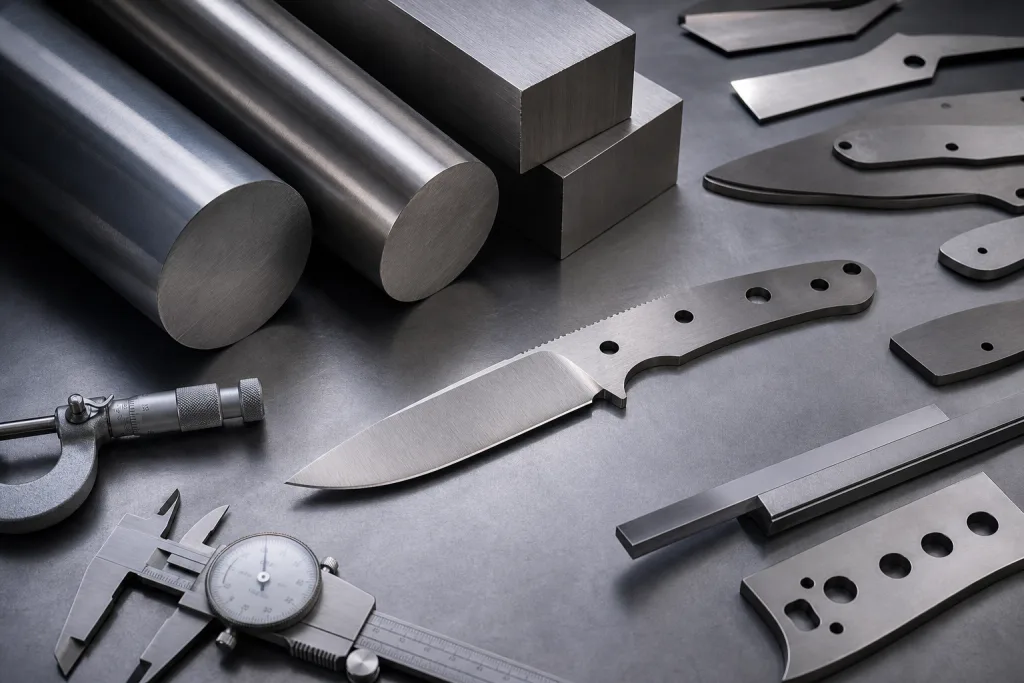
If you buy from a fillet knife factory China, the sample stage is where bad decisions are still cheap. Approve the wrong blade flex, a slick handle, or loose packaging, and you pay for it on every carton. A proper fillet knife sample approval guide is not paperwork. It is the first control point before the grinding line starts.
For importers and brand owners, the real question is not whether the knife looks good in a photo. We check 1.5 mm or 2.0 mm blade thickness, the HRC band for a flexible fish knife, the spine-to-edge taper on the gauge, and whether the sample matches the same steel, handle, and finish you can reorder at MOQ. QC pulled the sample, and the buyer flagged the handle color on the PO. That happens. The factories in Yangjiang that ship on repeat treat sample approval like a small production audit, not a free design round.
Start with the real use case
I’ll rewrite the section in place, keep the HTML exactly as-is, and tighten the sales-engineer voice with concrete specs and factory-floor detail.A fillet knife lives or dies by use case. A 6-inch saltwater fishing knife for soft-bodied trout is not the same part as an 8-inch blade for salmon, catfish, or commercial kitchen prep. Before you ask a fillet knife OEM for a sample, lock down the species, cut style, and cleaning environment. That one step cuts more rework than any packaging tweak.
We run this from three numbers first: blade length, blade flex, and corrosion exposure. A 6-inch blade with medium flex is a common all-rounder. An 8-inch blade with stronger flex control fits larger fish. If the knife will sit in brine, ice, and wet totes, ask for steel and finish that survive that abuse, not a showroom polish. QC pulled a sample last week because the handle insert failed after 24 hours in salt spray, and that is the kind of miss buyers hate. European and North American buyers also ask for food-contact paperwork; if the handle goes into retail kitchen channels, LFGB or FDA can be the real gate.
At TANGFORGE, a normal outdoor knife sampling run for a custom fillet knife starts from a drawing, blade spec sheet, and target price. For China sourcing, treat the sample as a measurable prototype: blade length in mm, spine thickness tolerance, flex band, and finish code. If you skip those numbers, the factory fills the blanks with its own assumptions. We've seen that go sideways fast. The buyer flags the sample, the PO has a typo on the thickness callout, and approval slips by 12 days instead of 4.
Lock the blade specification
I’ll keep the HTML intact and rewrite the prose with sharper factory-floor detail, concrete numbers, and a more sales-engineer tone. Then I’ll return only the cleaned HTML.The blade spec decides whether sample approval moves or stalls. For most fillet knife models, buyers should lock blade length in millimeters, spine thickness at three points, steel grade, hardness, grind, and surface finish. A workable range is 150-210 mm blade length with 1.5-2.2 mm spine thickness. Too thick, and the knife feels dead in the hand. Too thin, and it starts to wobble around bone.
Hardness is not a bragging number. We run plenty of fillet knife OEM projects at 52-56 HRC, using stainless steels chosen for corrosion resistance and edge retention. Push the hardness too far without the right heat treatment, and you get a blade that feels sharp on day one but chips early. We’ve seen this go sideways in export orders when the buyer asked for a harder spec but skipped the tempering curve. On the grinding line, the spec that works is the one QC can repeat after 50 samples, not the one that reads best on a PO.
Ask the supplier to show blade thickness at the heel, mid-blade, and near the tip. A simple spec sheet can look like this:
| Spec item | Typical target | Why it matters |
|---|---|---|
| Blade length | 150-210 mm | Fits fish size and cutting style |
| Spine thickness | 1.5-2.2 mm | Sets flex and hand feel |
| Hardness | 52-56 HRC | Keeps edge retention and toughness in balance |
| Finish | Satin, stonewash, polished | Affects corrosion behavior and look |
| Edge angle | 12-18° per side | Drives slicing and sharpening |
If the factory cannot state steel source, heat-treatment range, and inspection method, the sample approval is weak. That is the wrong question to ask after the sample arrives. A buyer flagged a typo on the PO last month and still missed the real issue: the blade spec never named the steel mill or the quench window. For a fillet knife factory China buyer working FOB, freight and duties will not save a bad blade spec.
Choose handle materials carefully
I’ll keep the HTML intact and rewrite the prose to sound like a factory-side sales engineer, with sharper buyer language and one concrete shop-floor detail per paragraph.Handle choice is where a custom fillet knife starts to feel right or feels cheap in the hand. The first thing the user notices is grip, especially with wet hands, gloves, or fish slime. We run this check on the packing table with a wet palm and a pair of nitrile gloves. A handle needs traction, sealed construction, and a shape that stays put instead of rolling in the hand. If it comes out slick, the buyer flags the blade, even when the steel is fine.
For sampling, ask for the exact handle material and surface treatment: PP, TPR overmold, ABS, G10, FRN, or wood composite. Each one changes tooling cost, MOQ, and hand feel. A basic injection-molded handle can keep MOQ near 1,000 pcs and sample cost manageable. A custom molded or overmolded grip can push MOQ to 3,000 pcs or more, because the tool has to be paid back. We see buyers ask for a premium grip at a promo price; the math does not work, and the mold room will tell you the same.
- Wet-grip check: hold the sample with wet gloves for 30 seconds.
- Balance check: the knife should not feel handle-heavy on a 6-8 inch blade.
- Seam check: no gaps that trap water or bait residue.
- Finish check: no sharp mold lines or exposed rivet edges.
If the program includes branded retail packaging or a gift set, match the handle texture to the carton promise. A glossy handle in a premium fishing kit looks off. We had one buyer send a PO with the handle code typed wrong by one digit, and QC pulled the sample before packing. For importers in Europe and North America, a handle that passes the hand test at sample stage saves more complaints than a slight blade polish upgrade.
Set MOQ and pricing expectations
I’ll rewrite the section directly in-place, keeping the HTML structure intact and tightening the sales-engineer tone with concrete factory-floor details.Too many buyers ask for a sample first and talk numbers later. That order is backwards. A clean sample approval process starts with MOQ and target unit cost, because the sample has to prove we can build it at your price. On fillet knife runs, sample fees usually land at USD 30-120 per design, based on steel grade, handle build, and whether we need a new tool. If the factory has to cut a new mold, the charge goes up fast. We’ve seen that on the grinding line more than once.
For repeat production, a normal fillet knife MOQ is 1,000-3,000 pcs per SKU. A straight-handle model with standard blade stock can stay near the low end. Custom blade geometry, overmolded handles, printed sheaths, and laser logos push the floor up. FOB China pricing for a basic stainless fillet knife may start around USD 2.20-4.50 at volume, while more involved programs climb from there based on steel, finish, and pack-out. If someone quotes way below that without specs, the math does not work. QC pulled the sample, and the buyer flagged it before shipment for a reason.
| Item | Typical range | Buyer note |
|---|---|---|
| Sample fee | USD 30-120 | Higher for new tooling or premium finishes |
| MOQ | 1,000-3,000 pcs | Depends on handle and packaging complexity |
| Lead time | 25-45 days | After sample approval and deposit |
| Inspection level | AQL 2.5 / critical AQL 1.0 | Tighten for edge and safety points |
If you need DDP pricing, give carton size, destination, and customs method up front. A DDP quote can hide freight swings and weak margin checks. We had one PO with a typo on the carton count, and the landed cost was off before the truck even booked. Ask for a clean FOB base first, then build the logistics on top.
Inspect the sample like production
I’ll tighten the prose, keep the HTML intact, and make it read like a factory-side sales engineer wrote it. Then I’ll return only the rewritten section.Sample approval fails when buyers inspect with a consumer mindset instead of a production mindset. The right question is simple: can we ship 1,000 or 10,000 pieces and keep the same result? We run that check with calipers, not gut feel. Measure overall length, spine thickness, handle alignment, tang centerline, edge symmetry, and sheath fit if the spec includes a sheath.
Use a short approval checklist and make every item measurable. A fillet knife factory China team should hand over a control sample with recorded dimensions, and QC should pull the sample on the same gauge we use on the line. Typical in-process and final checks include blade hardness, bend recovery, edge sharpness, corrosion spot test, visual finish, and carton drop resistance when retail packaging is part of the order. For export retail programs, I usually push AQL 2.5 for general defects and stricter limits for critical issues such as exposed sharp edges, broken tips, or loose handle assembly. If the knife goes into the U.S. retail channel, barcode and FNSKU label accuracy need a check before cartons leave the factory.
- Critical: unsafe edge, broken tip, loose handle, wrong steel.
- Major: visible scratches, off-center grind, poor sheath fit.
- Minor: small cosmetic marks, packaging print shift, label misplacement.
At TANGFORGE, the same production line that supports kitchen and outdoor knives can run around 240 employees across multiple knife categories. The approval logic does not change. If the sample cannot pass a practical QC gate, it is not ready for mass production.
Control the risks before mass production
I’ll rewrite the section in-place, keep the HTML exactly as-is, and make the prose sound like a hands-on sales engineer with concrete factory detail and tighter wording.The main fillet knife risks are easy to spot if you know what to check. We see over-flex or a dead-stiff blade, rust after 24 hours of wet use, handle shrink or flash at the mold line, and blade-to-sheath mismatch when the knife goes into retail packaging. On the grinding line, a 2 mm swing in spine grind can change the feel fast. Ignore one of these during sample approval, and the buyer flags it after cartons are already on the vessel.
We tell buyers to run a small pilot before they release the full order. 20-50 pieces after sample sign-off is a clean way to do it, then one more check before you cut the full MOQ. That is the right move for a new handle tool or a fresh finish on a custom fillet knife. We’ve seen this go sideways when a supplier jumps from one golden sample straight into mass production; the pilot catches the issue while the line is still open, and the math works. If the factory refuses a pilot, slow it down.
Check compliance early, not after the PO is locked. REACH matters for some handle compounds and coatings in Europe, and LFGB or FDA comes up when the knife is bundled with food-contact accessories. If you want laser logo branding, ask the factory to show burn depth on a black handle and compare it under QC light. We once found a typo on a PO where the buyer wrote the logo size in mm wrong by 3 mm, and the mark looked off on the handle. Good OEM work is not guessing; it is making the first sample hard to fake.
Approve with a clean document trail
I’ll rewrite the three paragraphs in the same HTML, tightening the sales-engineer voice and adding a few factory-floor specifics without changing the tags.Approval needs paperwork, not memory. Your fillet knife sample approval guide should leave behind a signed spec sheet, an approved photo set, packaging reference, and QC notes from both sides. The file must show which sample is frozen, what is locked, and what is still open. Skip that, and the factory may treat a late change as normal engineering while the buyer flags it as a defect. That is where disputes start.
For importers buying from Yangjiang or other Chinese knife hubs, we run a simple approval pack: one signed master sample, one measured spec sheet, one carton artwork proof, one compliance file, and one production tolerance table. Put the substitutions in writing too, like a 1 mm carton paper change or a secondary steel brand only if the cut test stays the same. QC pulled the sample, the caliper showed 0.3 mm drift, and that note saved a messy PO later. This is the wrong question to ask: not whether the factory can “adjust,” but what change stays inside the approved file. That keeps your fillet knife OEM project under control and lets the shop source without guesswork.
Once the sample is approved cleanly, reorder speed gets better. A repeat run on a mature design can move in 30-45 days when the MOQ is met and no new tooling is needed. We ship faster because the grinding line knows the knife spec, the carton code, and the target edge angle before the first blank is cut. On one job, a buyer had a typo in the PO and still got the wrong handle color; the approval file caught it on the next run. That is the gain here: fewer defects, fewer emails, and a shorter path back to production in China.
Frequently asked questions
Start with blade flex, spine thickness, and handle grip. For most fish knives, a 150-210 mm blade with 1.5-2.2 mm spine thickness and 52-56 HRC is a workable range. Then test the edge on real fish or a controlled cutting medium, not just paper. Also check corrosion resistance if the knife will see saltwater use. If the sample feels right but the dimensions are not recorded, you do not yet have a production-ready approval.
A common fillet knife MOQ is 1,000-3,000 pieces per SKU. Simple stainless designs with standard handles can be closer to 1,000 pcs. Custom handle molds, overmolding, printed sheaths, or premium packaging often push MOQ to 3,000 pcs or more. In Yangjiang and broader China sourcing, a lower MOQ usually means limited customization or a higher unit cost.
Most sample fees land around USD 30-120 per design. The low end is for minor changes to an existing knife; the high end is for new blade geometry, new handle tooling, or special finishing. If the supplier is quoting a free sample, ask what is not included. Sometimes the fee is hidden in a higher first-order price, which is fine if you know it upfront.
Critical defects are exposed sharp edges on the handle, broken tips, loose assembly, wrong steel, and severe bend failure. Major defects include grind asymmetry, poor sheath fit, handle flash, and visible corrosion spots. For mass production, many buyers use AQL 2.5 for general defects and a tighter critical standard around AQL 1.0. That is sensible for export retail programs.
Ask the factory for a measured spec sheet, steel declaration, hardness range, and approved artwork. Then compare the sample against a pilot run of 20-50 pieces. If the pilot matches within tolerance, the program is more likely to scale. If the factory cannot explain how the sample was made, or if the sample used a one-off process not used in production, treat it as a prototype only, not an approval.
Approve your next sample with less risk
Send your drawing, target MOQ, and price band. We will help you define a fillet knife sample that can actually be made in China at production quality.
Request a Quote