You are placing a 3,000-piece private-label chef knife order for a North American retail launch. The blade profile looks clean on the PDF, the handle chip matches your brand color, and the sales team wants a 90-day shelf date. Fine. The drawing is not the trap. The trap is signing off one pretty sample from the grinding line, then finding the 3,000-piece run cannot hold the same 1.5 mm tip radius or the same logo position under a retail display light.
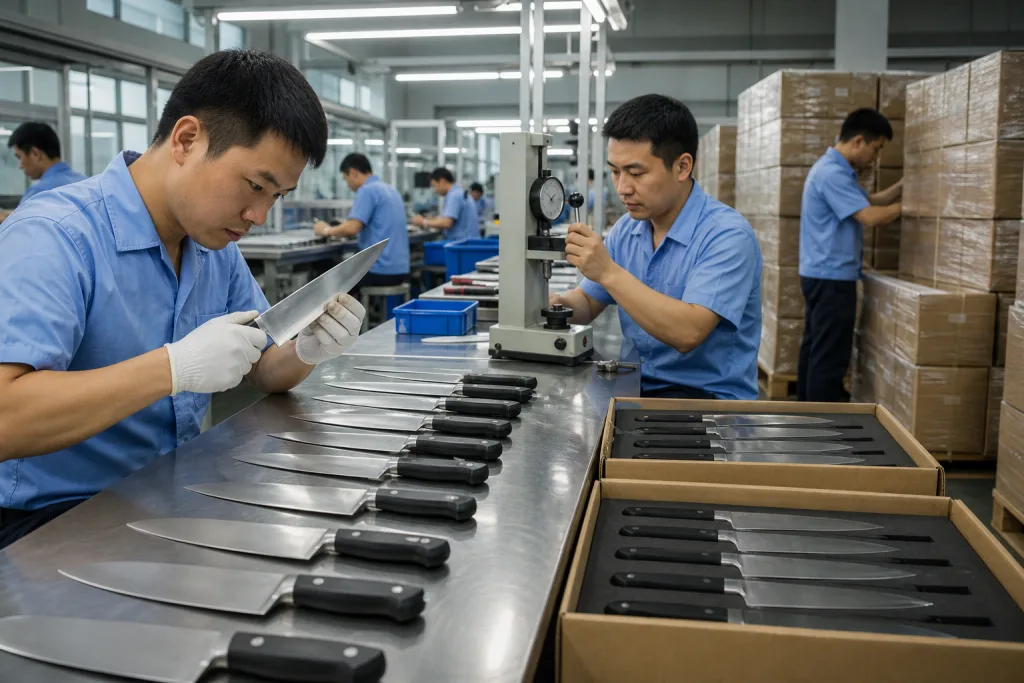
At TANGFORGE in Yangjiang, Zhejiang, China, we run sampling like a small production order, not a WeChat photo approval. Our factory has about 240 employees, and a first sample normally takes 10-18 days after confirmed drawings, steel, handle material, logo file, and packaging brief. QC pulled one chef knife sample last month with a 0.6 mm handle step at the bolster; the buyer first said “looks fine,” then flagged it after checking against their retail display knife. Good catch. This is why sample sign-off needs control. If the knife sample approval process is loose, the math does not work once 250 cartons are sealed and the vessel date is booked.
Start with the buyer scenario
Typical RFQ on our desk: a brand owner asks for a 3,000-piece 8-inch chef knife in 5Cr15MoV, black G10 handle, laser logo, individual color box, and Amazon-ready carton labels. Target FOB China price is USD 6.80-7.40. Goods need to be ready in 55-65 days after deposit. Three factories make samples, but only one gets the production PO. We start with the basics: digital caliper on blade thickness, Rockwell file on the heat-treatment range, and carton label artwork checked line by line against the Amazon template.
The first mistake shows up in about 6 out of 10 sample requests: the buyer asks for a knife before the commercial limits and technical limits are fixed. One good sample is easy. A worker can slow down on the grinding line, hand-polish the bevel, and make the handle seam look tight on one piece. That does not prove the factory can hold the same edge geometry, rivet position, and G10 fit across 3,000 pieces. Pretty is not control. Without a production-ready spec sheet, the sample is a showroom piece, not a buying standard.
Before TANGFORGE cuts steel in Yangjiang, Zhejiang, China, we want the order logic tight enough that the quote and the sample point at the same target. That means MOQ, order quantity, Incoterm, price band, steel grade, handle material, logo method, packaging level, compliance market, and inspection standard. If the retail channel needs REACH, LFGB, FDA food-contact declarations, FNSKU labels, or drop-test packaging, write it into the sampling brief. Do it early. We have seen a buyer add LFGB after sample approval; QC pulled the sample again, the test file had to be reopened, and shipment prep moved from 12 days to 18 days.
A clean buyer scenario protects your leverage. When all suppliers sample against the same written brief, you can compare price, workmanship, response speed, and risk with less noise. When each factory gets a different story, the cheapest sample often leaves out the painful parts, like the 1.8 mm carton wall or the matte laser logo depth. The math doesn't work if you compare three different knives. We have seen this go sideways: one PO had “G10 black” in the item line and “PP handle” in the remarks, and the buyer flagged it only after the golden sample was packed.
Freeze the spec before metal is cut
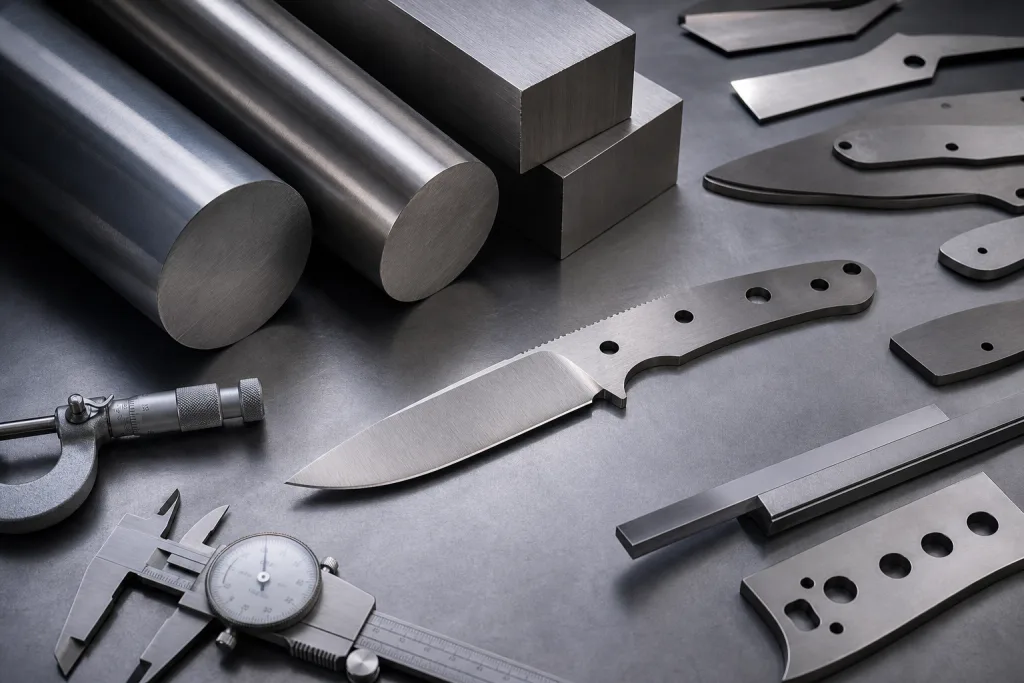
Your sample request has to be clear enough that our production engineer can open the job card and make the knife without calling sales two times. For an 8-inch chef knife, write the overall length, blade length, spine thickness in mm, grind type, edge angle, bolster choice, tang structure, handle thickness, rivet material, logo size, surface finish, and target HRC. No guessing. For 5Cr15MoV kitchen knives, a common production band is 56-58 HRC. For AUS-10 or 10Cr15CoMoV, buyers may target 59-61 HRC. Do not write “good hardness” or “premium steel.” Those words fail during inspection. Last month QC pulled a chef knife sample at 57 HRC on the Rockwell tester, but the PO only said “hard steel,” so nobody could prove whether it passed.
The handle needs the same control. Black G10 is not one material in real production; texture, fiber visibility, weight, and edge chamfer shift depending on sheet source and CNC handle jig setting. Pakkawood can shift by 2-3 shades between batches. ABS and PP injection handles need mold texture review, not just a WeChat photo taken under office light. If your brand color matters, send Pantone or physical swatches and state the visual deviation you will accept. For logos, choose laser engraving, etching, stamping, screen print, or metal badge before the first sample. Each marking method changes wear resistance and lead time; deep stamping also changes tooling cost. We’ve seen this go sideways when a buyer approved laser on the sample, then asked for deep stamping after the fixture was already booked.
A practical pre-sampling checklist looks like this:
- Blade: steel grade, HRC band, thickness tolerance in mm, grind drawing, edge angle per side, and satin or mirror finish checked against a reference sample on the grinding line.
- Handle: material, Pantone or swatch color, surface texture, rivet spec, chamfer size in mm, and adhesive line limits checked under bench light.
- Branding: logo file in AI or PDF, size in mm, placement tolerance, and marking method confirmed before the laser room opens the job card.
- Packaging: box structure, insert fit, barcode position, warning text, carton size, and drop-test requirement, including who owns the barcode typo if the PO shows the wrong EAN.
- Compliance: REACH, LFGB, FDA, Prop 65, BSCI, ISO 9001, or retailer-specific documents matched to the shipment market.
At this stage, you are not writing a 40-page technical manual. You are stopping the sample-room technician from making buyer-level decisions at the belt grinder. “Can you make it look premium?” is the wrong question. Ask for 2.5 mm spine thickness, 15° edge per side, 56-58 HRC, and a brushed satin finish, then sign off against those points.
Understand sample fees and timing
Sample fees are not a small invoice trick. They filter real custom work from casual price shopping. If a supplier promises unlimited free custom samples, usually the knife is stock with a logo, the cost is hidden in the bulk quote, or nobody is controlling the sample room calendar. We run each request on a job sheet: caliper check on blade thickness, logo film confirmation, handle material note, and a slot on the grinding line. For real OEM and ODM knife projects, a fair sample charge gets the job onto the bench faster and gives both sides one person to chase when QC pulled the sample and found the logo 1.5 mm too close to the bolster.
At TANGFORGE, standard OEM kitchen or outdoor knife samples normally take 10-18 days after confirmation. Damascus knives, new handle molds, special coatings, or custom gift packaging can take 20-35 days. If tooling is required, timing depends on mold complexity and approval of 2D or 3D drawings. We have seen 12 days turn into 18 days because the buyer sent a logo AI file but no blade spine thickness, no Pantone handle color, and no packing dieline. Ask better. “How fast can you make it?” is the wrong question. Ask what is still missing before the first cutting blank goes to heat treatment.
| Sample type | Typical fee | Lead time | Buyer risk |
|---|---|---|---|
| Existing blade with custom logo | USD 50-120 | 7-12 days | Low, if logo size, engraving side, and distance from bolster are confirmed in mm |
| Custom chef knife profile | USD 100-250 | 12-20 days | Medium, because edge curve needs a template and spine thickness needs caliper approval |
| Damascus or premium steel sample | USD 180-400 | 18-30 days | Medium to high, since pattern match and HRC reading can shift by batch |
| New injection handle mold | USD 800-3,000+ | 25-45 days | High, a 0.3 mm fit issue can mean tooling change cost |
| Retail box and insert mockup | USD 80-300 | 10-18 days | Medium, print color must match the artwork and the foam slot must clear the knife tip |
About 7 out of 10 factories will refund or credit sample fees after bulk order confirmation, often at 1,000-3,000 pieces depending on project value. Get that rule written on the PI, not buried in a chat screenshot. Separate courier cost from sample cost. For 2-5 knives, DHL/FedEx/UPS freight often lands at USD 45-120 depending on destination. Battery-free knives are simple to ship. The math still goes sideways if the HS code is wrong, the declared value is guessed, or the PO has one typo in the consignee address.
Run sample round one like QC
The first physical sample should not pass from photos or a 30-second hand feel. Treat it like a 5-piece QC check. Measure it, cut with it, wash it, shoot close-up photos of each issue, then put every comment into one marked PDF or Excel sheet. One file only. We had a PO last month where “satin” was typed as “stain,” and that single typo caused 2 sample days of back-and-forth before QC caught it at the packing table. If sales, design, and procurement send 3 separate email threads, the factory side gets noise; the grinding line won’t know whether to adjust the bevel, the handle radius, or the logo pad-print jig.
For the buyer scenario, check the chef knife against the drawing first. Use digital calipers, not the ruler from the sample room. Measure blade length, overall length, spine thickness, handle width, weight, and logo position where possible. A 0.5 mm difference is usually fine on a handle chamfer, but it can fail the sample if the logo sits 0.5 mm off center. Set tolerance by feature. For 8-inch kitchen knives, we often run practical tolerances like ±1.0 mm on overall length, ±0.2 mm on blade thickness, and ±0.5 mm on logo placement. Stamping, forging, and full-tang assembly move differently after heat treatment, so don’t copy one tolerance table across all SKUs.
Then test the knife as a product. Cut A4 paper, 3 tomatoes, 2 onions, 1 cardboard carton, and protein if the sales claim mentions meat prep. Wash and dry it 10-20 cycles by hand, then check the handle after five minutes of use. Small detail, big complaints. QC pulled one sample last quarter because the rear G10 corner measured only 0.3 mm radius, and the buyer flagged hand bite during prep work. Check burrs, uneven grind, blade warp, sanding marks, loose rivets, glue gaps, coating chips, and packaging rub marks with the same light box we use for final inspection. If the product is for professional kitchens, ask about CATRA edge retention testing or our internal cutting test; not every project needs CATRA, but high-claim retail packaging needs proof behind it.
Your feedback should separate defects from preferences. “Handle is too sharp at rear corner; increase radius by 1.0 mm” gives production a correction they can run on the belt sander. “Make it feel more premium” does not. Wrong question. Round one is where you keep control with measurements, marked photos, and direct sign-off comments, not by sending 14 opinions after the mold has already been adjusted. We’ve seen this go sideways: one buyer approved the blade profile but left the handle comment open, then asked for a 2 mm palm swell change after the CNC fixture was finished.
Use revisions without losing leverage
A revision round should close named issues, not restart the knife. If sample one has the correct blade but the handle contour is off, do not change the steel grade, logo process, box structure, barcode position, and carton mark in the same email. That kills leverage. We have seen buyers ask to switch 5Cr15MoV to 3Cr13 after the grinding line already cut 24 trial blades; the math does not work, and the ship date moves from 12 days to 18 days fast. New variables add cost or timing risk. Procurement loses pressure when the target keeps moving while the original delivery date stays on the PO, especially when our merchandiser is still chasing the typo in line 7 of the packing spec.
For the 3,000-piece chef knife order, a clean revision note might read: keep blade profile and edge angle, keep 5Cr15MoV at 56-58 HRC, reduce handle thickness from 21 mm to 19.5 mm, increase rear chamfer radius by 1.0 mm, move logo 3 mm toward handle, change box insert from white EVA to black molded pulp. That works. Our sample master can check it with a digital caliper, Rockwell hardness tester, and one printed box mockup instead of guessing what the buyer means. It gives the factory a controlled task list and shows whether the supplier follows instructions, not just whether the sales team writes polite emails.
At TANGFORGE in China, we prefer revision comments in a marked PDF with photos, arrows, measurements, and a decision column. Each line should be marked “must change,” “acceptable but improve,” or “approved.” QC pulled one sample last month where the buyer wrote “handle feels bulky” with no mm target; three emails later, the real request was only 1.5 mm off the belly. Small words waste sample days. For ODM projects, we expect one or two sample rounds before golden sample approval. More than three rounds tells us one of 3 things: the product brief moved after sampling, the buyer team is not aligned, or the supplier has weak engineering control.
If a factory pushes back on reasonable changes, ask whether the issue is cost, tooling, process capability, or misunderstanding. Ask directly. Some changes are easy in the sample room but painful in mass production, like hand-polishing a bolster that later needs 3,000 pieces at the same finish. We’ve seen this go sideways when a supplier says yes to a deep logo etch, then inspection finds patchy marks under AQL 2.5 with the 3M tape test failing on 6 of 80 checked knives. A supplier that warns you early about production limits is worth more than one that agrees to everything and fails before shipment.
Sign off the golden sample knife
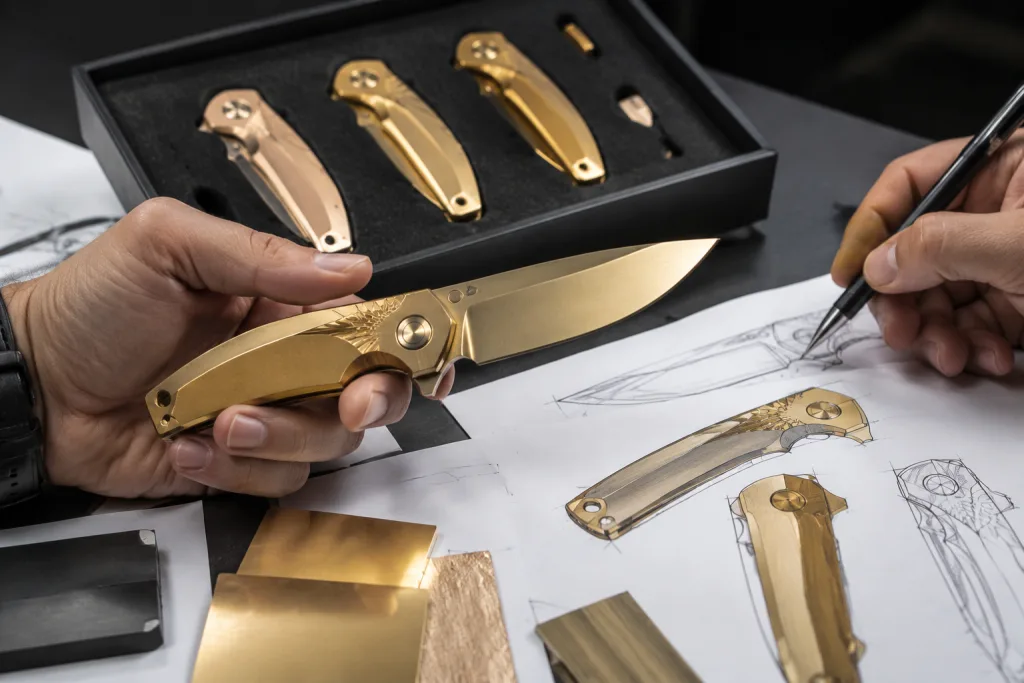
The golden sample knife is the production yardstick, not the nicest bench-made piece from the sample room. If our grinding line cannot repeat the bevel, satin line, logo depth, and handle fit inside the agreed tolerance, it is the wrong sample to sign. We run the approved steel, finish, logo method, packaging, and target tolerance on the same route planned for bulk, then QC checks spine thickness in mm and hardness against the HRC target with a caliper and Rockwell tester. For a normal PO, keep 2 signed samples: 1 at the buyer’s office and 1 sealed at the factory. For retail programs over 3,000 pcs, keep a third sample for the inspection company.
Sign-off control needs clear photos, real measurements, and labels nobody can “remember” differently later. On the sample record, write the project name, item code, version number, date, steel, HRC target, handle material, packaging version, and approving person. Simple. It works. We sign across the label and the tamper-evident bag, then take front, back, spine, edge, logo, and box photos under the QC desk lamp. Paperwork without numbers is just noise. The point is stopping quiet changes after approval, like a 0.3 mm thinner handle scale or a logo moved 5 mm toward the bolster.
For the chef knife scenario, the golden sample file should hold the knife itself plus the color box, insert, barcode label, carton mark, user card, warning text, and any retailer label such as FNSKU. Packaging is part of the product, and this is where we have seen orders go sideways. Last year, QC pulled the sample and the knife was fine, but the buyer flagged the box because the barcode scan rate was 7 out of 10 and “Made in China” was missing from one side panel. That pushed shipment from 12 days to 18 days. Close enough is the wrong standard when cartons reach an Amazon or retailer warehouse.
Once the golden sample is approved, freeze the bill of materials. No steel substitution, handle supplier change, coating change, glue change, carton change, or logo process change goes into bulk without written buyer approval. The math does not work if purchasing saves USD 0.06 on a handle and we lose 6 days rebuilding trust. If a component is short, we ship a comparison sample or issue a deviation sheet with photos, measurements, and buyer sign-off before production continues. That is how we stop sample approval from turning into a memory-based argument after the PO typo or supplier swap shows up on the line.
Control pre-production before bulk starts
A pre-production sample is not the golden sample. The golden sample is the signed control piece, usually sealed in a PE bag with the buyer’s signature label and our QC date sticker. The pre-production sample checks whether the line can match that control piece using bulk steel, bulk handle slabs, the actual jig set, and the same belt-grinding settings. For a 3,000-piece order, we normally ask for pre-production confirmation before full-line output, mainly on new blade profiles, new packaging, coated blades, or logo positions with tolerance under 0.5 mm. Photos are not enough. We want the knife on the bench, next to the signed sample, with calipers and the Rockwell tester ready.
In a controlled process, we run a pilot batch of 20-50 pieces and check them against the golden sample knife on the bench, not just by photo. QC pulled the sample last month and found 3 blades sitting at 58 HRC against a 60 HRC target, so the heat-treatment oven setting was corrected before bulk grinding. This is where batch problems show up: handle color drift under the light box, uneven edge grinding from a worn 240# belt, warped blades after polishing, weak magnets in a gift box, or cartons that close 2 mm too tight. One clean sample from the sample room does not prove that 3,000 units will pass AQL. That math does not work.
Your purchase order should tie sample approval to inspection terms. Write it plainly: mass production starts only after written golden sample approval; pre-production sample must match the approved version; final inspection follows ANSI/ASQ Z1.4, General Inspection Level II, AQL 2.5 for major defects, AQL 4.0 for minor defects, and zero tolerance for critical safety defects. Critical defects include broken tips, loose blades, cracked handles, severe rust, exposed sharp edges on packaging, wrong steel, or missing required warnings. We have seen one PO typo change “black G10 handle” to “black PP handle”; the buyer flagged it after photos, and it cost 6 days to reset material booking. This is the wrong place to save 10 minutes.
TANGFORGE’s monthly capacity changes by product mix, but for standard kitchen and outdoor knives we can plan 30,000-80,000 units per month when steel, handles, inserts, and cartons are locked early. Cutting steel is rarely the bottleneck. Late decisions are. If you approve the pre-production sample within 48 hours and keep change control tight, a 45-60 day bulk lead time is realistic for repeatable OEM knife orders in Yangjiang, Zhejiang, China. If logo artwork changes after pad-printing screens are made, we usually lose 4-7 days before the line runs again, and the grinding line waits while purchasing rechecks films, screens, and packing labels.
Frequently asked questions
For a normal OEM knife using an existing blade shape or small customization, one sample round plus one corrected sample is usually enough. For a new chef knife profile, custom G10 handle, or retail packaging set, two rounds are normal. More than three rounds is a warning sign. It usually means the brief was unclear, the buyer team is changing direction, or the factory cannot control the process. Set a rule before starting: round one checks design and function, round two confirms corrections, and the final approved unit becomes the golden sample knife. Each round should have a written change list with measurements, photos, and pass/fail decisions.
Photos are useful for screening, but they should not replace physical approval for a new knife order. A photo cannot confirm balance, edge comfort, handle grip, burrs, blade straightness, packaging fit, or true finish quality. For repeat orders with no change, photo confirmation may be acceptable for labels or carton marks. For a first order, insist on at least one physical golden sample. If timing is tight, ask the factory to send a measurement report, HRC test result, and high-resolution photos before courier dispatch, then review the physical sample within 24-48 hours after arrival.
Often yes, but not automatically. Many factories credit sample fees after you place a bulk order over a defined MOQ, such as 1,000 or 3,000 pieces. Courier fees are usually not refundable. Tooling fees are different; a mold fee may be partially refundable only after a higher accumulated volume, sometimes 10,000-30,000 pieces, depending on the handle or sheath design. Ask for the refund rule in the quotation: sample fee amount, courier cost, tooling ownership, refund threshold, and whether the credit is deducted from deposit or balance payment.
The form should identify exactly what was approved. Include item code, version number, sample date, buyer name, factory name, steel grade, HRC band, blade thickness, handle material, logo method, packaging version, carton mark, inspection standard, and approved tolerances. Attach front, back, side, logo, edge, handle, and packaging photos. State that mass production must match the signed golden sample unless the buyer approves a written deviation. For private-label knives, also record barcode, FNSKU if used, country-of-origin wording, and warning text. This prevents arguments during final inspection.
You can skip them on a repeat order with the same materials, same tooling, same packaging, and good inspection history. For a first order, skipping the pre-production sample saves a few days but increases risk. A pre-production sample or pilot batch of 20-50 pieces checks whether bulk steel, heat treatment, grinding fixtures, polishing, logo marking, and packaging assembly match the golden sample. It is especially important for Damascus knives, coated tactical knives, custom handles, gift sets, and retailer packaging. If you skip it, tighten final inspection and keep AQL and critical defect definitions written into the PO.
Send your sample brief for review
Share drawings, target price, steel, packaging, and launch timing. We will flag sampling risks before you spend money on prototypes.
Request a Quote