Micarta looks simple on a product page, but it causes hard sourcing questions: sheet grade, resin smell after polishing, color drift between lots, pin-hole tolerance in mm, edge radius after CNC shaping, oil absorption, and whether the handle survives a buyer’s dishwasher-abuse test. If your PO only says “micarta handle,” the supplier will pick the cheapest sheet that looks acceptable in 6 photos. We’ve seen this go sideways.
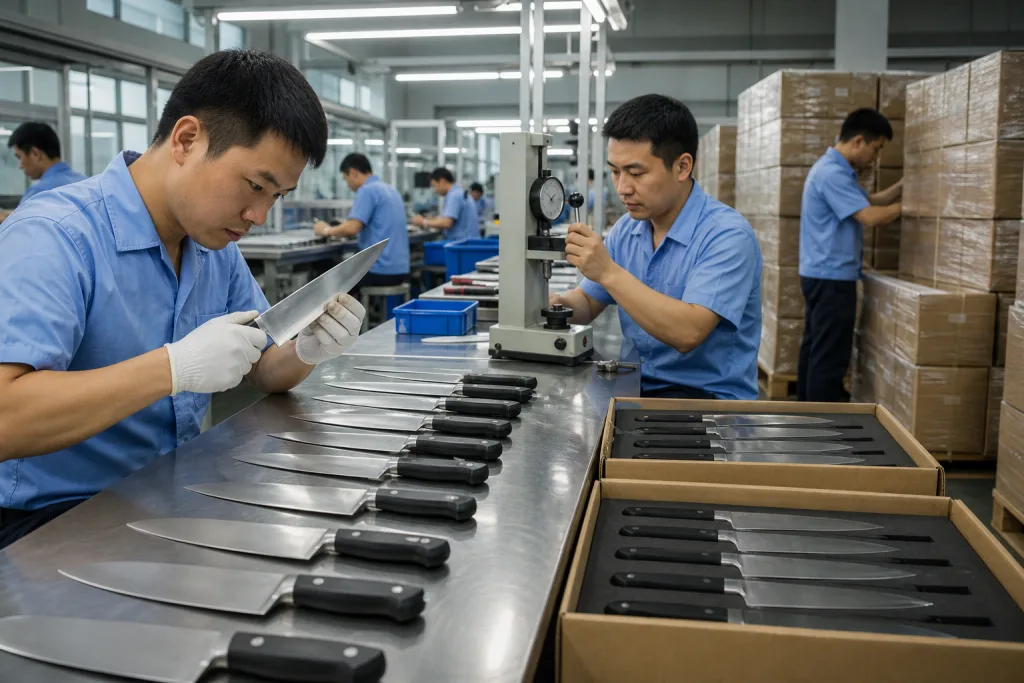
As a micarta handle knife manufacturer China buyers use for kitchen sets, outdoor fixed blades, and tactical private-label runs with separate sheath and logo specs, TANGFORGE sees the same issues repeat. Our Yangjiang, Zhejiang facility has about 240 workers and ships OEM/ODM knives for global importers; on the grinding line, QC pulled one sample last month where the left scale sat 0.35 mm proud near the rear pin. A stable spec, realistic micarta handle knife MOQ, and clear AQL 2.5 inspection plan will save more money than fighting over USD 0.20 after sampling. The math doesn’t work.
What Micarta Really Means in Production
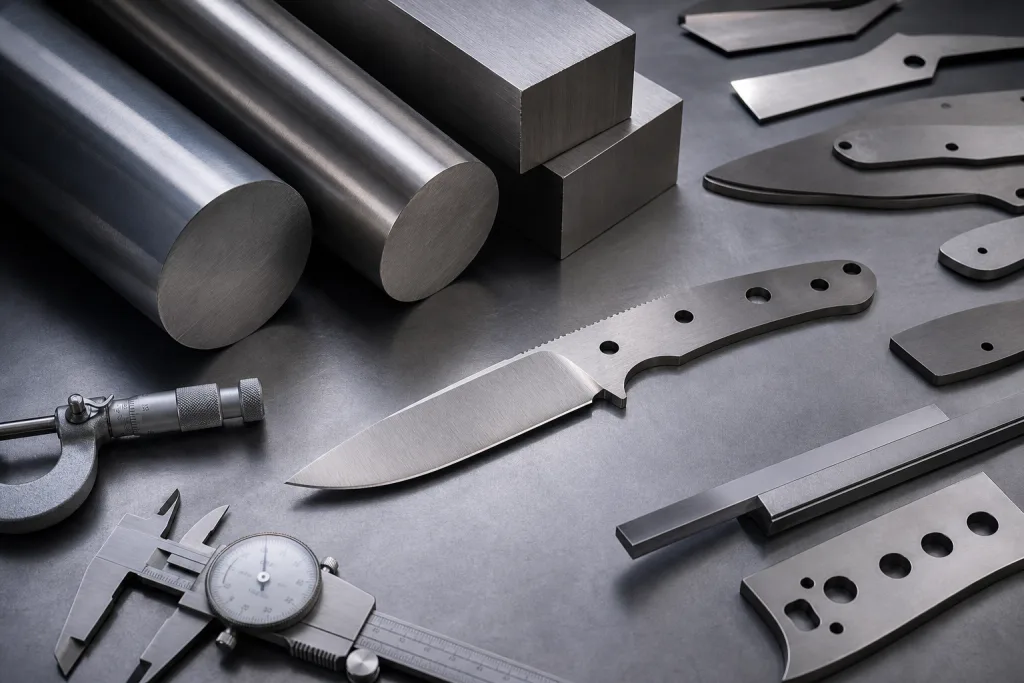
Micarta is not one material, even though 7 out of 10 knife POs we see use the word that way. On the grinding line, it means layers of canvas, linen or paper soaked with phenolic resin, pressed into sheets, then CNC cut, drilled, contoured and finished with belts from 240# up to 800#. One handle supplier may label 3 grades as “micarta,” but the hand feel, routing dust, edge chipping and reject rate do not land in the same bucket.
For a custom micarta handle knife, lock down the base fabric, resin color, sheet thickness, surface finish and exposed layer pattern on the spec sheet. Canvas micarta gives stronger bite in the hand and suits outdoor knives that need a rougher look. Linen micarta cuts cleaner on the CNC router and is the safer pick for premium kitchen or EDC handles. Paper micarta can polish smooth, but we have seen it chip at the edge when a 3 mm radius bit is run too fast.
At our Yangjiang, China production line, the bad call is approving a sample by photo only. QC pulled one green micarta sample last month: dry it looked grey under the light box, after oiling it shifted close to the approved swatch. Dry micarta can look dull before oiling; wet sanding can darken the color by 10-20%; black, green and brown batches do not always match across sheet lots. If your retail set needs four knives with matching handles, put color range and pairing rules into the QC file.
Micarta is a handle scale material, not a fix for weak construction. This is the wrong question to ask if the tang drawing is still loose. If tang holes are off by 0.2 mm, pins get forced during assembly. If scales are too thin, countersunk screws can show through the surface after final buffing. If the edge radius is sharp, the knife feels cheap even when the blade steel is good; we usually call this out before mass production because the math does not work once 2,000 sets are already drilled.
Buyer Specs That Prevent Factory Guesswork
A good micarta handle knife OEM spec sheet should stop the factory from filling blanks with assumptions. You do not need a 30-page engineering file for every SKU, but you do need measurable items. On 8 out of 10 new RFQs, we ask buyers to confirm blade steel, HRC band, handle construction, scale thickness, fastener type, logo method, packaging details, and compliance market before we run the quote sheet. Guessing costs money. Last month QC pulled the sample because the PO said “black micarta,” while the approved sample was black-green linen micarta with 8 mm raw scales.
For kitchen knives, common steel choices include 5Cr15MoV at 54-56 HRC, 1.4116 at 55-57 HRC, 10Cr15CoMoV at 58-60 HRC and VG10-clad Damascus at 59-61 HRC. For outdoor knives, D2 at 59-61 HRC, 14C28N at 58-60 HRC and 8Cr13MoV at 56-58 HRC are common cost-performance options. The handle has to fit the blade category. A 6.5 mm linen micarta scale can work on a chef knife after CNC contouring, but a hunting knife used with gloves usually needs 12-14 mm finished palm swell and a rougher blasted texture. We run this check before heat-treatment booking, because changing steel after the furnace schedule is set can move delivery from 35 days to 48 days.
Put these handle details in the RFQ: scale thickness before machining, finished handle width tolerance, edge radius, pin or screw material, lanyard tube size, adhesive type, surface finish and whether oiling is allowed. Give numbers where you can: ±0.3 mm handle width tolerance, R1.5 edge radius, 6 mm brass lanyard tube, 24-hour epoxy cure. If food-contact rules apply in Europe or North America, ask for REACH, LFGB or FDA-related declarations for the complete knife, not only the steel. This is the wrong question to ask if the buyer only says, “Is the blade FDA?” The carton label, handle oil, glue and polishing compound can all get checked during a buyer audit.
Logo placement matters too. Laser engraving on micarta is possible but contrast can shift between brown canvas micarta and black linen micarta, even when the same 30W fiber laser setting is used. Metal shield inlays look premium, but they raise scrap risk and MOQ; we have seen a 3% reject rate on shields sitting 0.2 mm proud after final buffing. For a private-label launch, laser on blade plus printed carton is safer than an inlay during the first 500-1,000 pcs order. The buyer flagged it once, and the math did not work after rework and air freight.
MOQ, Tooling and Price Reality
Micarta handle knife MOQ is not set by the word “micarta.” It is set by handle geometry, sheet color, and packing method. If we run an existing blade with our current handle drawing and stock black or green micarta sheet, 300 pcs can work. If the buyer asks for a new palm swell after the first CAD, the math changes fast. A micarta handle knife factory China buyers can trust should break MOQ by cost driver, not throw out one magic number on WhatsApp.
For TANGFORGE, typical MOQ is 300-500 pcs per SKU when the blade profile and handle shape are already in our production system, with micarta sheet on our rack. For a new handle contour, we need CNC programming, fixture adjustment, and at least 2 trial pieces checked with a 0.02 mm caliper gap at the tang. Then 800-1,000 pcs is more realistic. For custom color micarta sheets, expect 1,000-2,000 pcs or a material surcharge because sheet suppliers also have batch minimums. We have seen this go sideways when a buyer approved “dark burgundy” by phone photo, then flagged the bulk as too brown under store lighting.
| Project type | Typical MOQ | Sample time | Bulk lead time | FOB China price impact |
|---|---|---|---|---|
| Existing knife, standard micarta | 300-500 pcs | 10-15 days | 35-45 days | Base quote |
| New handle shape | 800-1,000 pcs | 18-25 days | 45-60 days | +USD 0.40-1.20 |
| Custom micarta color | 1,000-2,000 pcs | 25-35 days | 55-70 days | +USD 0.60-2.50 |
| Gift set with custom box | 1,000 pcs | 20-30 days | 50-65 days | +USD 1.00-4.00 |
Price moves with finishing time. A flat slab handle is cheaper because the grinding line can hold a steady rhythm. A 3D contoured handle with hand sanding, controlled chamfer, and oil finish can add 3-5 minutes per knife; QC pulled samples last month where the chamfer drifted from 0.8 mm to 1.4 mm after one belt change. At 5,000 pcs, one extra minute per unit means 83 extra labor hours. That is not small. It changes line capacity, inspection load, and delivery planning.
QC Risks Buyers Often Miss
Micarta handle defects usually show up after assembly, when the cost is already baked in. If the blade has passed sharpening on the 800-grit belt and sits in the inner box, changing one handle scale can scratch the satin finish or send the knife back through full rework. We split the checks into incoming micarta inspection, fitting checks on the grinding line, and final packed inspection. That extra gate saves money. We have seen this go sideways on a 600 pcs fixed-blade order where QC pulled the sample only after blister packing.
The first risk is color drift. Green micarta from 2 sheet lots can pass separately, then look wrong when 12 knives sit side by side in a counter display. For sets, ask the factory to cut handles from the same sheet batch where possible, and write the batch rule on the PO instead of leaving it to email. The second risk is gaps between tang and scale. A 0.15 mm gap sounds small, but it holds polishing compound, moisture, and complaints. For premium knives, we run no visible gap under normal light and use a 0.10 mm feeler gauge on sampled units.
The third risk is pin and screw finish. Pins need to sit flush: not raised enough to catch a fingernail, not ground so hard they turn oval under the buffing wheel. Torx screws should seat cleanly without stripping; the buyer flagged this once because 18 pcs in a 200 pcs pilot had T8 heads chewed by the wrong bit. On full-tang fixed blades, lanyard tube flare needs control, or the press can crack the micarta edge. The math does not work if you find that after logo etching.
Use AQL 2.5 for major defects and AQL 4.0 for minor cosmetic defects unless your retail channel demands tighter rules. Major defects should include loose handle, cracked scale, exposed sharp edge, wrong material, rust, unsafe blade tip, and failed pull or torque test; we usually record torque on the QC sheet in N·cm so nobody argues later. Minor defects can include small sanding marks, slight shade variation inside approved range, or tiny glue residue outside the grip area. One PO typo we see too often is “Micata” with no color code, and that is the wrong question to ask after mass production starts.
Testing and Compliance for Import Markets
For Europe and North America, the buyer treats the knife as one finished consumer item, not a blade blank with a nice handle. Steel chemistry is only one line on the spec sheet. If the blade touches food, we ask for documents covering LFGB for Germany, FDA-related requirements for the U.S., and REACH checks for restricted substances in micarta, coatings, epoxy, carton ink and even the color sleeve. Last month QC pulled 12 samples from a 600-piece kitchen knife run because the PO listed “FDA handle” by mistake; this is the wrong question to ask, because FDA is about food-contact suitability, not a marketing stamp on micarta.
Micarta is resin-based, so smell and residue are not small issues. A sealed gift box can trap phenolic odor, and the buyer flagged it twice for us on black canvas micarta even though the handle passed the pull test. We run finished handles on an airing rack for 24 hours before packing, then reject any piece with clear solvent smell or burnt odor after the sanding belt. Dishwasher-safe claims are risky. We do not recommend selling micarta handle knives as dishwasher-safe, because heat, detergent and 30-minute wet cycles can fade the finish and stress the adhesive line.
Mechanical tests need to fit the knife. Kitchen knives need handle pull strength, humidity corrosion review, sharpness checks and edge retention checks when the buyer pays for them. Outdoor knives need impact, lateral flex, sheath retention and screw torque checks; on the grinding line we usually set Torx screw torque at 0.8–1.2 N·m before QC signs off. For higher-end programs, CATRA cutting tests can compare edge performance, but the math doesn't work if you skip basic handle assembly inspection and then try to explain loose scales after delivery.
If you ship to Amazon or chain retailers, packaging control is part of compliance. Confirm FNSKU labeling, carton drop test, blade tip protection, desiccant use and warning labels before mass packing starts. We ship DDP cartons with 5-layer outer boxes, and QC has found blade tips piercing the inner tray after a 76 cm drop test when the plastic guard was 2 mm too short. A beautiful micarta handle will not save the order if the knife cuts through the box before the customer opens it.
How to Audit a China Supplier
Do not audit a micarta handle knife manufacturer China supplier from the showroom. Start at process control. Ask who buys the micarta sheets, whether sheet lot numbers are written on the material card, who signs off the CNC program, where handle fitting is checked, and how rejected scales are put in the red-bin area. We’ve seen this go sideways when a buyer approved black canvas micarta, then the next lot came in 0.4 mm thinner and the rivets sat proud after sanding. If the factory cannot answer these points at the bench, repeat orders will be messy.
TANGFORGE operates from Yangjiang, Zhejiang with about 240 employees and monthly capacity that can reach roughly 180,000 knives depending on mix. A stamped kitchen knife can move through blanking and grinding in 12 days, while a Damascus chef knife or contoured micarta hunting knife may need 18 days because each handle needs hand sanding and edge protection before packing. Big capacity talk needs SKU detail. A supplier saying “500,000 pcs per month” is asking the wrong question if your order needs 8 mm micarta scales, individual sheath fitting, and carton drop-test approval.
Ask for business documents, ISO 9001 status if available, BSCI or social audit support if your retailer requires it, and sample inspection records. During a factory video call, ask the merchandiser to walk from the handle warehouse to the CNC area, grinding line, sharpening area, final inspection tables and packed goods area without cutting the camera. Fifteen minutes is enough. QC once pulled a sample for us where the PO said “green micarta,” but the carton mark typed “gren micarta,” and that typo would have followed 36 cartons into the warehouse if nobody checked the packing list.
For the first order, keep risk controlled. Run one or two handle colors, cut packaging versions to one master carton layout, and lock a golden sample with signed specifications. If the first 500 pcs pass quality and sell through, add new micarta colors, inlays or gift boxes on the second PO. The math does not work when a small first order carries 6 SKUs, 3 inserts, and 2 barcode versions; we ship cleaner when the first batch gives the grinding line and packing team fewer chances to mix parts.
Practical RFQ Checklist Before Sampling
Before you ask for a sample quote, send the details that move cost. With blade length, handle thickness in mm, steel grade, target HRC and packing style on the first email, we can quote in 24-48 hours instead of coming back with 3 or 4 basic questions. The common trap is simple: the sample gets cut from clean hand-picked micarta sheet, then bulk uses a looser color standard. We have seen this go sideways when QC pulled the sample and the production handle was 0.6 mm thicker at the rear pin.
Your RFQ should include target market, expected annual volume, first order quantity, blade type, blade steel, target HRC, blade length, overall length, handle drawing or reference photo, micarta color, finish, logo method, packaging, inspection requirement and Incoterm. Send the drawing in PDF or STEP if you have it; one buyer once wrote “black micarta” on the PO, then flagged the sample because he meant black-gray layered canvas micarta, not solid black linen. If you need FOB Ningbo, FOB Shenzhen, DDP U.S. warehouse or delivery to a European forwarder, say it early. Freight terms change carton strength, shipping marks and sometimes the label size we run on the packing table.
For a private-label custom micarta handle knife, define the sales channel before sampling. Neutral white box for a distributor is not the same job as a retail blister card or an Amazon-ready master carton with FNSKU labels on 2 sides. Packaging can add USD 0.20 for a simple color sleeve or USD 3.00+ for a magnetic gift box with molded insert. The math does not work if the buyer asks for MOQ 300 pcs, then adds a heavy wood box after the knife price is approved.
The safest buying sequence is practical: approve drawings with pin hole size and handle thickness, approve material swatches, approve pre-production sample, confirm inspection checklist, then release deposit. Do not skip the pre-production sample on new micarta colors. CNC contouring, belt sanding on the grinding line and oiling can make the sheet look warmer or darker than the flat swatch. Better to catch that before 1,000 handles are cut.
Frequently asked questions
For a new brand, a realistic micarta handle knife MOQ is usually 300-500 pcs per SKU if you use an existing blade profile, standard micarta color and normal carton packaging. If you need a new handle shape, custom CNC contour, special fasteners or a private micarta color, plan on 800-1,000 pcs. For gift sets or custom retail boxes, 1,000 pcs is safer because packaging suppliers also set minimums. If a supplier offers 50 pcs with full customization, expect a high unit price, limited QC leverage or workshop-level production rather than stable factory output.
Compared with basic PP, ABS or simple pakkawood, micarta usually adds about USD 0.60-2.50 per knife FOB China, depending on thickness, fabric grade, color, CNC time and finishing. Flat scales on an EDC knife are cheaper than 3D contoured full-tang outdoor handles. Linen micarta with tight color control costs more than standard black canvas micarta. If you add metal inlays, mosaic pins, hand oiling or individual polishing, labor becomes the main cost driver. For accurate quoting, send the finished handle thickness, photos, target surface feel and order quantity.
Yes, micarta can be suitable for kitchen knives sold in Europe, but you should manage compliance and claims carefully. Ask the supplier for REACH-related declarations and LFGB support where food-contact expectations apply. The blade, handle, adhesive, logo ink and packaging should be considered together. We do not recommend claiming dishwasher-safe for micarta handle knives unless you run your own validation, because high heat and detergent can dull the finish or stress the adhesive line. For kitchen programs, specify rounded edges, no visible handle gap, corrosion-resistant pins and a target blade hardness such as 56-60 HRC depending on steel.
The most common defects are color variation, visible gaps, chipped edges, uneven sanding, proud pins, stripped screws, glue residue and strong resin odor after packing. On full-tang knives, check both sides of the tang for gaps and run a fingernail over the pins. On folding knives, check scale alignment, screw seating and blade centering after assembly. A practical inspection plan uses AQL 2.5 for major defects and AQL 4.0 for minor cosmetic issues. For premium retail, add a signed golden sample and color swatch range so inspectors are not judging by memory.
For an existing micarta handle knife design, sampling usually takes 10-15 days and bulk production takes 35-45 days after deposit and sample approval. A new handle shape with CNC programming often needs 18-25 days for samples and 45-60 days for bulk. Custom micarta colors can push sampling to 25-35 days and production to 55-70 days because sheet material must be made or reserved. Add another 7-14 days if you need custom packaging, FNSKU labels, third-party inspection booking or DDP shipment preparation.
Send Your Micarta Knife RFQ
Share blade drawings, handle reference, MOQ target and market requirements. We will return practical pricing, lead time and QC notes before sampling.
Request a Quote