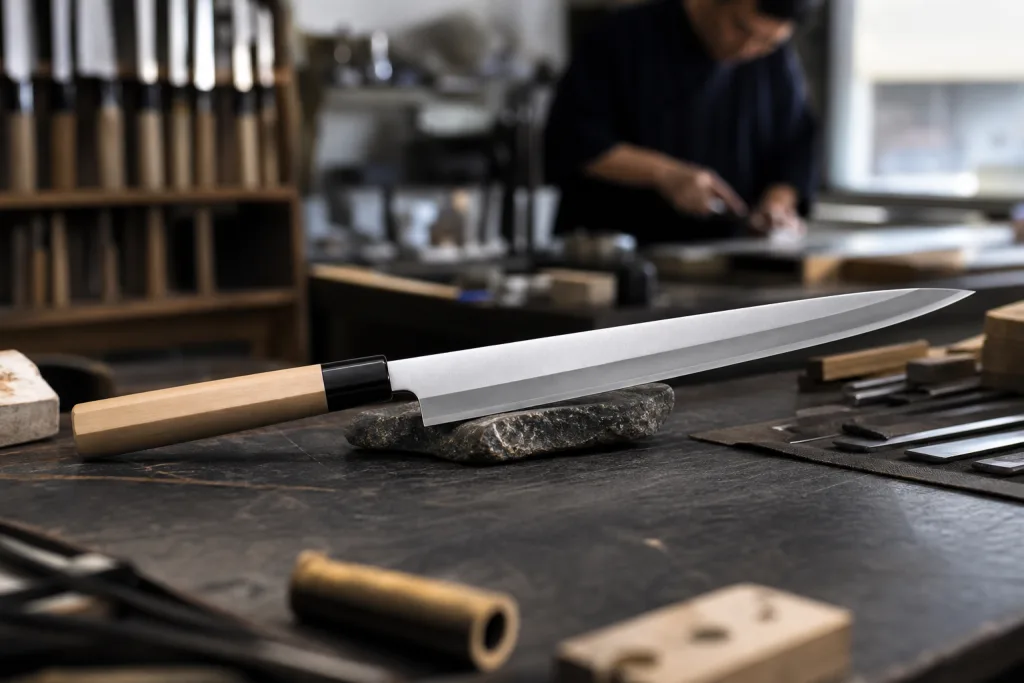
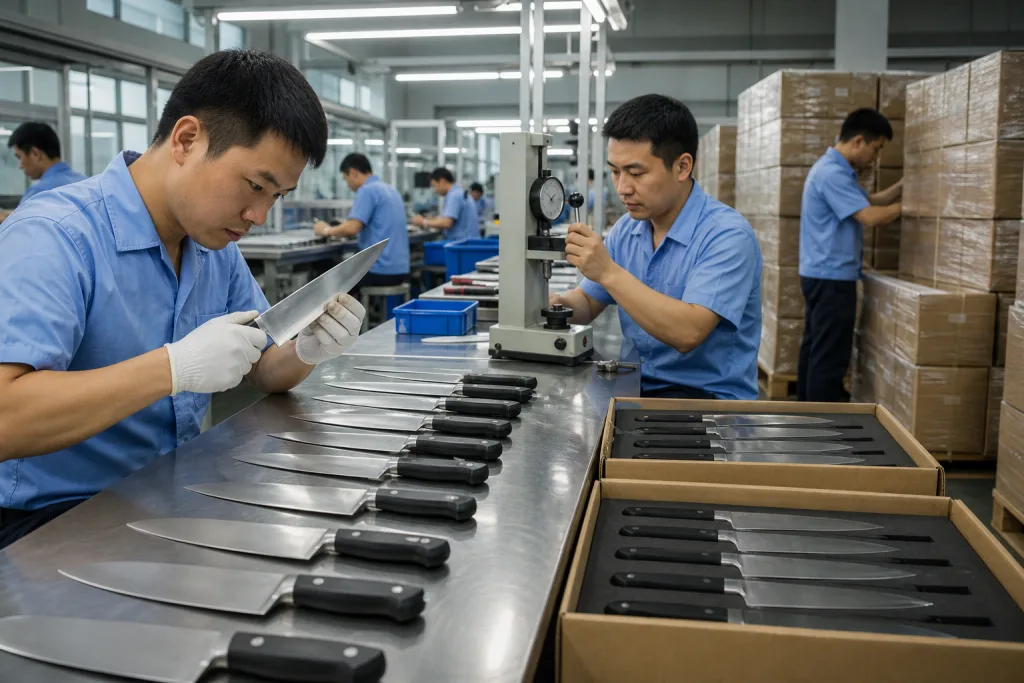
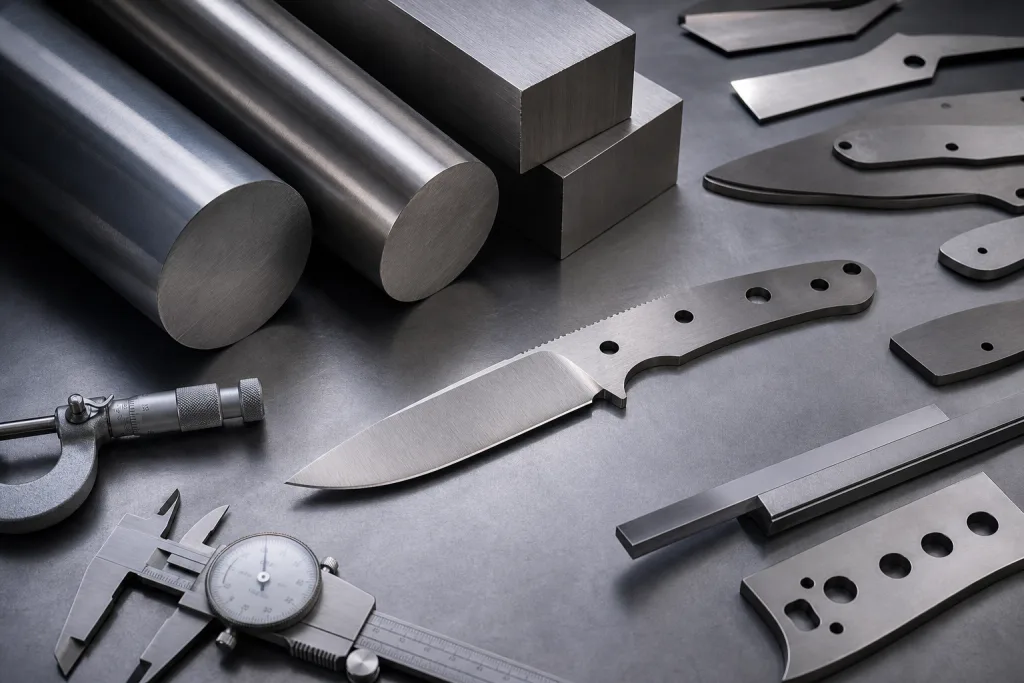
For retail nakiri programs, handle material is not just a color choice. It changes first grip, blade balance, wash resistance, carton weight, and whether the knife sells as a $19 entry SKU or a $69 gift item. We run the same 165 mm nakiri blade with PP, pakkawood, and G10 handles on the sample bench; after 6 minutes of handling, buyers usually comment on the grip before they ask the steel grade.
Restaurant supply distributors need a handle that survives repeat washing, meets REACH or LFGB expectations where required, and stays tight across a 500-piece or 2,000-piece wholesale run. At TANGFORGE in China, QC has pulled samples with 0.8 mm handle gaps after steam testing, and that small defect turns into return claims fast. We have seen this go sideways. Chasing the cheapest handle is the wrong question to ask; the math does not work if warpage, cracking, or weak shelf appeal kills the reorder. The grinding line checks tang fit in mm, and a 2 mm mismatch is enough for the buyer to flag it on the next PO.
Why handle material drives retail value
For a nakiri knife wholesale program, the handle is the fastest way to lift retail price without changing blade geometry. The nakiri profile is already familiar to serious home cooks and foodservice buyers: flat edge for push cuts, tall blade for vegetable prep. The handle decides what the customer thinks they are buying. A basic polypropylene handle reads back-of-house utility. A contoured pakkawood or linen Micarta handle reads giftable and countertop-ready, with better margin. Same blade, different story. On our grinding line, the same 165 mm blade blank can sit in 3 price bands after the fitter changes handle material and checks the bolster gap with a 0.2 mm feeler gauge.
From a sourcing point of view, handle material changes your risk profile. In Yangjiang, where knife assembly and finishing are concentrated, we can pair the same blade blank with different handles for restaurant supply, retail blister pack, or gift box channels. If you are building retail SKUs for restaurant supply distributors, we usually run one handle family for entry tier and one for mid-tier, then keep the premium line for accounts that can carry the shelf price. That keeps tooling simpler and helps a nakiri knife manufacturer hold color and fit across 20 or 50 cartons. We have seen this go sideways: one buyer mixed 4 handle colors in one PO, then flagged shade differences during carton inspection under the light box.
There is also the practical side: grip security in wet prep and dishwasher exposure. Packaging weight matters too. A 120 mm nakiri with a dense wood handle may feel elegant, but a lighter polymer handle can cut freight weight and reduce cracked handles during FOB China shipping. This is the wrong question to ask: “Which handle looks best?” Ask which handle survives your channel, your labor use, and your target price. QC pulled one sample last month where the wood scale lifted after a hot-water soak, while the polymer sample passed with no rivet movement after the caliper check.
Polypropylene and ABS for entry retail
Polypropylene and ABS are the usual handle picks for entry retail nakiri programs. They keep the FOB down and the injection cycle stays steady on repeat runs. Need a black handle, light texture, and a buyer watching every cent? We start here. On our Yangjiang injection line, the 160-ton machine runs fixed black masterbatch, so a 5,000 pcs order does not land in three shades of “black.”
For retail, the real win is day-to-day durability in home kitchens. Poly handles shrug off moisture better than untreated wood, and cleanup is simple. The look fits mass-market kitchen knife sets. Feel is the weak spot. QC pulled the sample last month, and the buyer flagged the handle as “too plastic” because the edge radius was only 0.6 mm; after we opened it to 1.2 mm, the grip felt less cheap. Small change. Big difference. If your target retail sits below USD 20, this is not a deal breaker. Asking only for the lowest handle price is the wrong question to ask.
- Best for: entry retail, promo bundles, grocery and warehouse channels where price matters more than handle story
- Typical MOQ: 1,000 pcs for color-matched private label, sometimes 500 pcs if using existing molds
- Common test focus: tight fit at the tang, odor after packing, dishwasher resistance, blade-handle gap inspection under AQL check
If you are buying a custom nakiri knife for a price-sensitive channel, ask your nakiri knife factory to quote plain black first, then a two-tone TPR overmold version. The overmold adds cost, but wet-hand grip is better, and return comments drop when the thumb area has texture. We ship both types. Expect roughly USD 0.30-0.90 per piece difference depending on mold complexity and order size; for one buyer, the math worked at 3,000 pcs but not at 1,000 pcs because the mold charge ate the margin.
Pakkawood and stabilized wood options
Pakkawood is a solid upscale handle choice for a nakiri knife manufacturer selling into retail. It gives the look of wood without the movement we see from raw timber. We check handle fit with a 0.02 mm caliper after final sanding, and raw wood is usually where small shoulder gaps show first. The buyer flagged one of those on a sample set last quarter. No one wants that photo. For imported knife programs, the handle has to survive 35°C port heat, container dwell, then a dry storeroom in Europe or North America. A good pakkawood handle cuts shrinkage complaints and still looks sharp under retail lighting.
Stabilized wood sits one step above pakkawood in price and appearance. Resin treatment improves moisture resistance and helps the handle hold shape after repeated use, so it fits gift retail and mid-premium Japanese-style kitchen lines. The cost is not only material. Sorting eats time. QC pulled a 200-piece pre-shipment sample last month and flagged 17 handles for uneven color bands, not loose assembly. That is the issue with natural-looking handles. Put grain direction on the PO, set an approved color range, and call out a sanding standard such as 400 grit before oil or clear coat. We run into this on the grinding line all the time; a clean blade does not save a poor handle tone.
If your channel includes restaurants, do not sell wood-based handles as maintenance-free. That is the wrong question to ask. Ask whether the end user hand washes the knife or drops it into a 70°C hot wash cycle with alkaline detergent. Even with a clean finish, pakkawood and stabilized wood take rough back-of-house use worse than molded polymers. We have seen this go sideways when the carton says “professional use” but the care card reads like a retail gift set. For retail, packaging and care cards matter. If you sell at FOB terms, make sure the shelf promise matches the usage guide, or misuse comes back as a product failure claim. One PO typo on “dishwasher safe” once cost a week of back-and-forth.
| Handle material | Approx. retail position | Typical added FOB cost | Channel fit |
|---|---|---|---|
| PP / ABS | Entry | USD 0.00-0.40 | Mass retail, promo |
| Pakkawood | Mid-premium | USD 0.40-1.20 | Gift, specialty retail |
| Stabilized wood | Premium | USD 0.70-1.80 | Retail, display sets |
G10, Micarta, and performance handles
G10 and Micarta fit a nakiri that needs a performance story, not a “wood-look but cheaper” story. We run these handles for buyers who want a hard grip and less swelling after 50-cycle wash testing. Outdoor channels ask for it. Pro-kitchen buyers ask for it too, though one buyer flagged our first black G10 sample as “too tactical” for a home kitchen set. Fair point. The look is less traditional than pakkawood, but the performance case is solid.
G10 is fiberglass laminate pressed with resin, so it stays hard, flat, and resistant to swelling. Micarta uses layered cloth or paper with resin; the hand feel is warmer, and the grain reads less cold in retail photos. Both can be CNC-machined with checkering, diagonal grooves, or a plain satin face, so a private label line can look different without paying for a new blade mold. Small details matter. On the grinding line, a 0.8 mm handle edge radius feels better than a sharp corner, and a clean bolster transition makes the knife feel above its parts cost.
These handles cost more than polypropylene, but the math works if the knife is sold by touch or by close-up photos. If the customer picks it up in-store, G10 or Micarta can close the sale. Online, the texture catches side light well and supports a higher price point. Specify sanding finish, edge radius, and logo method before sampling; QC pulled one batch where the laser logo looked shallow on coarse G10, while the same artwork looked clean on smooth wood. We’ve seen this go sideways. The buyer flagged a PO once with “standard handle finish” typed in, and that is not enough for a handle this visible.
Stainless steel and all-metal handles
All-metal handles are not our default pick for every nakiri, but they work for retail programs that want a clean shelf photo and hard wash durability. We run these mainly in 430 or 304 stainless handle builds, with brushed finish for tighter cost sheets and bead-blasted finish when the buyer wants a softer matte look. Simple sanitation story. A stainless handle is easy to explain for hotel and restaurant-supply channels: no wood swelling, no rivet gaps, fewer places for grease to sit. In 2024, 6 of our distributor projects used this style because the catalog photo looked rugged and the buyer wanted “no wood, no rivet gaps” written on the spec sheet. On the packing line, we still check the handle seam with a fingertip before the knife goes into the sleeve.
The downside shows up fast in the hand: weight and cold touch. Some all-metal handles make a nakiri feel rear-heavy, while thin hollow handles feel cheap if the wall thickness drops below about 0.8 mm. Balance decides it. If the balance point moves too far behind the heel, users feel it on the first onion cut. This is the wrong question to ask: “Can you make it look like the photo?” Ask for a drawing showing tang thickness, cavity layout with centerline, weld area length, and final balance target in mm from the blade heel. QC pulled one sample last year where the handle cavity was off-center by 1.5 mm, and the knife twisted in the grip during a wet-hand test. We run that check on every pre-shipment lot.
For retail, all-metal handles sell best as a modern kitchen item, not as a traditional Japanese story. They also need careful finishing. We check the finger transition with a cotton glove because burrs at the neck show up fast, even when the surface looks clean under normal light. If the knife is going into commercial kitchens, ask for salt-spray testing and inspect the seam where blade and handle meet under 10x magnification. We have seen this go sideways: one buyer flagged rust staining after 12 days in a dish-room trial because polishing compound stayed in a small seam, even though the handle itself was stainless. The math does not work if the finish step is rushed by 20 minutes.
How to choose by channel and price
Do not pick handle material first and hope the price lands later. Start with two numbers: target shelf price and channel margin. Then check how the customer will use the knife. A nakiri knife wholesale program for a club store needs a different build from a premium DTC kitchen line with photos shot on a walnut board. If your retail target is USD 14.99, premium handle finishing plus a magnetic gift box will blow the cost sheet. If your target is USD 49.99, the buyer will spot cheap rivets in 10 seconds. We saw this on a sample review last April: QC pulled the sample, measured a 0.4 mm gap at the bolster with a feeler gauge, and the buyer flagged it before asking about blade steel. Wrong question first. Handle choice follows the channel.
The table below is the sourcing shortcut we use at TANGFORGE in Yangjiang, China when we run nakiri quotes; our merchandiser usually checks it against the BOM sheet before sending the first PI. The 0.1 mm tolerance note on the handle join matters more than the glossy render:
| Channel | Recommended handle | Target FOB | Notes |
|---|---|---|---|
| Mass retail | PP / ABS | USD 3.80-6.50 | Simple card or color box, low return risk |
| Specialty retail | Pakkawood | USD 6.80-11.50 | Warmer shelf look, better for gift sets |
| Premium retail | Micarta / G10 | USD 9.50-15.80 | Solid hand feel, stronger wet grip |
| Institutional / sanitation-led | Stainless or polymer | USD 5.50-10.00 | Easy cleaning, clear hygiene message |
These numbers move with blade steel, grind, packing, and MOQ, but the tradeoff is real. A better handle can lift conversion; it also pushes the item into a retail price some channels reject. We've seen the math go sideways on a USD 19.99 program where the buyer wanted pakkawood, full-tang construction, and a printed sleeve with spot UV. It did not fit. On the grinding line, a 1.8 mm blade and a basic PP handle can pass the same cutting test as a prettier sample, but the shelf story is different. A good nakiri knife factory asks for target MSRP before quoting materials. If the buyer cannot give that number, the sourcing plan is already shaky.
Specs to lock before mass production
After you lock the handle material, freeze the production spec before the first bulk PO. A golden sample can pass on the desk and still fail on the grinding line if the tolerance never made it into the file. For a custom nakiri knife, we ask buyers to confirm handle length in mm, ferrule width, palm-swell thickness at the center point, gloss level against a signed sample board, and logo position measured from the handle butt. Put it in writing. Small gaps cost money. One missing 22 mm ferrule-width note once gave us 187 rejected handles in a 1,000-3,000 pcs run, and QC caught it with a 0.05 mm digital caliper only after the handles were fitted.
Here is the checklist we ask buyers to sign off before release; this is the wrong place to rely on memory or a WhatsApp photo from last month:
- Handle dimensions: length in mm, thickness tolerance, left-right symmetry checked with calipers, and max gap at ferrule joint after fitting
- Blade steel and hardness: for example, HRC 56-61 depending on steel grade, edge angle, and target retail use; we run the hardness check before final polishing
- Inspection standard: AQL 2.5 for major defects, AQL 4.0 for minor defects is common; QC pulled the sample if handle shrinkage shows at the ferrule
- Compliance: REACH for EU chemical concerns, LFGB or FDA where applicable to contact materials; ask for the test scope, not just the logo on a PDF
- Packing: sleeve, box with EPE insert, barcode/FNSKU position, and carton mark if the product goes to Amazon or similar platforms; one wrong FNSKU label can stop a full carton at warehouse check-in
Do not trust the handle label by itself. Ask the nakiri knife manufacturer for a material declaration plus color master approval, then require pre-production sample photos under normal factory light, not only studio light. We once had a buyer flag a PO typo: “walnet” instead of “walnut,” and that single letter delayed artwork approval by 2 days. If your brand sells in Europe and North America, packaging consistency is not a side issue. The math does not work if the box swells in a 40HQ, the logo fades after a tape test, or the grip feels different between carton 12 and carton 38; we have seen this go sideways during final random inspection.
Frequently asked questions
For most retail programs, pakkawood or G10 gives the best balance of margin, appearance, and durability. Pakkawood usually fits mid-premium kitchen lines, while G10 works better if you want a tougher, more technical look. If your target retail is under USD 20, polypropylene or ABS is safer. In China, especially in Yangjiang, you can often switch handle families without changing the core blade tooling, which helps keep MOQ around 500-1,000 pcs instead of starting a new platform.
Not as a rule. Even stabilized wood and pakkawood are more sensitive than molded polymer or stainless handles. Repeated dishwasher heat and detergent exposure can dull the finish, loosen adhesives, or create swelling over time. If your buyer base includes restaurant supply distributors, it is better to position wood-based handles as hand-wash only. For commercial use, I would steer you toward G10, Micarta, or high-grade polymer if you want fewer service issues.
For a new handle mold or new colorway, expect about 1,000 pcs MOQ in most Yangjiang, China factories, sometimes 500 pcs if the mold already exists. If the handle is a complex pakkawood shape or a premium multi-piece construction, the MOQ can move higher because of labor and yield loss. Lead time is usually 35-60 days after sample approval, not counting packaging changes or compliance testing.
Compare total landed cost, not just unit price. A handle that adds USD 0.60 FOB can become USD 1.10 after extra labor, heavier freight, and higher packing cost. Also factor in returns: if a cheaper handle creates a 2%-3% complaint rate from cracking or looseness, it is not cheaper anymore. Ask your nakiri knife supplier for a side-by-side quote with blade steel, handle, box, and test requirements separated line by line.
For Europe and North America, request material declarations, REACH-related statements, and if the handle or coating contacts food or is marketed with food-contact claims, ask about LFGB or FDA-relevant testing. If you are using private label in retail, also request carton marks, barcode verification, and inspection photos. A serious nakiri knife factory in China should be able to provide ISO 9001 process control, factory audit documents, and batch traceability without delay.
Choose the right handle, not the cheapest
Send your target retail price and channel, and we’ll match the nakiri handle material, MOQ, and finish that fits your market in China, Europe, or North America.
Request a Quote