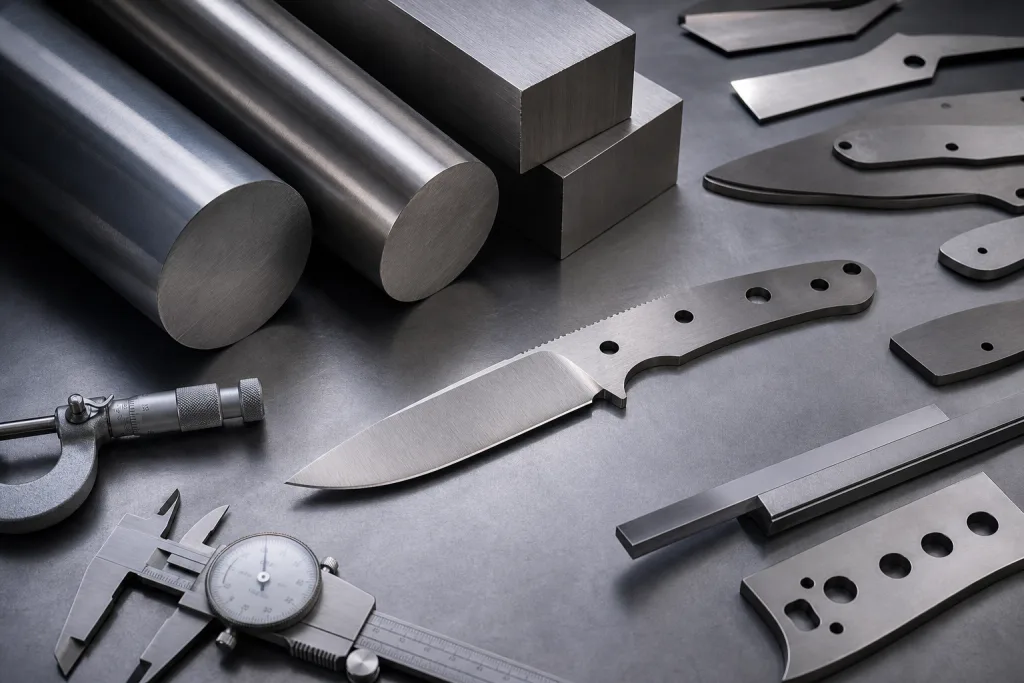
Selling into Switzerland is not a copy-paste EU file job. Swiss control is tighter on one-hand opening knives and automatic knives, and the cutoff is different from what some importers use for general EU catalog checks. On our packing table, we check each Swiss-bound SKU with 0.02 mm calipers, a lock test, and a blade-length gauge before the carton label is approved. One wrong spec can hold 600 pcs in finished-goods storage. If the catalog mixes pocket knives, tactical models, and gift sets, compliance has to be checked by item number, not by brand name.
We see the same mistake in Yangjiang and Zhejiang: the buyer asks for a “legal knife” and thinks that is enough. It isn't. We need blade length, lock type, opening method, target channel, and carton copy before the grinding line starts. A PO typo such as “manual open” instead of “one-hand open” can turn a clean sample into a rejected shipment; QC pulled one like this last year before sealing the outer cartons. If you are buying from a switzerland knife law compliance manufacturer, ask for measurement photos, mechanism close-ups, material declarations, and a packing spec that matches the Swiss sales channel.
What Switzerland actually cares about
Swiss knife compliance is a product-configuration check, not a branding discussion. Swiss customs and import partners do not care if the handle feels premium; they look at opening method, pocket concealability, blade size, lock behavior, and wording on the card. We have seen this go sideways. One German-market SKU was copied into a Swiss PO without a second review; QC pulled the sample, measured an 88 mm blade with a thumb stud, and the buyer flagged the carton copy before we booked the vessel.
The check is narrow: one-hand opening, automatic opening, blade length, lock behavior, and intended use. Big difference. A plain slip-joint folder with a 70 mm blade is not the same risk as a 95 mm liner-lock with a thumb stud and flipper tab. If the blister card says “tactical,” “self-defense,” or “spring-assisted,” the Swiss importer will ask for backup, even when the mechanism sits near the line. In Yangjiang, China, we split quotes into compliance families before pricing: casual EDC under 75 mm, outdoor utility, kitchen, and tactical-look items that need a hard stop. It saves 2 to 3 sample rounds later, and the grinding line does not waste a week making the wrong sample.
For switzerland knife law compliance sourcing, treat the legal screen like a pre-production spec. Ask for full open length, closed length, blade length measured from scale to tip, lock type, opening feature, and whether the knife opens one-handed without tools. We run this check beside the caliper record and sample photo sheet, before mass production starts. If the supplier answers “normal folding knife” instead of giving mm data and lock details, stop there. Wrong question, wrong file. The product is not ready for Switzerland; the math does not work.
One-hand opening is the first filter
One-hand opening is where 7 out of 10 Swiss compliance problems start in our RFQ checks. A knife can look plain on the sales sheet and still be treated as a one-hand opener if the thumb stud, thumb hole, flipper, front flipper, or blade cutout lets the blade clear the handle with one thumb. Simple bench test. Clamp the handle, push with the thumb pad, and watch the pivot. The legal wording will not save a weak design. If the blade opens in one motion while the other hand only holds the handle, the Swiss side checks the opening feature first, not the catalog copy or the buyer's clean 3D render.
As a switzerland knife law compliance manufacturer, we check the opening sequence during sampling on the bench and again on the grinding line. QC pulled the sample, we set the push-pull gauge, and we test after 50 open-close cycles, not just on a stiff first prototype spring. A 6–8 N detent force may work for controlled openers, while a lighter detent plus a taller thumb ramp can make the blade pop out too easily. If a buyer wants one SKU for the EU and Switzerland, we usually change the opener: remove the thumb stud, trim the flipper tab, or rework the nail nick so it gives about 0.8 mm less finger purchase. This is where buyers push back on cost. The math does not work any other way.
For your sourcing file, keep close-up photos of both sides, the pivot area, and the opening feature. Put the SKU code on every image. We ship those photos with the pre-production sample report because memory is useless six months later. If your Swiss distributor asks why one SKU was delisted and another stayed live, you want factory proof in the folder, not a guess from sales. We have seen this go sideways on a PO with one typo in the opener description, and the buyer flagged it 14 days before shipment while the cartons were already booked.
Automatic knives need stricter screening
Automatic knives need a separate screen. We mark them restricted unless the buyer sends written legal clearance for that exact sales channel, not a loose “OK for Europe” email. If the blade fires from a button, side switch, or spring-driven release, it does not belong in the same SKU family as a normal folding knife. Full stop. Do not hide automatic-looking samples inside a standard pocket knife program and expect the Swiss importer to clean it up later; we have seen this go sideways after QC pulled 1 pre-shipment sample from the AQL 2.5 table and the button action did not match the PO wording.
China-side buyers use “assisted” too loosely. Bad shortcut. Write the mechanism like an engineer would: thumb stud opens by hand only, flipper tab starts the blade then spring takes over, push button releases spring power, or gravity drop opens after wrist movement. A switzerland knife law compliance sourcing process should make the supplier state the opening action in plain language and send a clear 15-second video from the grinding line bench, with one close-up of the pivot screw and one close-up showing where the spring sits. For OEM work, ask for the actuation force in N, spring location, lock release method, and whether the blade deploys only after pressing a button; if 1 press makes the blade open under spring power, stop the listing and get a legal check before Switzerland sees it.
For 8 EU brands we worked with last year, the cleaner route was to remove automatic-style products from the Swiss assortment and run non-automatic folders for retail instead. The math does not work the other way. Cutting 3 risky SKUs before production beats holding a container for 12 days, reprinting Swiss packaging stickers, or explaining to a distributor why customs flagged the opening mechanism during inspection. We ship Swiss cartons with mechanism wording checked against the PO line by line, because one sticker typo like “auto assist” can create a problem nobody priced into the order.
Build the SKU for the channel
Swiss compliance is decided by the knife spec and the sales channel. A folder that passes a kitchen chain review can still get refused on a marketplace if the listing says concealed carry, self-defense, or fast deployment. We set the spec before sampling for each route: outdoor store, kitchen counter, or online page, and we check the wording against the blade drawing, carton mark, and listing draft. Last year the buyer flagged PO line 04 because the English artwork said “tactical rescue” while the product brief said “camping tool.” QC pulled the sample from the sealing table, and the carton label used the same words in 6 mm print. Small wording. Big headache.
We usually build three product profiles when a Switzerland order is sourced from China:
- Retail utility folder: nail nick or slow thumb stud, clean logo, no skull artwork, no combat wording, blade length printed on the spec sheet and inner box, with the opener checked by hand before the pre-production sample leaves the bench.
- Outdoor/EDC knife: camping-grade steel or a thicker spine for rope and food prep, opening force checked on the assembly bench, plain packaging copy, and no “defense” wording on the hang tag; the buyer may like the tougher look, but compliance teams read those words first.
- Restricted mechanism item: do not ship it to Switzerland until your counsel has signed off the sale route, buyer type, listing text, and import paperwork. We have seen one automatic-style sample held back over a 9-word listing title.
For example, a 2.8 mm blade thickness, 440C or 14C28N steel, and a 58–60 HRC target can work for a consumer folder. A 3.5 mm blade with deep jimping, black coating, and fast one-hand opening gets questions from the buyer’s compliance team fast. “Can we still sell it?” is the wrong question to ask. Check whether the invoice, web listing, blister card, and product photo all point to the same low-risk use. On our Zhejiang and Yangjiang production lines, we run changes such as lighter handle scale texture, softer detent, or revised packaging copy before mass production. A 20-minute check at the grinding line beats reworking 480 cartons after the vessel is booked.
If one model has to cover several regions, lock the legal spec before sampling. Changing the blade profile or opener after approval is where files go sideways; we have seen 12 sample days become 18 days because the buyer changed “manual opening” after the first golden sample, and the test report had to be reissued. The math doesn't work when the lab slot is booked, the laser marking fixture is set, and the PO still has the old opener description.
What to request from the factory
For a China-made knife order, ask for a document pack that proves the shipped SKU is the same knife as the golden sample on your desk. Swiss orders need more proof than our normal OEM folder; one buyer flagged a 3 mm blade-length mismatch after QC pulled the sample and checked it with a Mitutoyo digital caliper. Do not accept an email saying “legal for EU.” Wrong paper. Ask for files your Swiss distributor can give to customs, retail compliance, or the insurer without calling Yangjiang at midnight.
The minimum file set should include:
- General arrangement drawing showing blade length in mm, measured from tip to handle front, with the measurement line printed on the drawing
- Photos of open and closed positions from the same production sample, plus one halfway-open photo if the mechanism can be questioned
- Lock type and opening method written clearly, not hidden in a sales description
- Steel grade, hardness target, and heat-treatment range, such as 58–60 HRC, with the HRC test point marked if the buyer asks
- Packaging artwork, barcode, and country-of-origin mark, including carton side-mark wording exactly as printed
- Inspection standard, preferably AQL 2.5 for major/minor defects, tied to the final inspection report
Here is a simple sourcing table we run before quoting Swiss-facing SKUs:
| Check item | Target | Why it matters |
|---|---|---|
| Blade length | Under 120 mm for retail folders | Fewer questions from retail buyers |
| Opening method | No easy one-hand opener if avoidable | Cuts legal exposure |
| Mechanism | No automatic button/spring actuation | Keeps the SKU out of restricted category |
| Hardness | 58–60 HRC for utility folders | Good edge life without making service claims painful |
| Inspection | AQL 2.5 | Controls batch drift before shipment |
If you ask a Switzerland knife law compliance manufacturer for OEM work, send the legal target before the CAD file and handle color. We have seen this go sideways: the grinding line makes a clean sample, the PO says “outdoor tactical,” and nobody checks the opener tab until carton inspection. QC pulled the sample on day 18, not day 12. Too late.
Labeling and packaging are not cosmetic
Packaging can create compliance risk before anyone opens the box. We have seen a plain 85 mm folding knife get extra questions because the color box showed a combat stance and the insert said “rapid deployment.” Swiss buyers, distributors, and customs officers scan that wording fast. Fast enough. Your carton, insert card, and hangtag need the same control we give blade length on the Mitutoyo digital caliper, down to 0.1 mm. This is not decoration.
For Switzerland, keep the copy factual: blade steel, handle material, blade length, weight, country of origin, care instructions, and warranty terms. If you run multilingual packaging for EU and Swiss distribution, check the German, French, and Italian line by line, not only from a shared translation file. We run this check beside the artwork proof on the packing table, with the dieline printed at 100%. One wrong noun can change how the product feels. One buyer flagged “Einsatzmesser” on a German draft because it pushed a normal utility knife toward tactical positioning. Small word. Big problem.
We recommend a simple SKU code that matches the compliance file, especially when the same product ships through different channels. Use one code for the Swiss retail version and another for the broader EU version. The difference might be only the opener geometry or the label text, but it should show on the outer carton and packing list. QC pulled a sample last year where the PO said CH-214, the carton said EU-214, and the importer asked for photos of all 300 cartons. We lost 2 days just lining up carton photos instead of releasing the shipment. The math does not work. This is basic China sourcing discipline, not a clever legal trick.
Factory controls that protect your shipment
A clean spec can still fail if the grinding line drifts. Our 240-employee Yangjiang plant ships about 38,000 folding knives in a heavy month, but Switzerland-bound orders stay clean because the line leader checks parts at the bench. Not because we add headcount. Before mass production, we run the first-article sample through opener function, pivot torque with a 0.6 N·m torque screwdriver, blade centering, lockup, and carton artwork against the signed PDF. QC pulled the sample at 10:40 last Tuesday on one CH order and found the thumb stud opening too freely after polishing. Small miss. Big risk.
For a compliant run, freeze these control points before the first carton is taped:
- Incoming steel checked by heat number and supplier stamp, then matched to the batch card before cutting
- Hardness spot check after heat treatment, recorded per tray before the blades move to the grinding line
- Open/close cycle test, usually 200–300 cycles on sample units, with loose pivots rejected before packing
- Blade length audit with calipers to 0.1 mm, not a ruler borrowed from the packing table
- Packaging check against approved artwork, market wording, barcode position, and the CH item code on the inner box
If you buy from China under FOB or DDP, put the inspection standard in the PO. We usually recommend pre-shipment inspection at AQL 2.5 for majors and minors, with a separate compliance check for the opener and labeling. A generic “passed QC” note is the wrong thing to rely on. Last quarter the buyer flagged one PO where “Switzerland” was typed as “Swizterland” on the inner box file; that typo stopped 6,000 boxes from printing for 2 days. Across our Zhejiang and Yangjiang operations, 80% of preventable compliance issues come from label wording or opener geometry. Raw steel failure is rare.
Practical buyers ask for retained samples. Keep one sealed sample per SKU, marked with the approval date and “CH” for the market. We store ours in a clear bag with tamper tape on the QC shelf, next to the Mitutoyo caliper log, because six months later the approved sample beats a 27-email argument every time.
How to source for Switzerland without overcomplicating it
Switzerland knife law compliance sourcing works better when you split legal risk from product development on the first sample sheet. Start with the buyer's use case: pocket carry for office retail, hiking stock for outdoor shops, chef knives for kitchen channels, or boxed gift sets for Q4. Then lock the mechanism, blade length, and marking before we quote steel or handle material. On our side, QC writes the opening type on the sample card, down to "nail nick only" or "thumb stud," because that 3 mm detail can change the conversation with an importer. We had a buyer flag one typo on the PO last month, and that burned 5 days. Do this early. Sourcing gets simpler.
For most EU-selling brands, we quote a safer Swiss list first: a neutral folding knife with no automatic opening, controlled one-hand features, retail packaging without tactical wording, and a spec file the importer can keep for customs. If you need OEM work, such as custom liners, G10 handle scales, or a laser logo 18 mm from the pivot, that is fine. The wrong question is whether the knife looks "premium" enough. Ask whether the legal profile stays clean. We run handle material, blade finish, and scale color changes without changing the opening category. The grinding line can swap black G10 for green canvas in 20 minutes, and the opening class stays the same.
If the order is bigger, make separate SKUs for Switzerland and the broader EU market. It looks like extra admin, but the math does not work after one rejected pallet of 60 cartons. We have seen this go sideways when a buyer used the same PO line for two mechanisms, and QC pulled the pre-shipment sample only after the carton mark was printed. The better brands keep the Swiss SKU boring: fixed spec, archived photos, carton label matching the invoice. We ship cleaner that way. Fewer phone calls from customs. In knife business, boring is profitable.
Frequently asked questions
Sometimes, but you should not assume a standard yes. In practice, one-hand opening is the first feature that gets examined because it can change how the knife is classified and how it is viewed in retail and customs channels. A thumb stud, flipper, or large thumb hole can make a knife easy to deploy with one hand even if the blade is only 80–90 mm. For EU-selling brands, the safer approach is to request a non-one-hand configuration unless your legal adviser has checked the exact SKU and channel. We usually test the opener during sampling, because a product that looks mild on paper can still deploy too easily in the hand.
Do not rely on blade size alone. If the knife opens automatically by button, switch, or spring actuation, it deserves a separate legal review regardless of whether the blade is 65 mm or 95 mm. In sourcing terms, automatic means the opening force comes from the mechanism, not from the user pushing the blade out manually. That distinction matters in Switzerland and in your retailer’s compliance file. If you want to reduce risk, keep automatic knives out of the Swiss assortment and use a standard manual folder instead. A small blade does not cancel the mechanism issue.
Ask for the blade length in mm, the exact opening method, lock type, steel grade, hardness target, photos of open and closed positions, and packaging artwork. If the factory is serious, they should also give you a sample inspection record and a country-of-origin declaration. For your compliance file, add the SKU code, barcode, and the approved retail channel. We recommend a hardness band like 58–60 HRC for standard utility folders, because it is easy to document and stable in production. A manufacturer in Yangjiang or Zhejiang should be able to provide this without hesitation.
Use different SKU numbers, different carton labels, and ideally a different opener configuration or packaging insert. Even if the knife body is 90% the same, your records should show which version is for Switzerland and which is for the rest of the EU. This prevents mix-ups in warehousing and makes customs questions easier to answer. We often see brands use one base model but change only the thumb stud, flipper tab, or label copy for the Swiss version. That is a practical way to keep the product family efficient without blurring the legal line.
For most consumer knife orders, AQL 2.5 is a sensible baseline for major and minor defects, with a separate compliance check for opener behavior, blade length, logo placement, and packaging text. If the order is small or the market is sensitive, add 100% visual screening on the first 300 units of a new SKU. We also advise a retained master sample signed off by the buyer and the factory. That is especially useful for Switzerland-bound stock, because opener feel and packaging details can become the dispute point later, not the steel itself.
Need a Swiss-ready knife spec?
Send us your target channel, opening style, and blade length. We can review the SKU, refine the OEM spec, and build a compliance file from our Yangjiang and Zhejiang production lines.
Request a Quote