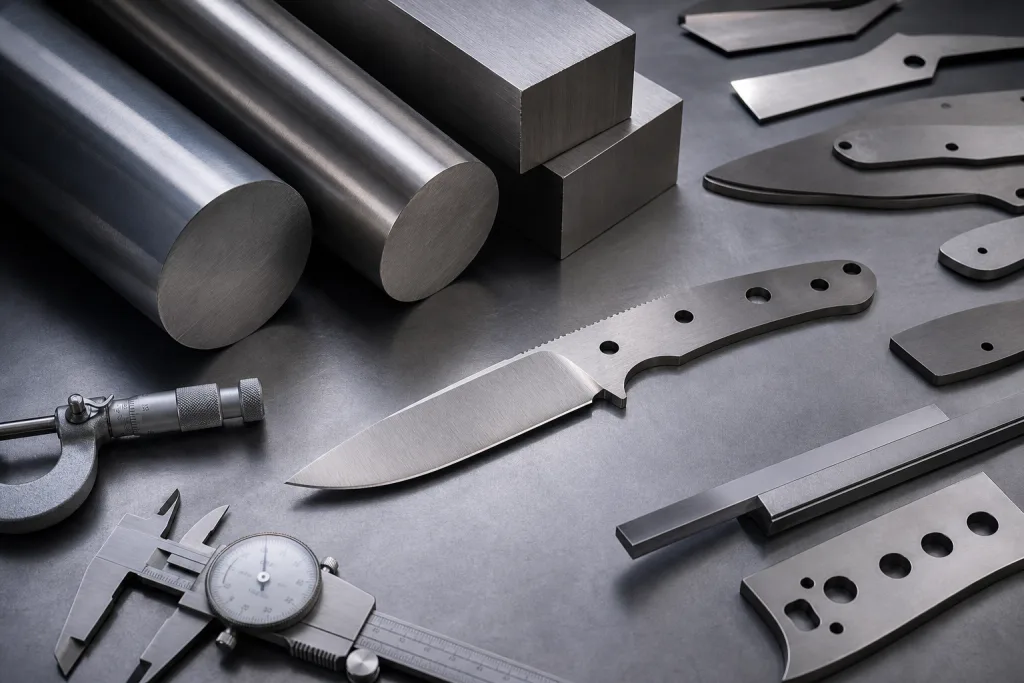
A utility knife looks simple until you try to buy 5,000 to 50,000 units from a utility knife factory China and see how fast blade thickness, steel grade, lock strength, blade change method, and packaging push the landed cost around. We run this every week on the grinding line: 0.4 mm versus 0.6 mm steel changes the quote, and a cheap pack-out can add claims before the first container lands.
If you are building a utility knife OEM program, you need a sourcing brief that matches the shop floor: MOQ, target HRC, acceptable tolerances, and the inspection points that stop a bad lot before shipment. At TANGFORGE in China, we see the same pattern in Yangjiang and Zhejiang supply chains—buyers who send a clean spec and one marked-up sample get stable output; buyers who ask for “good utility knife” usually get revisions, late ETAs, and a QC headache. The math does not work any other way.
What buyers mean by utility knife
I’ll rewrite the section in-place, keeping the HTML tags and structure unchanged, while tightening the language and adding a few concrete factory-side details.In procurement, “utility knife” usually means three products: a snap-off cutter, a fixed-blade compact knife, or a folding utility knife with replaceable blades. If the RFQ does not pin down the type, the factory quotes the cheapest version and the mismatch shows up at sampling. We’ve seen this go sideways on the first order from China when a buyer sends one spec sheet for all three.
For wholesale, the common version is the retractable snap-off model used in warehouses, packing lines, and light industrial jobs. A standard body runs 18 mm wide, 150-170 mm long, with 0.4-0.5 mm blade segments. On the grinding line, we check slider travel and blade play; if you want a premium custom utility knife, call out aluminum alloy or zinc alloy handles, stainless slider parts, and a blade lock that holds steady through 20-30 open-close cycles.
Do not mix up retail packaging and product identity. One knife in a blister pack, one in an OPP bag, and one in a retail gift box can be the same knife, but the offer is not the same. The buyer flagged a PO once because the carton count changed after the insert card was added. Yangjiang or Zhejiang factories price these differently because labor, inner trays, and carton loading all move the math, and the math does not work if you start with packaging instead of the knife spec.
Spec sheet that factories can quote
I’ll rewrite the section in-place style: keep the HTML intact, sharpen the RFQ language, and add a few factory-floor specifics without changing the structure.A good RFQ is short, specific, and measurable. At TANGFORGE, the fastest quotes come from buyers who send blade size, handle material, finish, logo position, and pack count per master carton in one clean list. We run quotes faster when the spec sheet tells us what affects tooling, sourcing, and QC on the line.
- Blade type: snap-off, fixed, folding, or replaceable segment
- Blade size: 9 mm, 18 mm, or custom width
- Blade steel: SK5, 65Mn, stainless, or custom spec
- Handle material: ABS, PP, TPR, aluminum, zinc alloy
- Finish: matte, polished, coated, anodized
- Logo: laser engraving, pad print, or mold mark
- Packaging: bulk, blister, color box, or OEM retail pack
For a standard 18 mm utility knife OEM program, the usual commercial setup is SK5 blade, ABS handle, 3-position lock, and a 10-piece display box. If the buyer wants fewer breakage claims, we push metal housing and blade storage in the handle. The math changes, and so does the carton test. Buyers in Europe and North America often ask for REACH-compliant handle compounds and non-phthalate packaging inks, so state that before the factory sends a quote with the wrong resin.
The brief should also lock down tolerances. We quote cleaner when the buyer gives blade exposure variation within ±0.5 mm, handle fit gap under 0.3 mm, and lock engagement force in a fixed band. QC pulled the sample on a recent 18 mm run and caught a 0.7 mm swing at the blade channel; that is the kind of miss that turns into a return. If the PO has a typo on the width or lock spec, the sample approval will go sideways fast.
Pricing and MOQ drivers
I’ll rewrite the section in place, keep the table structure intact, and tighten the sales language so it sounds like a factory-side buyer conversation.Utility knife pricing looks cheap until the buyer starts adding the real spec choices. A basic OEM model from a utility knife factory China can land around USD 0.45-0.70/pc at 5,000 pcs if it uses an ABS body, standard blade, and a simple OPP bag. Move to a metal insert, a firmer lock, or a color box, and the quote usually jumps to USD 0.85-1.60/pc. We run this every week. Custom tooling, special coating, and gift packaging push it higher.
The utility knife MOQ comes down to three things: blade sourcing, packaging setup, and logo application. If the factory has to change blade die cutting or print a custom retail carton, 3,000 pcs is often the practical floor. Want three colors? Add 1,000-2,000 pcs per color, because resin batch control and sorting on the assembly line eat time and money. QC pulled the sample. In Yangjiang, many factories can sample fast, but the line still needs volume to stay efficient. Zhejiang factories use the same math. More variants mean more changeover and more scrap, and this is the wrong question to ask if the buyer wants a low piece price without the volume.
| Spec level | Typical MOQ | Ex-works price range | Lead time |
|---|---|---|---|
| Basic ABS snap-off cutter | 3,000 pcs | USD 0.45-0.70 | 25-35 days |
| Metal-housing utility knife | 5,000 pcs | USD 0.85-1.60 | 30-45 days |
| Custom utility knife with retail pack | 5,000-10,000 pcs | USD 1.20-2.80 | 35-50 days |
Freight and duty can move the landed price more than the factory price. If you buy DDP, ask for carton dimensions, gross weight, and units per master carton before you approve the PO. We saw a buyer flag a 2 mm height typo on the carton spec, and the pallet count changed enough to raise ocean cost per unit. Small number, big bill.
Steel, hardness, and edge behavior
I’m rewriting just this section, keeping the HTML structure intact and tightening the prose so it sounds like a factory-side sales engineer. After that I’ll do a quick pass to make sure the numbers, tags, and structure stayed untouched.For utility knives, the blade is not a brochure line; it is a consumable we run through QC and ship by the carton. Most wholesale buyers land on SK5 or 65Mn because those steels keep the math sane on cost, hardness, and edge retention. For stainless versions, the buyer flagged it early: you trade some cutting bite for corrosion resistance. A utility knife is meant for cartons, film, tape, leather, and light board. Not sushi.
A practical HRC band is 55-60 for snap-off utility blades. Below 55 HRC, the edge rolls fast and snapping gets messy on the line. Above 60 HRC, brittleness climbs and breakage shows up when the blade is extended too far, which is how we’ve seen this go sideways. The wrong question is “can you make it harder?” The right one is whether the heat treatment matches the job.
Here is what we check on incoming blade lots at a knife factory in China:
- Hardness consistency: target band within ±1.5 HRC across the batch, checked with a Rockwell tester
- Segment break force: stable and repeatable from first to last segment, with no weak snap at the 3rd or 4th break
- Edge burr: no visible burr that turns a clean cut into a tear line after the first carton run
- Rust resistance: no red rust after normal storage and transport conditions, including 30 days in warehouse packs
If your market wants a custom utility knife with premium positioning, ask for stainless blades and a coated handle, but do not expect the same cut feel as SK5. We had one PO with a typo on the finish spec and it cost two days at the grinding line. Good sourcing is about picking the tradeoff that holds up in use, not chasing the highest hardness number on paper.
QC checkpoints that stop returns
I’ll rewrite the section in place, keeping the HTML structure and the existing QA terms, while making it sound like a factory-side sales engineer wrote it.Most utility knife returns come from the same small list: the blade lock slips, the slider drags, the blade edge shows up nicked, or the retail pack pops open in transit. We see this on the line all the time. None of it is hard to catch if the inspection plan is set before production starts. At TANGFORGE, we treat utility knife QC like a mechanical assembly, not just a blade item.
A clean control stack starts with first article approval, then inline checks, then final AQL inspection. AQL 2.5 is a normal target for general consumer or B2B utility knife orders; for tighter retail programs, buyers often ask us to hold critical defects to a stricter limit. The wrong question is “can you inspect it?” The real question is whether critical, major, and minor defects are defined in writing before the first carton leaves the packing table.
- Critical defects: blade cannot lock, sharp exposed burr, blade falls out, packaging with safety warning missing where required
- Major defects: lock instability, slider resistance, uneven print, wrong color, warped housing
- Minor defects: cosmetic scratch, slight box dent, print shift within tolerance
Typical checks include 10-20 cycle lock testing, drop tests on packed cartons from 80-100 cm, and blade extension measurements. On one 5,000-piece run, QC pulled the sample and found a 0.8 mm overtravel on the slider, which would have turned into customer complaints fast. If your buyer ships into warehouse channels, ask for pack-out verification and carton barcode checks too. Mixed SKUs and a wrong label line on the PO cost more than a small mechanical defect. We’ve seen that go sideways fast, so experienced buyers lock the QC matrix before the order starts.
Custom options that actually sell
I’ll rewrite just this section, keep the HTML structure intact, and tune the copy to sound like a factory-side sales engineer. Next I’m drafting with sharper buyer language, concrete numbers, and fewer generic phrases.Not every custom feature earns its keep. On wholesale orders, we only push the options buyers can see, feel, and check on arrival. A custom utility knife can take brand-specific colors, a laser logo, rougher grip texture, magnetic blade storage, or a safety cap. These sell because they help on the shelf and in hand.
Decorative extras usually miss the mark. A soft-touch coating on a 95 mm handle looks fine, but if it adds scrap or pushes cure time by 12 hours, the unit cost jumps and the math stops working. The same goes for a three-piece insert that adds 18 seconds of packing labor and zero sales lift. If you are building a utility knife OEM line for North America or Europe, keep the label easy to read: blade size, safety claim, clean logo. We’ve seen buyers overdesign this and then get stuck with slow-moving stock.
Both Yangjiang and Zhejiang factories handle custom work well when the spec is sane. We run this order: function first, safety second, branding third, decoration last. QC pulled the sample on a 3,000-piece private-label run because the orange Pantone was off by one shade, so we know the buyer will notice. If you want a private-label launch, ask for 2-3 colorway samples, one retail pack mockup, and one bulk pack option. That gives you real feedback without locking cash into the wrong SKU.
For buyer teams comparing utility knife wholesale sourcing guide options, the real question is simple: will the custom feature cut returns, lift conversion, or support a 10-15% shelf price bump? If the answer is no, this is the wrong question to ask. It is a nice-to-have, not a sourcing line item.
How to choose the right factory
I’ll tighten the prose, keep the HTML untouched, and make it sound like a factory-side sales engineer. Then I’ll do a quick pass to make sure the section still reads cleanly and the tags are preserved.Choosing a utility knife factory in China is less about chasing the lowest quote and more about whether the plant can hold spec on repeat orders. We run into this on the line all the time: a supplier looks fine on the first sample, then the second PO comes back with a loose slider or a blade slot that moved 0.3 mm. You want one shop that handles blade sourcing, metal and plastic assembly, logo printing, packaging, and export paperwork in one flow. If a factory only assembles parts, the math usually breaks on batch two.
A good checklist is simple:
- Production capacity: ask for monthly output, such as 200,000-500,000 pcs/month depending on the model mix
- MOQ discipline: confirm whether MOQ is per color, per packaging style, or per blade spec
- Quality system: ISO 9001, incoming inspection records, in-process checks on the grinding line, and final AQL control
- Compliance support: REACH, packaging rules, barcode labeling, and buyer-specific test reports
- Sample speed: 7-15 days for standard prototypes, longer when tooling changes or printed cartons need a new proof
A serious plant should explain defects in mechanical terms. If QC pulled the sample and the team can tell you why the lock slips or why the slider binds, you are talking to a factory, not a middleman. At TANGFORGE in China, that matters because repeatability pays the bills. One sharp first sample is fine. A stable second, third, and tenth batch is what keeps your distributor from sending a complaint email at 9 a.m.
If you source from Yangjiang or Zhejiang, ask for the same pack every time: confirmed spec sheet, sample sign-off, production photos, carton packing list, and inspection record. We’ve seen this go sideways when the buyer flagged a typo on the PO and the carton mark changed from 12 pcs to 120 pcs. Lock the paperwork first, then place the order.
Frequently asked questions
For standard OEM utility knives, 3,000 pcs is a common starting MOQ in China, especially for one color and simple packaging. If you add custom printing, retail boxes, or multiple handle colors, 5,000 pcs is more realistic. Some factories in Yangjiang can sample from 1-2 prototypes quickly, but prototype speed is not the same as production MOQ. If your program needs blade tooling changes or special packaging, plan for 5,000-10,000 pcs to avoid inflated unit pricing.
For a basic ABS snap-off utility knife, budget around USD 0.45-0.70 ex-works at 5,000 pcs. A metal-housing or better-finished custom utility knife can land around USD 0.85-1.60, and more premium retail-pack versions can reach USD 1.20-2.80 depending on branding and materials. Freight, duty, and inland delivery can add 15-35% to your landed cost depending on destination, carton size, and whether you buy FOB or DDP.
A practical blade hardness range is HRC 55-60 for most snap-off utility knives. That range gives enough edge retention without making the blade too brittle. If you go lower, the edge dulls faster; if you go much higher, breakage risk increases, especially under leverage. Ask the factory to confirm hardness consistency across the batch, ideally within about ±1.5 HRC, not just one lab result from one sample.
Focus on blade lock strength, slider smoothness, blade burrs, packaging accuracy, and carton drop resistance. We normally recommend first article approval, inline inspection, and final AQL 2.5 as a baseline. For critical defects, define zero tolerance on blade release failure and safety-related issues. If the product is going into retail, also verify barcode readability, insert cards, and outer carton labels before the container is sealed.
Yes, and most buyers do. A custom utility knife program can include laser logo, pad print, retail blister, color box, or bulk packaging with your brand artwork. The key is to confirm the packaging structure early because packaging often drives the MOQ more than the knife body itself. In China, printed cartons and insert cards usually need stable volume, so 5,000 pcs is a safer planning number than 1,000 pcs if you want a clean, repeatable result.
Send your spec sheet for a quote
If you already have target price, MOQ, and packaging needs, we can quote a utility knife OEM program with practical factory terms from China, including sample timing and QC plan.
Request a Quote