A wood handle chef knife private label spec is not just blade steel plus a logo. If the handle is wrong, the project gets expensive fast. We have seen cracks, 1-2 mm shrinkage gaps, color drift, loose rivets, dishwasher claims that fail in QC, and cartons picking up moisture after 35 days at sea. On the grinding line, one batch passed visual check and still opened a 0.8 mm gap after the climate test. This is the wrong question to ask if a buyer only talks branding.
At TANGFORGE in Yangjiang, China, we see good buyers lose a week because the first RFQ says only “8 inch chef knife, wooden handle, private label.” The math does not work. You need steel grade, HRC band, wood species, moisture target, logo method, packaging, AQL 2.5, and the wood handle chef knife MOQ before sampling starts. We have had a PO typo turn “beech” into “birch,” and QC pulled the sample the same day the buyer flagged the handle color against the Pantone note.
Start With The Knife Positioning
Before you ask any wood handle chef knife factory China supplier for price, fix the knife’s job in your line. A $9.80 FOB chef knife and a $28.00 FOB chef knife can both be listed as “8 inch wood handle chef knife,” but they are built on different routes. Not the same knife. The gap comes from blade steel, grinding minutes on the wet belt, handle blank sorting, bolster machining, mirror or satin polishing, gift box spec, and the reject pile QC pulls at final inspection.
For retail brands, start with the sales channel, not the steel grade. A volume kitchenware item normally runs 3Cr13, 5Cr15MoV, or X30Cr13 with Pakka wood or stabilized wood handles, often at 1,000 pcs MOQ per SKU. A mid-market giftable chef knife usually moves to X50CrMoV15, 1.4116, 7Cr17MoV, or 10Cr15CoMoV, with tighter edge grinding and cleaner handle fit. Premium private label programs may use VG10 core Damascus, 9Cr18MoV, or powder steel, but the math changes: 12 days for standard blade blanks can become 18 days once we add Damascus billet sorting, hand polishing, and 60-62 HRC hardness checks on the Rockwell tester.
The handle sets the buyer’s expectation fast. Natural walnut, olive wood, rosewood, ebony, maple burl, and oak all differ in color spread, density, oil content, and export paperwork sensitivity. We have seen this go sideways: the buyer approved a dark chocolate walnut photo, then flagged 37 pcs in pre-shipment because the bulk handles showed light sapwood. Put the acceptable color range into the specification, such as “no white sapwood over 3 mm wide on visible handle face,” instead of leaving it inside a mood board.
At our Yangjiang, China facility, a stable private label chef knife project usually starts with one reference sample, one target FOB price, one target retail channel, and one clear defect standard. That is the working set. If the PO only says “wood handle chef knife” and the logo file is named final-final-new.ai, the quotation is still a guess dressed as a price, and QC will end up arguing over scratches, handle shade, and blade balance after the grinding line has already run.
Core Specification Sheet Buyers Should Send
A wood handle chef knife private label spec should fit on two pages. Make it tight. We run quotes from the spec sheet, not from mood-board photos, so the factory needs enough detail to lock cost and repeat the same knife on the second shipment. If 6 or 7 points are left open, the grinding line will choose the lowest workable option to keep the FOB price alive. We have seen this go sideways when a buyer wrote “premium walnut handle” on the PO, then rejected the pre-shipment sample because the grain looked lighter than the showroom knife.
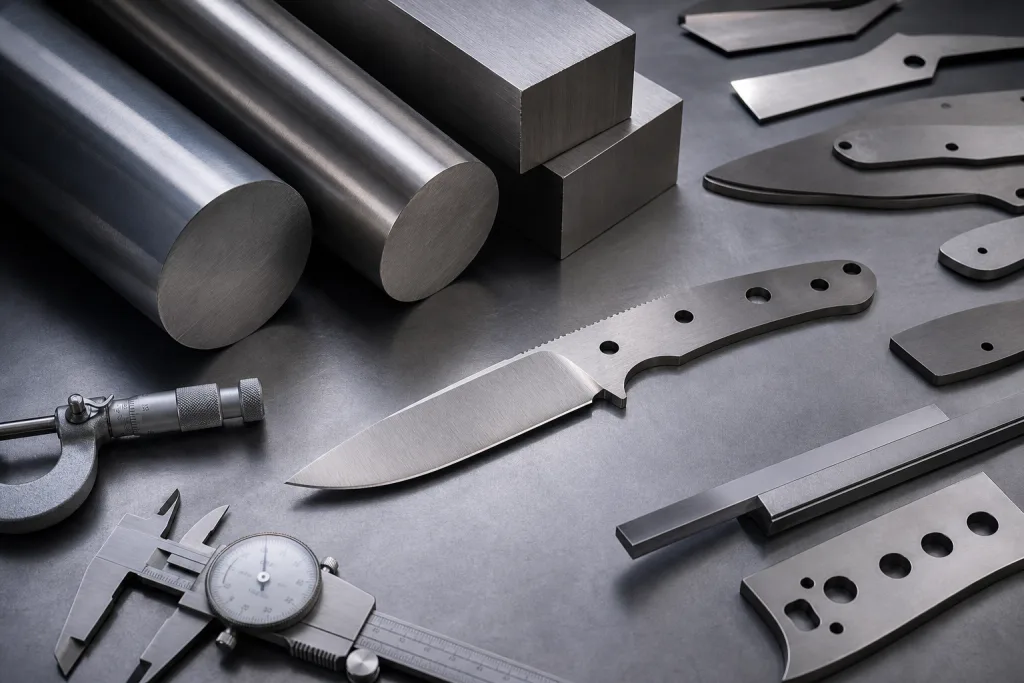
For the blade, specify total length, blade length, blade thickness at spine, blade height, steel grade, heat treatment target, edge angle, grind type, surface finish, and logo position. For an 8 inch chef knife, common dimensions are 330-345 mm total length, 200-210 mm blade length, 2.0-2.5 mm spine thickness, and 45-52 mm blade height. A Western chef knife usually uses a 15-18 degree per side edge; a harder Japanese-style gyuto may use 12-15 degrees per side, but only if the steel and target user support it. QC pulled one sample last month at 2.8 mm spine after polishing, and that 0.3 mm made the knife feel heavy in a 12-piece carton check.
For the handle, specify material, length, thickness, contour, tang type, rivet material, bolster or no bolster, moisture target, surface finish, and oil or wax treatment. For example: full tang walnut handle, 125 mm length, 18-22 mm thickness, three stainless rivets, sanded to 600 grit, mineral oil finish, moisture content 8-12 percent before assembly. Do not just write “wood handle.” That is the wrong question to ask. Ask whether the handle is stabilized, what sanding belt sequence we use, and whether the incoming wood meter reading is recorded before riveting.
Branding details matter. Laser logo on blade is the most stable and economical; we ship it often because the mark survives normal carton rub testing. Etched logos are darker but need process control, especially if the buyer wants a black mark near the heel where polishing compound can leave a grey halo. Handle logo options include laser engraving, metal badge, hot stamp on packaging, or sleeve printing, but pick one primary method and give the logo file as AI or PDF, not a 72 dpi JPG pulled from a website. For food-contact markets, also state REACH, LFGB, FDA, or California Prop 65 requirements before sampling, not after mass production.
MOQ And Price Drivers
MOQ for a wood handle chef knife is mostly decided by how far the buyer moves away from our running parts. If we run an existing blade blank, existing handle shape, standard carton, and private label laser marking, MOQ can start at 600 pcs per SKU; our laser room usually sets the logo jig in 0.15 mm tolerance before mass marking. If the order needs custom tooling, a new handle profile, custom gift box, color sleeve, barcode labels, and FNSKU application, 1,000-2,000 pcs per SKU is the cleaner target. Damascus or stabilized burl handles are different. QC pulled 37 rejected handle scales from one 500 pcs trial because the burl color split was too wide, so material sorting eats yield fast.
Here is the sourcing range we use on real wood handle chef knife OEM quotations. Not every design fits it, and this is the wrong question to ask if the drawing is still changing after sample approval. We use these numbers for budget screening before 2D drawings, blade thickness, HRC target, and packaging dieline are locked; one buyer once sent a PO with “walunt” instead of walnut, and purchasing still stopped the order until the handle material was confirmed.
| Specification Level | Typical MOQ | Indicative FOB China Price | Common Lead Time |
|---|---|---|---|
| Existing 5Cr15MoV blade, Pakka wood handle, laser logo | 600-1,000 pcs | USD 4.80-8.50 | 30-40 days |
| X50CrMoV15 full tang, walnut handle, retail box | 1,000 pcs | USD 8.50-15.00 | 40-50 days |
| 10Cr15CoMoV, custom handle contour, premium box | 1,000-1,500 pcs | USD 14.00-24.00 | 45-60 days |
| VG10 Damascus, stabilized wood, magnetic gift box | 500-1,000 pcs | USD 22.00-45.00 | 50-70 days |
Price jumps when the spec asks for thicker blade stock, full mirror polishing, hand-rounded choil and spine, or tight wood color grading. It jumps again with a custom stainless bolster, individual edge guards, magnetic boxes, and DDP shipping; the math doesn't work if a buyer wants all of that at entry 5Cr15MoV pricing. A custom wood handle chef knife also needs sample budget. Expect USD 80-250 per sample design for normal OEM development, with extra cost if the CNC handle fixture is new or the Damascus pattern has to match across 12 display samples.
Wood Handle Risks You Must Control
Wood sells because it gives a chef knife a warmer hand feel and a higher shelf price than molded plastic. Wood also gives us less room for mistakes. On the grinding line, QC has pulled handles where natural walnut scales moved after assembly and the tang sat proud by 0.2 mm. Natural wood expands and contracts with humidity. If the factory fits scales while moisture is high, the handle can shrink later and show proud tang edges, raised rivets, or hairline gaps. Too dry is no better. Ship that same knife into a wet summer market, and swelling or finish haze can show up before the second retail reorder.
The first control point is moisture content. For most kitchen knife handles, we target roughly 8-12 percent before assembly, checked with a pin moisture meter, not a thumb press from the handle room. The exact number depends on wood species and destination climate. The wrong question is “does the handle look dry?” Buyers sourcing from China to Europe or North America should ask where handle blanks are stored, how many days they acclimate after cutting, and whether each lot has a moisture record before riveting. We run this check before CNC shaping, because a nice polish cannot fix wet wood.
The second control point is sealing. Oil finish looks natural, but it needs honest consumer instructions printed on the insert card or back label. A knife with a natural walnut handle should not be advertised as dishwasher safe; we have seen buyers flag this exact claim during artwork approval. If your retail copy says dishwasher safe, use engineered Pakka wood, resin-stabilized wood, G10, or another stable handle material with a clear finish spec. Even then, be careful. Heat, detergent, and 60-minute wash cycles punish rivets and adhesives, and the edge also takes abuse in the basket.
The third control point is fit. Full tang wood handles should be checked for gaps over 0.15 mm, uneven rivet heads, sharp tang edges, and glue overflow under AQL 2.5 or your own tighter line standard. QC pulled the sample, not the sales team. A small cosmetic gap on day one can turn into a warranty claim after the customer washes the knife 20 times. For premium lines, add a simple soak test or thermal cycling test during pre-production validation. It costs less than replacing 500 cartons after distribution, and we have seen this go sideways when buyers skip it to save 2 days.
Steel, HRC And Edge Expectations
About 7 out of 10 buyers start with the handle because the project is a wood handle chef knife OEM line, but the blade decides whether the customer orders again. The steel grade and hardness must match the user, not just the catalog photo. A hard edge looks good on a sample sheet, then chips when casual home cooks twist through pumpkin or knock the edge on a ceramic plate. We have seen QC pull 3 samples from a 200 pcs pilot run after micro-chips showed under a 10x loupe.
For German-style chef knives, X50CrMoV15 or 1.4116 at 56-58 HRC is a safe mid-market specification. It gives solid corrosion resistance and easy sharpening, with enough toughness for daily kitchen use. For a sharper Asian-style chef knife, 9Cr18MoV or 10Cr15CoMoV at 58-60 HRC works when the grinding line holds the edge angle, for example 15° per side with blade thickness checked at 2.0 mm ±0.2 mm near the spine. For VG10 Damascus, many buyers request 60-62 HRC. Fair request, but the math does not work if the end user expects dishwasher cleaning and bone contact.
Do not write “high carbon stainless steel” as the full material description. That is the wrong question to ask, and it weakens your purchase order when the supplier quotes a cheaper grade. Write the steel grade, HRC range, blade thickness tolerance, and edge performance target. If you use CATRA testing, state the target TCC value or compare only against your own approved standard sample. If you do not run CATRA, require paper cutting plus tomato cutting, then add rope or cardboard spot checks during final inspection. We once had a PO typo listing “58-60 HRB”; the buyer flagged it after pre-production samples were already ground.
Surface finish changes buyer expectations fast. Satin finish hides hairline scratches better than mirror polish and stays more stable in bulk production, especially when we ship 1,000 pcs MOQ orders with mixed wood grain. Hammered finish and stonewash need signed limit samples. Black coating and Damascus etching need them too, because photos do not show texture depth, etch contrast, or the amount of variation the buyer will accept. We have seen this go sideways when one approved sample was 30% darker than the mass production lot.
Private Label Branding And Packaging
Private label work is where small details hold the container. We’ve had 3,000 pcs finished on the packing table, then QC pulled the sample because one EAN digit on the carton sticker did not match the PO. The blade was fine. The shipment still waited 4 days. Barcode, insert card claims, warning label, carton mark, and country-of-origin text belong in the spec sheet before we run mass production, not after the grinding line is done.
For blade branding, laser engraving is the normal choice because it gives clean repeat work at low cost. We run a 20W fiber laser for most blade logos, and a simple mark usually adds USD 0.05-0.20 per unit depending on logo size, fixture time, and batch quantity. Deep etching or two-side marking costs more and can add 2-3 days if the buyer changes artwork after approval. Handle logos need more care. Laser on walnut or olive wood shifts from light brown to dark burn marks because the grain density changes across a 120 mm handle. If the buyer wants the logo to match Pantone black, this is the wrong place to force it. Use a metal badge, printed box, or belly band instead.
Retail packaging can be a kraft box with EVA insert or a rigid magnetic gift box. For online sales, drop tests are not decoration. A 200 mm chef knife with a wood handle can punch through its own box if the tip guard is loose by 1-2 mm or the EVA slot is too soft. We’ve seen this go sideways on 1.2 m corner-drop tests. For Amazon-style fulfillment, specify FNSKU label position, suffocation warnings if polybags are used, carton weight under 15-18 kg where possible, and master carton drop-test rules before the carton factory cuts the first sample.
For Europe, confirm LFGB food-contact expectations, REACH substance controls, and packaging recycling marks. For the United States, confirm FDA food-contact logic, Prop 65 review where applicable, and country-of-origin marking. A wood handle chef knife factory China supplier can prepare the usual test reports and declaration files, but the factory needs the sales market before the quote is locked. If the destination changes from Germany to California after PI approval, the math does not work; labels, cartons, and sometimes test scope all move.
QC Plan Before Bulk Shipment
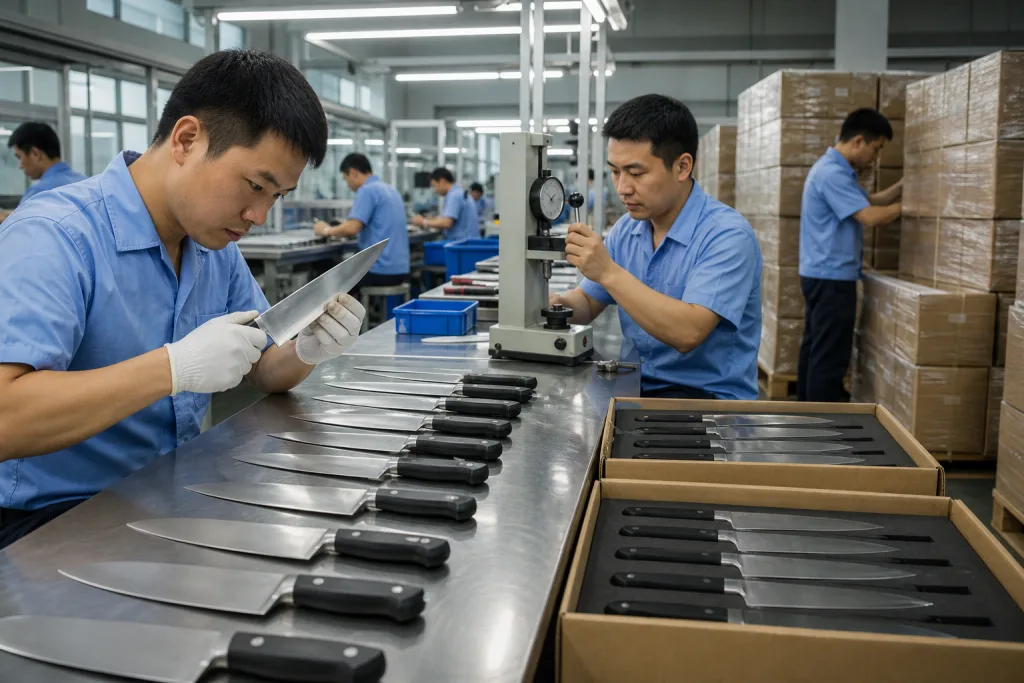
A workable QC plan has to fit on the inspector’s clipboard and still protect the brand on the shelf. For most private label chef knife orders, we run pre-production sample approval, in-line inspection at 20-30 percent completion, and final random inspection before balance payment. At TANGFORGE, our normal production capacity is about 180,000-220,000 knives per month across kitchen, outdoor, pocket, and Damascus lines, but wood handle chef knives never go through the grinding line as “set and forget” work. QC pulled 32 pcs from a recent walnut handle lot and found 3 handles sitting 0.4 mm proud at the bolster. Small gap, big complaint.
Use AQL 2.5 for major defects and AQL 4.0 for minor defects unless your buyer manual sets another level. Critical defects should be zero tolerance. No debate there. Critical defects include cracked blade, loose handle, exposed sharp burr on handle, broken tip, unsafe packaging, wrong steel, wrong logo, and serious rust before shipment. Major defects include blade warp beyond agreed tolerance, handle gap, uneven rivets, poor edge sharpness, wrong HRC, and carton marking errors. Minor defects include small polish inconsistency, slight wood color variation within the approved range, or tiny packaging scuffs. We have seen this go sideways when a PO says “rose wood” and the artwork file says “walnut”; the buyer flagged it only after 1,200 gift boxes were printed.
Your inspection checklist should cover blade length and total length with a 300 mm caliper, spine thickness, blade straightness, HRC spot check, edge sharpness, handle fit, rivet finish, logo position, packaging count, barcode scan, carton drop condition, and moisture condition of inner packing. If the order uses natural wood, keep signed limit samples for color, grain, knots, and acceptable filler. Do not rely only on the golden sample. Natural wood needs a range standard, because 8% moisture maple and 14% moisture maple will not behave the same after 18 days in a sea container.
The cleanest projects keep one approved sample with the buyer, one at the factory, and one sealed for QC. Three samples sounds basic, but it saves money when the repeat order starts six months later and the original merchandiser has already left. We write the SKU, logo version, handle material, and approved date on the sample tag with a paint marker; one missing digit on the PO can turn a 5Cr15MoV reorder into a 3Cr13 argument.
Frequently asked questions
For a standard wood handle chef knife with existing blade tooling, laser logo, and simple private label box, a realistic MOQ is usually 600-1,000 pcs per SKU. If you need a custom blade profile, custom wood handle shape, special rivets, printed retail box, FNSKU labels, or gift packaging, plan for 1,000-2,000 pcs per SKU. Damascus chef knives or stabilized burl wood handles can sometimes start at 500 pcs, but the unit price is higher and material sorting is stricter. Very small orders below 300 pcs are usually sample or trial orders, not stable OEM production.
There is no single best wood. Walnut is popular because it looks premium, machines well, and fits mid-market chef knives. Olive wood has strong grain but wider color variation. Rosewood and ebony feel dense, but sourcing and documentation need more attention. Pakka wood is not natural solid wood; it is engineered and more stable, which is useful for lower warranty risk. Stabilized wood is attractive for premium lines but costs more. For most importers, walnut or Pakka wood is the safest starting point, with moisture controlled around 8-12 percent before assembly.
We do not recommend calling a natural wood handle chef knife dishwasher safe. Heat, detergent, and long moisture exposure can cause shrinking, swelling, dull finish, raised rivets, or handle gaps. If your retail channel insists on dishwasher-safe wording, consider Pakka wood, resin-stabilized wood, G10, or molded composite instead of natural walnut or olive wood. Even then, test at least 10-20 cycles before approving the claim. For premium knives, the safer instruction is hand wash only, wipe dry immediately, and oil the handle occasionally.
For a general Western-style 8 inch chef knife, 56-58 HRC is a practical range for X50CrMoV15, 1.4116, or similar stainless steel. It balances corrosion resistance, toughness, and easy sharpening. For 9Cr18MoV or 10Cr15CoMoV, 58-60 HRC is common when you want better edge retention. VG10 Damascus is often specified at 60-62 HRC, but the edge should not be too thin for casual users. Always specify a range, not a single number, and confirm the factory can perform HRC spot checks during production.
The biggest claim risks are handle cracking, gaps between tang and scale, raised rivets, loose handles, rust spots, poor sharpness, and packaging damage during transit. Natural wood color variation also causes disputes if the buyer approved only one perfect sample. For final inspection, use AQL 2.5 for major defects and AQL 4.0 for minor defects, with zero tolerance for unsafe defects. Add checks for moisture condition, blade straightness, HRC, edge sharpness, barcode scan, carton marking, and tip protection. Signed limit samples are especially important for wood grain and color.
Send Your Chef Knife Spec For Review
Share your drawing, target FOB price, market, MOQ, and packaging plan. TANGFORGE can check the specification before sampling and flag cost or QC risks.
Request a Quote