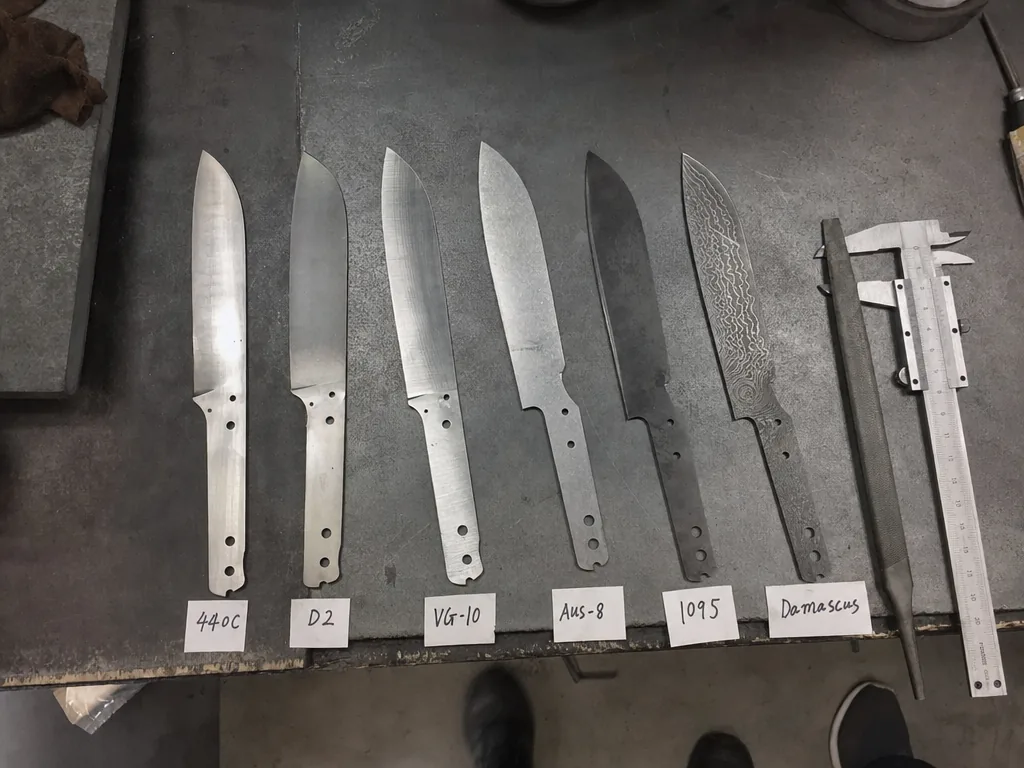
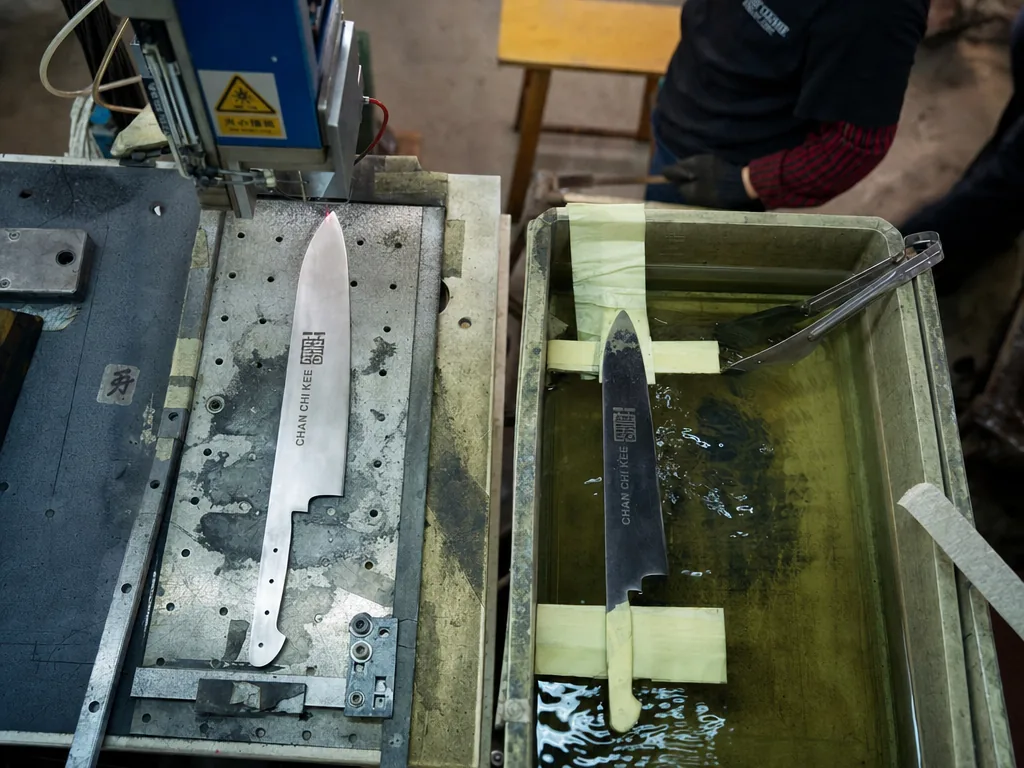
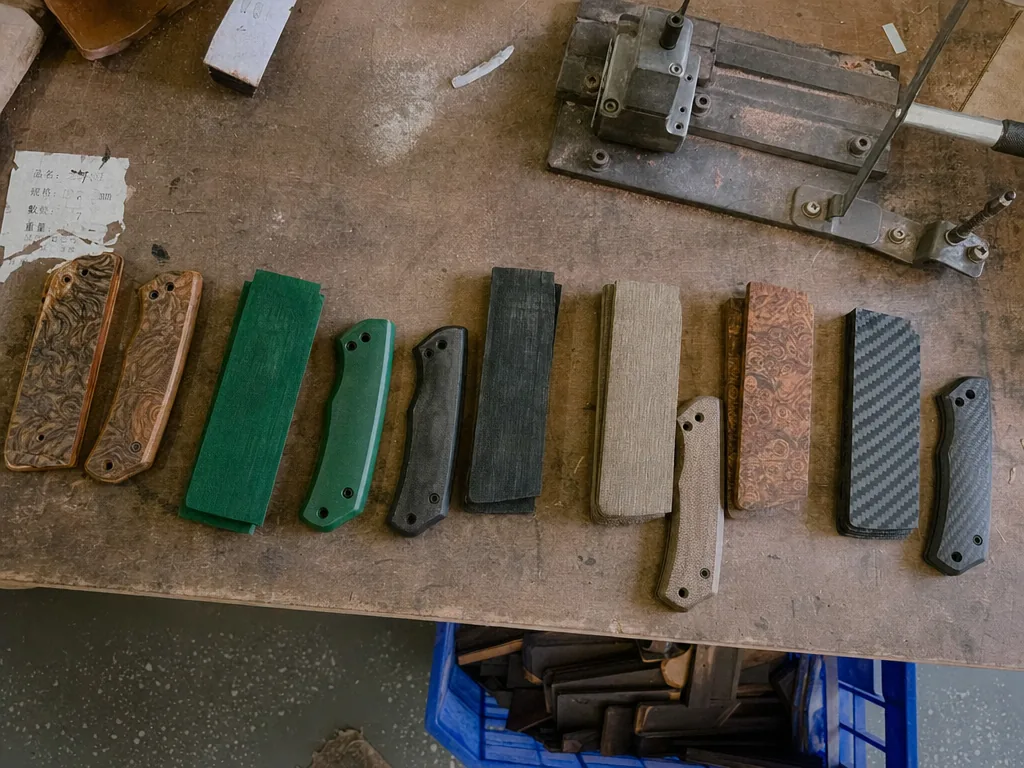
AQL knife inspection is the standard language buyers use to convert broad quality expectations into measurable pass/fail rules before goods leave the factory. For importers, Amazon sellers, and private-label knife brands, the issue is not whether to inspect, but how to set the sampling level, defect classification, and tolerance so the result matches commercial risk.
In knives, a weak AQL setup can pass a shipment with visible cosmetic defects, inconsistent edge finish, loose lock action, or packaging errors that trigger returns. A disciplined setup defines critical, major, and minor defects, applies a suitable sampling code by lot size, and ties the inspection to real product specifications such as blade hardness at 56-60 HRC, edge symmetry, handle gap tolerance in mm, carton drop resistance, and barcode accuracy. This article explains the numbers, the tradeoffs, and how procurement teams should use AQL in knife pre-shipment inspection.
What AQL knife inspection actually controls in production lots
AQL stands for Acceptable Quality Limit. In practice, it is a statistical sampling method used during knife quality inspection to decide whether a production lot should pass or fail based on the number and severity of defects found in a sample. It does not guarantee zero defects. It defines the maximum defect rate that is considered tolerable for a specific category of issue.
For knife importers, the method matters because knives combine appearance, function, and safety. A buyer may accept minor print misalignment on an inner box, but not burrs on a sharpened edge, excessive blade play, corrosion spots, or a liner lock that fails under normal hand pressure. An AQL plan turns those priorities into inspection criteria.
In most export programs, the factory or third-party inspector selects samples according to lot size and an agreed inspection level, often General Inspection Level II. The inspection then checks workmanship, dimensions, finish, assembly, function, labeling, and packaging against the approved golden sample and specification sheet. TANGFORGE documents this through its inspection process, where product standards, carton requirements, and functional checks are tied to the PO before shipment.
AQL should be used with, not instead of, process controls. Heat treatment records, incoming material verification, and in-line assembly checks reduce defect creation; AQL simply measures whether the finished lot is commercially acceptable.
How AQL 2.5 knives standards are set by defect class
Most knife buyers do not use one AQL number for every problem. They split defects into three classes:
- Critical defects: safety or legal failures. Typical tolerance is AQL 0, meaning any critical defect fails the lot.
- Major defects: function, saleability, or obvious workmanship issues likely to cause returns. A common setting is AQL 2.5.
- Minor defects: small appearance issues that do not affect use. A common setting is AQL 4.0.
This is why buyers often refer to AQL 2.5 knives as shorthand. In reality, 2.5 usually applies only to major defects, not to the whole inspection program. For knives, sensible defect coding is more important than the number itself.
Examples by class:
- Critical: cracked blade, exposed sharp burr on handle edge, lock failure on a folding knife, wrong steel declaration if regulated claims are printed, mold on packaging.
- Major: blade centering visibly off, scratch above agreed cosmetic limit, handle scale gap greater than 0.30 mm, logo missing, hardness below specified range, sheath retention failure, carton quantity mismatch.
- Minor: slight print shift on insert card, small polish haze not visible at 30 cm, tiny glue residue inside gift box.
Buyers should state these categories in the quality manual and PO attachment. If the inspector has to guess, disputes follow. Where the program includes retail compliance or marketplace sensitivity, ask the supplier for relevant certifications and test references, but remember that certification does not replace lot inspection.
Knife sampling plan: lot size, code letters, and acceptance numbers
A knife sampling plan usually follows ANSI/ASQ Z1.4 or ISO 2859-1 single sampling. The buyer first defines the lot size, then the inspection level, then the AQL for each defect class. General Level II is widely used for routine production. Tightened or reduced inspection may be used if supplier performance trends justify it, but many importers keep Level II as the default for consistency.
For example, a lot of 3,200 knives under General Level II typically maps to code letter L, with a sample size of 200 units in a standard single-sampling plan. If major defects are set at AQL 2.5, the acceptance and rejection numbers are commonly 10 and 11. If minor defects are set at AQL 4.0, the acceptance and rejection numbers are commonly 14 and 15. Critical defects remain zero tolerance.
| Lot size | Typical level | Code letter | Sample size | Major AQL 2.5 | Minor AQL 4.0 |
|---|---|---|---|---|---|
| 501-1,200 | General II | J | 80 | Ac 5 / Re 6 | Ac 7 / Re 8 |
| 1,201-3,200 | General II | K | 125 | Ac 7 / Re 8 | Ac 10 / Re 11 |
| 3,201-10,000 | General II | L | 200 | Ac 10 / Re 11 | Ac 14 / Re 15 |
| 10,001-35,000 | General II | M | 315 | Ac 14 / Re 15 | Ac 21 / Re 22 |
These numbers should be confirmed against the exact sampling table used by your inspection provider, because switching tables or inspection severity changes the result. The key point is commercial: the larger the sample, the more reliable the read on process stability, but the higher the inspection cost and handling time.
AQL knife inspection checkpoints that matter for blades, handles, and packaging
Knife buyers should avoid generic checklists. A robust AQL knife inspection program should reflect the actual product family: chef knives, folding knives, outdoor fixed blades, utility sets, or gift-boxed kitchen programs. The checkpoint list must cover appearance, dimensions, function, material claims, and packing accuracy.
Typical measurable checkpoints include:
- Blade geometry: overall length, blade length, thickness, grind symmetry, tip alignment, and edge bevel consistency.
- Hardness: usually verified by process records or spot testing. Common production ranges are 54-56 HRC for some value kitchen knives, 56-58 HRC for many stainless chef knives, and 58-60 HRC for higher-performance SKUs depending on steel and heat treatment.
- Surface finish: scratch limits, wash lines, black coating adhesion, stonewash consistency, and corrosion spotting.
- Assembly: rivet seating, handle scale flushness, gaps, epoxy overflow, spacer alignment, pivot tuning, lock engagement, and blade play.
- Function: opening and closing force, lock security, sheath fit, cutting test on paper or corrugate, and stability on a flat surface where applicable.
- Branding and packaging: logo position, barcode scan, suffocation warning text, carton marks, inner pack quantity, drop-test integrity, and moisture protection.
For custom projects developed through an OEM service, the approved golden sample should define what counts as acceptable variation. Without that baseline, inspectors tend to over-focus on obvious cosmetics and under-report functional inconsistency.
Knife pre-shipment inspection timing, lead times, and cost tradeoffs
Knife pre-shipment inspection is most effective when scheduled after at least 80 percent of goods are packed and 100 percent are produced. Earlier inspections can identify process issues, but they are not a substitute for the final AQL decision because packaging accuracy, assortment ratios, and carton marks are not fully visible until near completion.
Typical workflow for China exports:
- PO confirmed with specification sheet, defect list, and AQL standard.
- In-line check at 20-30 percent production if the product is new or technically sensitive.
- Final random inspection 3-7 days before ETD, after master cartons are available.
- Corrective action if the lot fails, followed by rework and re-inspection.
Lead times matter. For standard kitchen or folding knife orders, production often runs 25-45 days after deposit and artwork approval. Rework after a failed inspection can add 5-12 days, and replacement packaging may add another 3-7 days. If the shipment is under FOB terms, these delays can push booking and warehouse cutoff dates. Under DDP programs, the supplier may absorb more logistics coordination, but the inspection risk does not disappear.
Inspection pricing varies by location and scope. A one-day final random inspection in China often lands around USD 220-350 plus transport, while a more technical audit with hardness checks, drop tests, and expanded packaging verification can run higher. That cost is usually small compared with claim exposure from one failed Amazon launch or retailer chargeback.
When AQL knife inspection is not enough and process control must go deeper
AQL is a sampling tool, not a manufacturing system. It can miss low-frequency but high-impact issues, especially when the defect is intermittent or hidden. Knife programs with tight tolerances, premium finishes, or safety-sensitive mechanisms should add upstream controls instead of relying only on final random inspection.
Examples where deeper control is justified:
- Heat treatment variation: A sample may pass while another subset in the lot falls below target hardness. Ask for furnace records, hardness test logs, and traceability by batch.
- Coating adhesion or corrosion resistance: Visual checks are insufficient. Salt spray or cross-hatch adhesion testing may be needed by project stage.
- Locking mechanism consistency: Folding knives can show acceptable action in sample units while assembly torque drifts across production. In-line functional testing is better than final inspection alone.
- Assortment and packaging complexity: Gift sets with multiple SKUs, inserts, or multilingual labels need carton reconciliation and barcode verification at packing stage.
Experienced procurement teams often require first-article approval, pilot-run review, and controlled re-inspection loops for new SKUs. They also use supplier scorecards covering on-time delivery, defect ppm, claim rate, and corrective action closure time. AQL 2.5 is still useful, but it works best inside a larger supplier quality system grounded in ISO 9001 discipline, CAPA follow-up, and trend analysis over multiple orders.
How importers should write pass/fail criteria for AQL knife inspection
The most practical way to improve results is to write specifications the inspector can apply in minutes, not standards that require interpretation. A strong inspection appendix should include product photos, dimension points, defect images, test methods, AQL levels, and shipping marks. It should also state whether the inspector can open sealed inner cartons, perform destructive packaging tests, or conduct simple cut tests on production units.
Recommended baseline for many mid-market knife programs:
- Critical defects: AQL 0
- Major defects: AQL 2.5
- Minor defects: AQL 4.0
- Inspection level: General II
- Carton quantity tolerance: 0 unless explicitly approved
- Barcode readability: 100 percent of sampled retail packs
- Visible rust, cracks, lock failure, missing parts: classify as critical or major depending on safety impact
For premium chef knives or retailer programs with strict shelf standards, buyers may tighten major defects to AQL 1.5. For value-oriented promotional items, some buyers keep major at 2.5 but narrow the defect definition on customer-facing cosmetics. The decision should reflect channel risk. Amazon FBA and DTC brands usually need stricter packaging and labeling control because listing suspensions and return rates are costly.
The operational goal is simple: everyone should know before production starts what causes a fail. When that is clear, suppliers quote more accurately, inspectors report more consistently, and buyers spend less time arguing over borderline units.
Frequently asked questions
No. AQL 2.5 is commonly used for major defects, but not for every defect class. Critical defects on knives are usually zero tolerance, while minor defects may be set at AQL 4.0. Premium retail programs, high-value chef knives, or safety-sensitive folders may require tighter major limits such as AQL 1.5.
Typical automatic fail issues include cracked blades, lock failure on folding knives, dangerous burrs, severe rust, wrong branding or labeling with regulatory impact, and major carton quantity discrepancies. The exact rule should be written in the PO appendix, but any defect affecting safety, legal compliance, or basic function should be treated as critical.
It depends on lot size and sampling level. A lot around 3,200-10,000 units under General Level II often uses a sample size of 200 pieces. Smaller lots may use 80 or 125 units. The inspection company should state the code letter, sample size, and acceptance numbers in the report before inspection begins.
Yes. AQL is based on sampling, so it measures whether the lot is acceptable within a defined statistical tolerance. It does not certify every unit. That is why knife buyers should combine AQL with in-line process checks, approved samples, material verification, and corrective-action review for repeat issues.
Book it after full production is complete and most goods are packed, ideally 3-7 days before the vessel cutoff or air freight handover. If you inspect too early, packaging and assortment errors may be missed. If the lot fails, plan for 5-12 days of rework plus time for re-inspection and revised booking.
Get your project quoted
From a single SKU to a full product line, we can quote, sample and ship from our Zhejiang facility. Talk to a specialist who's worked on hundreds of buyer briefs.
Request a Quote