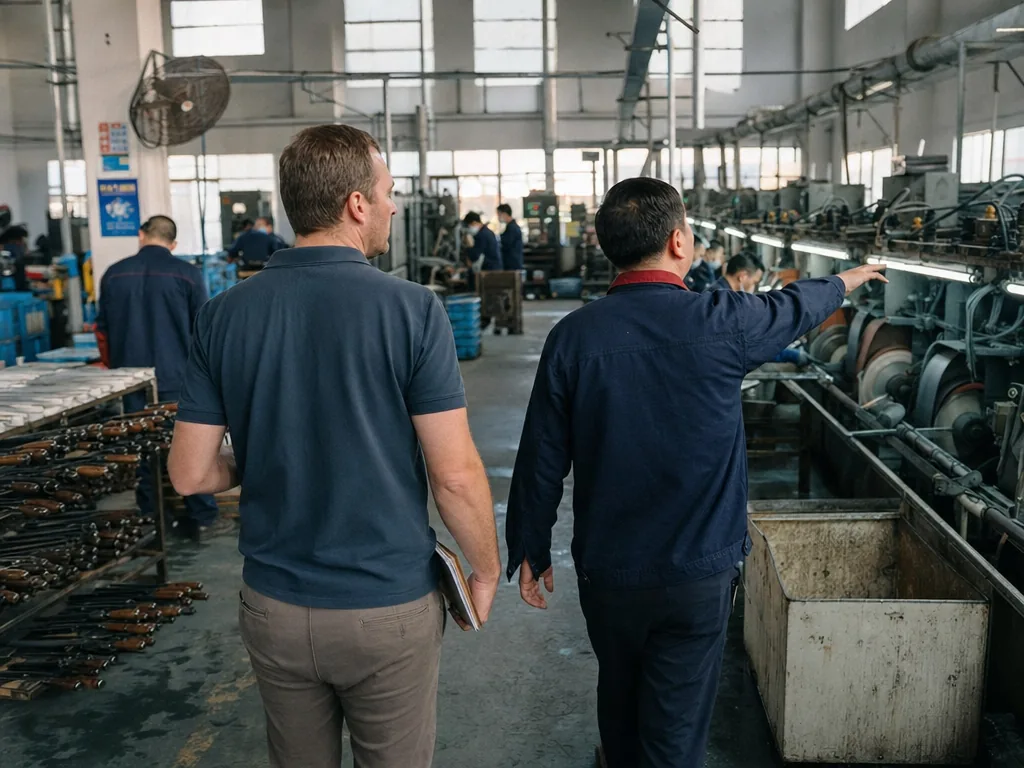
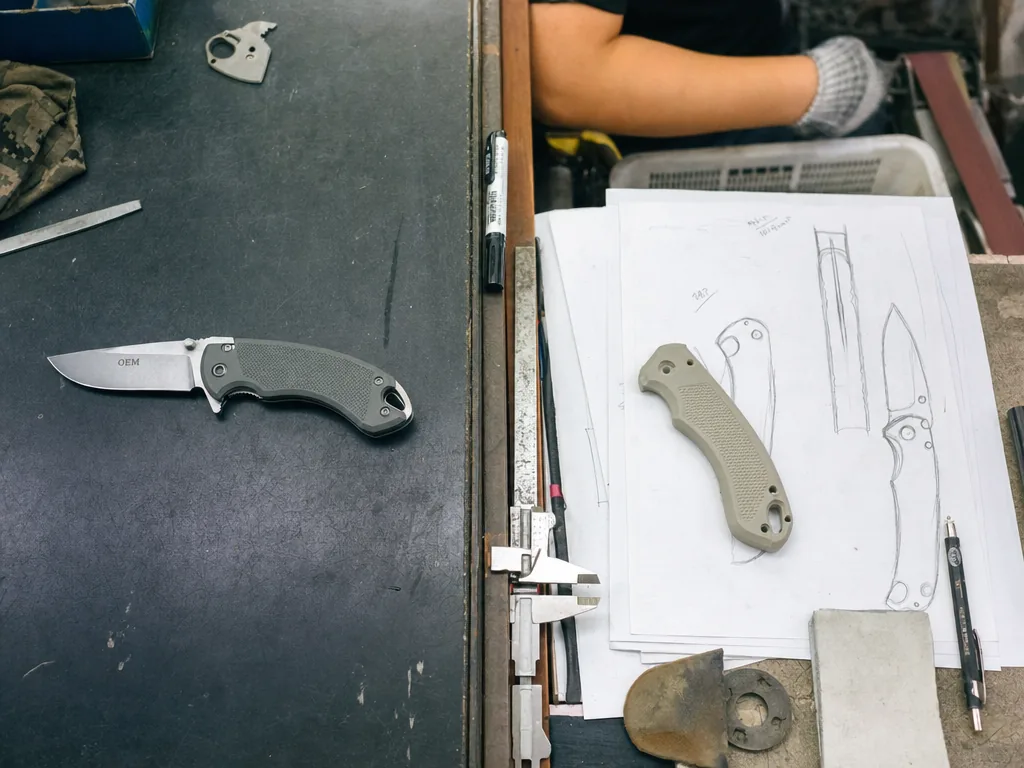
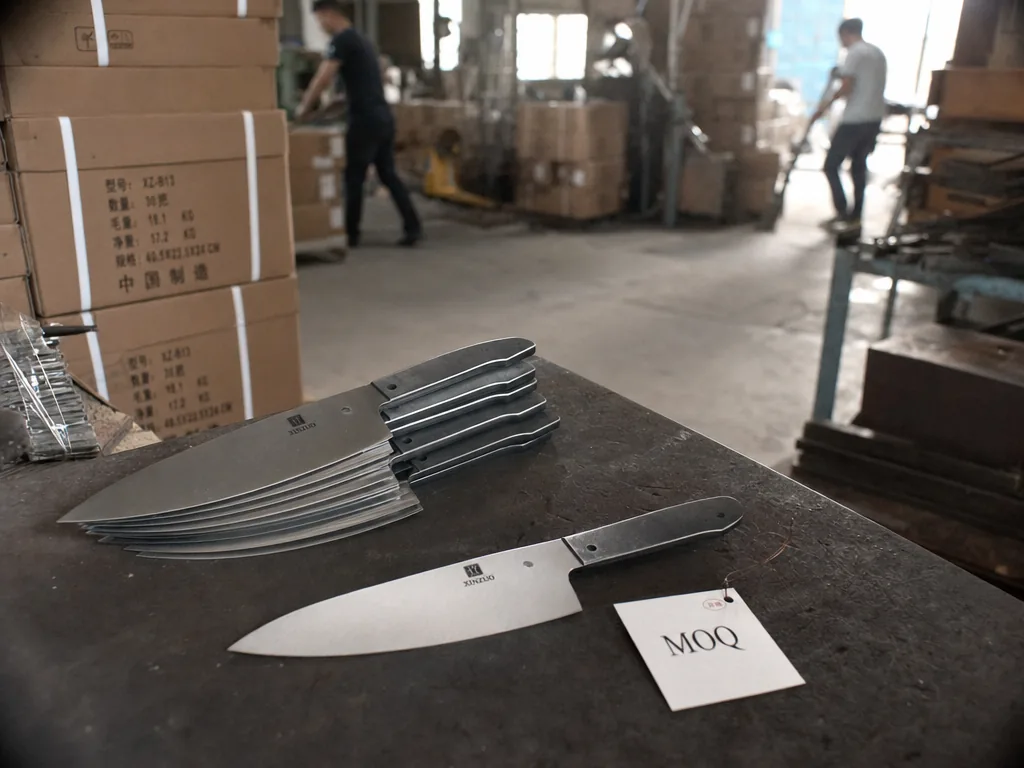
Knife import regulations directly affect whether a shipment clears customs, triggers extra inspection, or is refused at the border. For commercial buyers sourcing from China, the risk is rarely just duty cost. It is the mismatch between product design and destination-market rules: opening mechanism, lock type, blade geometry, packaging claims, origin marking, and paperwork consistency.
This guide is written for procurement teams, importers, and Amazon-focused brand owners buying folding knives, fixed blades, and multi-use products at scale. It covers the practical split between customs classification and downstream market legality in the EU and the US, including blade length restrictions, switchblade exposure, documentary controls, and factory-side steps that reduce detention risk. The goal is not generic legal advice. It is a buying framework you can use before tooling, sampling, and purchase order release.
Knife import regulations start with customs classification, not marketing
Most commercial problems begin when buyers treat a knife as a retail concept instead of a customs-defined product. Customs authorities classify the physical article, not the product page. A folding knife marketed as EDC, rescue, tactical, camping, or gift item may still face the same screening questions: fixed or folding, automatic or manual opening, assisted opening, locking or non-locking, blade material, blade length, and whether the article can be treated as a prohibited weapon in the destination market.
In practice, import review works on two layers. The first layer is tariff and customs compliance: correct HS/HTS/CN code, declared value, country of origin, importer of record details, and commercial invoice consistency. The second layer is admissibility under national law. A product can be correctly classified yet still be restricted for import or sale because of opening mechanism or local carry law. This is where many buyers fail, especially with folding products sold as pocket knives.
For sourcing teams, the minimum product data pack should include:
- Overall length and blade length in mm
- Blade thickness and edge type
- Opening method: nail nick, thumb stud, flipper, spring assist, button automatic
- Lock type: slip joint, liner lock, frame lock, lockback
- Steel grade and hardness target, typically 54-58 HRC for mass-market stainless folding knives
- Country of origin marking method
- Packaging text, warnings, and age-use claims
If any of these data points are unclear during quotation, customs risk is already elevated. Import compliance should begin before sample approval, not after cargo is on water.
EU knife import rules: customs entry is only one part of compliance
There is no single unified EU criminal law for knives, but there is a common customs environment combined with member-state weapon rules, consumer product obligations, and marketplace enforcement. For an EU knife import, buyers need to separate importation into the customs territory of the Union from the legal ability to distribute in Germany, France, Italy, Spain, the Netherlands, or the Nordics. A knife that clears customs under a CN code can still create retail or fulfillment problems in a specific member state.
At customs entry, standard controls include tariff classification, VAT handling, EORI registration, product description accuracy, and origin evidence where needed. For products shipped DDP, the importer should still verify who acts as importer of record and who retains compliance responsibility. Many Amazon and private label sellers assume the forwarder absorbs this risk. It usually does not.
At market level, several EU states apply practical restrictions tied to blade length, one-hand opening, locking mechanisms, concealed carry, or intent-based categories. There is no reliable shortcut based only on a single blade-length number. Buyers should review each destination state before committing to tooling. For example, a 90 mm manual folder with liner lock may be commercially acceptable in one market and more sensitive in another depending on carry and sale rules.
Factory-side mitigation is straightforward:
- Offer a non-assisted manual-opening variant
- Prepare an alternate slip-joint design for sensitive markets
- Keep blade length options modular, such as 70 mm, 85 mm, and 95 mm
- Maintain SKU-specific packaging by region
- Document buyer-approved specifications under an OEM service workflow
For customs and marketplace resilience, EU buyers should avoid assuming that one CE-like document solves knife compliance. Knives are generally not CE products by default; the controlling issue is legal design and safe market placement.
US knife import law focuses heavily on mechanism and federal admissibility
US knife import law is shaped by customs entry rules and by federal restrictions that are especially sensitive to automatic knives and related mechanisms. For most standard fixed-blade and manual-opening folding knives, admissibility is manageable when product descriptions are accurate and invoices match the goods. Problems escalate when the product could be characterized as a switchblade, ballistic knife, disguised knife, or another restricted article.
At federal level, buyers should pay attention to the Switchblade Knife Act framework and how Customs and Border Protection evaluates opening mechanism and construction. A knife described casually by a supplier as spring-assisted or auto-open can be enough to trigger deeper review if the physical sample supports that reading. Procurement teams should require written mechanism confirmation from the factory and verify it during pre-shipment inspection.
US state laws then add a separate layer. State restrictions can involve automatic opening, concealed carry, age, school-zone issues, and practical blade length thresholds. Customs may release a product that later becomes a sell-through problem on Amazon or in retail due to state-level restrictions. This matters if inventory is fulfilled across multiple states.
Buyers should also control importer documentation carefully:
- Commercial invoice with precise knife type and materials
- Packing list aligned to SKU count and carton marks
- Country of origin permanently marked where required
- HTS classification reviewed by broker before booking
- Product photos and opening-mechanism video held on file
For first orders or mechanism-sensitive designs, asking the factory to ship a golden sample by courier before mass production is a low-cost control. If you need product-specific guidance from the manufacturer side, use the request quote channel early, before PO issuance.
Knife customs regulations: documents, HTS/CN codes, and inspection triggers
Knife customs regulations are enforced through paperwork consistency and physical inspection. Customs officers do not need a large discrepancy to stop cargo. Common triggers include vague descriptions such as “tools” or “outdoor goods,” mismatched SKU photos, value declarations that do not align with steel grade and packaging level, and missing origin marking. A 5,000-piece order declared with consumer-gift language and no clear mechanism description is more likely to be examined than a technically detailed invoice.
Buyers should treat classification as a broker-reviewed task, not a factory guess. While many knives fall under broad headings for cutlery or knives with cutting blades, the admissibility risk comes from the exact article. A button-deployed folder, assisted opener, kitchen paring knife, and fixed outdoor knife may have very different risk profiles even if they are all casually called knives.
| Control area | EU practice | US practice | Buyer action |
|---|---|---|---|
| Tariff classification | CN/TARIC based entry | HTSUS based entry | Pre-clear with broker using drawings and photos |
| Origin marking | Required for customs accuracy; retail rules vary | Country of origin marking is scrutinized | Use permanent blade, handle, or packaging marking as advised |
| Mechanism sensitivity | Depends on member-state law after import | High sensitivity for switchblade-type products | Confirm manual vs assisted vs automatic in writing |
| Inspection triggers | Undervaluation, vague invoice, inconsistent SKU data | Admissibility concern, origin issues, vague descriptions | Keep invoice, carton marks, photos, and sample synchronized |
| Incoterms impact | FOB common; DDP needs role clarity | FOB common; DDP still does not transfer all legal risk | Define importer of record and compliance owner contractually |
For higher-risk first orders, add a pre-shipment inspection using AQL 2.5 for major defects and AQL 4.0 for minor defects, with a specific checkpoint for opening mechanism and blade length measurement. This does not replace legal review, but it reduces customs surprises caused by production drift.
Knife blade length restrictions and design choices that reduce risk
Knife blade length restrictions are often oversimplified by buyers looking for a universal safe number. There is none. Length matters, but so do opening method, lock type, intended use, and national or state-level carry rules. For import planning, blade length should be treated as a configurable risk variable rather than a fixed brand identity decision.
From a manufacturing perspective, small dimensional changes are usually cheaper than late-stage relabeling or unsellable stock. On common OEM folding knife platforms, changing from a 95 mm blade to an 85 mm blade may require revised CAD, stop-pin adjustment, packaging update, and sample confirmation, but not a full tooling reset if the handle family remains stable. On fixed blades, however, shortening the blade often affects sheath retention, carton dimensions, and declared use case.
Commercially, the safest mainstream configurations for broad-market sale are usually:
- Manual opening rather than automatic
- Clear non-disguised utility or outdoor form factor
- Blade lengths below the most sensitive market thresholds where feasible
- Non-aggressive packaging claims
- Stainless steel in the 54-57 HRC range for cost-stable mass production
Typical OEM cost effects are manageable. A standard stainless manual folder in 3Cr13 or 5Cr15Mov can land around USD 1.80-4.50 ex-factory at 1,000-3,000 pcs depending on handle material and packaging, while a premium 8Cr13MoV or D2 model may rise to USD 4.50-12.00. The expensive mistake is not the shorter blade. It is buying 3,000 units of a mechanism or size that a marketplace or jurisdiction later flags.
How buyers should manage knife import regulations in sourcing and QA
Compliance discipline should be built into the sourcing calendar. For most custom knife projects, a realistic timeline is 7-14 days for sample revision, 20-35 days for production after deposit, and 15-40 days for ocean transit depending on lane and Incoterms. Import review has to sit inside that timeline, not after it. If a broker or legal review questions opening mechanism after production starts, the schedule impact is immediate.
A practical buyer workflow looks like this:
- Define target markets by country and channel, including Amazon FBA if applicable.
- Freeze mechanism, blade length, and lock type before final sampling.
- Have broker or counsel review the technical data pack and proposed classification.
- Approve labeling, origin marking, and packaging claims.
- Book pre-shipment inspection with legal-risk checkpoints, not only cosmetic QC.
- Keep shipment file with invoice, packing list, photos, inspection report, and sample references.
QA should measure what customs may care about. That means actual blade length in mm, opening force consistency, lock engagement, sharp-point geometry if relevant, and whether the production unit matches the declared mechanism. A product sold as manual opening should not show hidden spring behavior in inspection videos.
On supplier selection, ask direct questions: What is the MOQ for a compliant variant, can the factory maintain separate region SKUs, and can it hold revision control on mechanism parts. Serious factories can usually support 500-1,000 pcs for standard configurations and higher MOQs for custom molds, coatings, or complex handle tooling. The right supplier is not just a low FOB price. It is the ability to manufacture to a legally stable specification.
When to use FOB, DDP, and specialist review for EU and US knife import
Incoterms affect operational convenience, but they do not remove product-law risk. FOB remains the cleaner structure for experienced importers because the buyer controls the broker, importer of record, and destination compliance review. DDP can be efficient for smaller Amazon sellers, yet it often obscures who classified the goods, who made admissibility assumptions, and who will respond if customs asks technical questions.
For EU and US knife import programs, a sensible rule is this: use FOB for repeatable SKUs and destination markets you understand; use DDP only when the importer role and compliance liability are explicitly documented. If the forwarder or seller cannot explain the declared description, tariff logic, and origin-marking treatment, DDP is not reducing risk. It is hiding it.
Specialist review is worth the cost in three cases:
- Automatic, assisted-opening, or button-deployed products
- Borderline blade lengths or designs intended for multiple jurisdictions
- High-volume launches where a detention would disrupt Amazon inventory or retail delivery windows
Typical external review cost is modest relative to inventory exposure. Even USD 300-1,500 for broker pre-classification support or jurisdictional legal review is small against a 2,000-piece order value, detention storage, relabeling, or return freight. For branded programs, the better model is to settle the compliance architecture once, then duplicate it across future SKUs with controlled changes. That is how knife import regulations become a sourcing parameter rather than a recurring emergency.
Frequently asked questions
Yes. Customs clearance mainly addresses classification, valuation, origin, and admissibility at the border. Separate national or state rules may still restrict sale, possession, carry, or marketplace listing. This is common in the EU, where a knife may enter the customs territory but face member-state restrictions tied to opening method, lock type, or intended use.
There is no universal safe length. Buyers should evaluate each destination market and sales channel. As a sourcing strategy, many importers reduce risk by offering regional variants around 70 mm, 85 mm, or 95 mm and pairing blade-length control with manual opening instead of automatic mechanisms. Length alone does not determine legality.
Not always. The legal and customs treatment depends on construction and how the mechanism operates in practice. If a knife can be characterized as switchblade-like, it may face heightened review. Buyers should not rely on casual factory descriptions. Obtain written mechanism specifications, review sample videos, and confirm admissibility with a broker before production.
At minimum: commercial invoice, packing list, importer details, broker instructions, accurate SKU descriptions, and country-of-origin marking information. For higher-risk products, keep blade-length drawings, opening-mechanism confirmation, photos, and pre-shipment inspection reports on file. Document consistency across invoice, cartons, and sample images reduces customs queries and reinspection risk.
Operationally, DDP can be simpler, but it is not automatically safer. It may hide who selected the tariff code, who acts as importer of record, and who owns admissibility decisions. Experienced buyers often prefer FOB because it keeps compliance control with their broker and internal team. If using DDP, define legal responsibility in writing.
Get your project quoted
From a single SKU to a full product line, we can quote, sample and ship from our Zhejiang facility. Talk to a specialist who's worked on hundreds of buyer briefs.
Request a Quote