Knife industry trends 2026 are defined less by novelty than by procurement discipline. Global buyers are narrowing SKU counts, pushing factories for faster sampling, and selecting steel, handle, and packaging combinations that protect margin after freight, returns, and platform fees. Whether the end channel is Amazon, specialty retail, or OEM supply, the commercial question is the same: which knife specifications convert consistently without creating QC, compliance, or replenishment problems.
For importers, brand managers, and private label sellers sourcing from China, the market now rewards practical differentiation. That means 58-62 HRC targets matched to actual use case, MOQ structures that support test orders, AQL 2.5 inspection planning, and packaging built for both transit and shelf presentation. The sections below break down where demand is concentrating in kitchen, EDC, and Damascus categories, how lead times and cost bands are changing, and which sourcing choices reduce risk before you place a PO.
Knife industry trends 2026 start with tighter SKU strategy
One of the clearest shifts in knife industry trends 2026 is SKU rationalization. Buyers are not abandoning breadth, but they are launching with fewer, better-defined models. A common 2024 playbook was 12-20 SKUs per new brand line; in 2026, first orders are more often concentrated into 4-8 core SKUs with stronger review potential and easier inventory forecasting. For Amazon sellers, this reduces stranded inventory risk. For importers supplying wholesale accounts, it simplifies carton assortment, labeling, and replenishment planning.
Procurement teams are also standardizing around narrower specification windows. Instead of broad requests like “premium chef knife,” RFQs increasingly define blade thickness to within 0.2 mm, hardness range such as 56-58 HRC for German-style kitchen lines or 60-62 HRC for premium Japanese-inspired SKUs, and packaging drop-test expectations. This is good practice. Factories quote more accurately, and pre-production approval cycles shorten when tolerances are explicit.
Another sourcing pattern is modular product development. Buyers review a factory product catalog, select an existing platform, then customize steel finish, logo method, handle material, sheath, and box insert rather than commissioning fully new tooling. This can reduce sample lead time from 20-30 days to 7-15 days and keep initial MOQs in the 300-500 unit range instead of 1,000-plus. The result is faster validation with less working capital tied up in slow-moving designs.
- Typical entry MOQ for stock-based customization: 300-500 pcs per SKU
- Typical MOQ for new mold or unique handle tooling: 1,000-3,000 pcs
- Sample lead time on existing platforms: 7-15 days
- Mass production lead time after approval: 25-45 days in normal season
Knife market 2026: materials, hardness, and finish choices buyers prefer
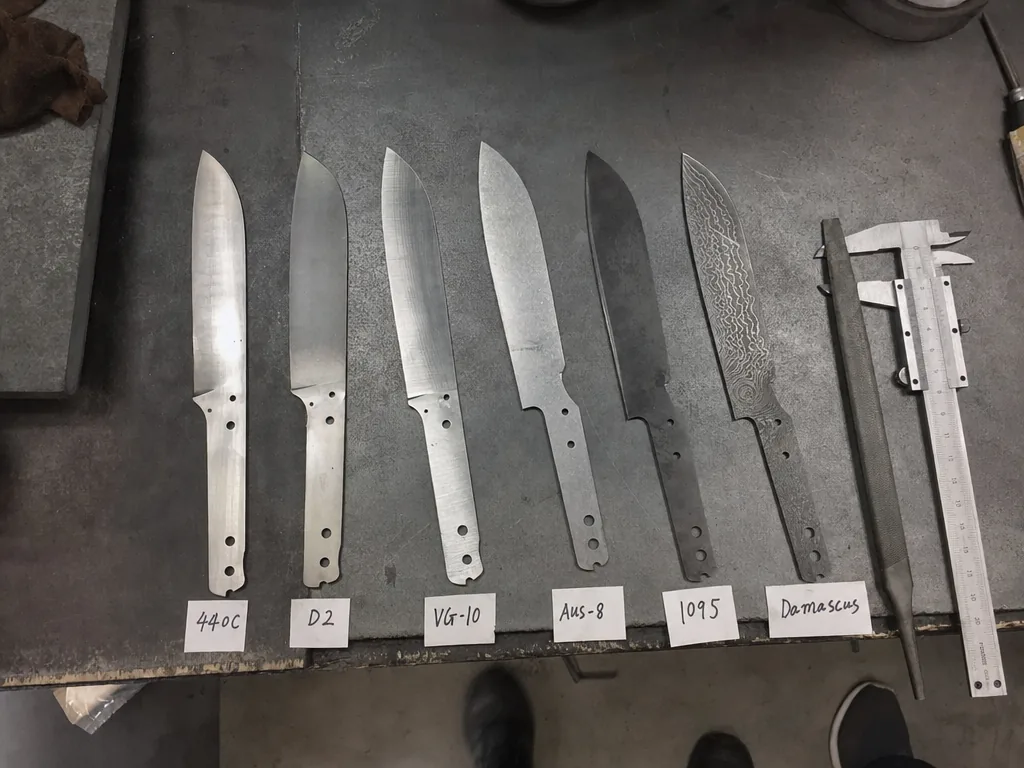
The knife market 2026 is not converging on one steel. It is segmenting more clearly by channel, price ceiling, and customer tolerance for maintenance. For value kitchen lines, 3Cr13 and 5Cr15MoV remain viable at FOB levels around USD 1.20-4.50 depending on size and handle construction. Mid-market programs continue to rely on 7Cr17MoV, 8Cr13MoV, and 9Cr18MoV. Premium kitchen and EDC lines are increasingly specified in AUS-10, VG-10, or composite Damascus-clad cores where the appearance supports higher retail pricing.
Hardness requests are also more disciplined. Buyers have learned that chasing high HRC without matching geometry and use case can increase chipping complaints. For chef knives, a realistic commercial range is 56-58 HRC for heavy-use Western profiles and 60-62 HRC for thinner Japanese-style blades marketed to enthusiasts. For folding EDC, 58-60 HRC remains a common compromise between edge retention and field durability.
Surface finish is now a larger sales lever than many RFQs reflect. Stonewash and bead-blast continue to perform well in EDC because they hide handling marks. Satin and polished finishes dominate kitchen lines where cleanliness and shelf presentation matter more. PVD black coatings are still active in tactical segments, but buyers should price in higher scratch sensitivity and consistency checks across batches.
| Segment | Common steels | Target hardness | Typical FOB range | Buyer note |
|---|---|---|---|---|
| Value kitchen | 3Cr13, 5Cr15MoV | 54-56 HRC | USD 1.20-4.50 | Good for entry retail and promo bundles |
| Mid-market kitchen | 7Cr17MoV, 9Cr18MoV | 56-58 HRC | USD 4.00-10.00 | Balanced margin and performance |
| Premium chef | VG-10, AUS-10, layered steel | 60-62 HRC | USD 12.00-35.00 | Requires tighter grind QC |
| EDC folding | 8Cr13MoV, D2, 9Cr18MoV | 58-60 HRC | USD 5.00-18.00 | Lock reliability matters as much as steel |
| Damascus-style premium | VG-10 core with cladding, composite Damascus | 60-62 HRC | USD 18.00-60.00 | Visual pattern must match listing claims |
Kitchen knife trends in 2026 favor practical premium over novelty
Kitchen knife trends are moving toward practical premium: cleaner silhouettes, more disciplined weight balance, and packaging that communicates use case quickly. The strongest sell-through is still concentrated in the 8-inch chef knife, 7-inch santoku, utility knife, and compact set formats. Large 10-12 piece blocks remain active in some retail channels, but many online-first brands now prefer 2-5 piece curated sets because freight, return handling, and listing complexity are lower.
In specification terms, buyers are favoring blade thickness around 2.0-2.5 mm for mainstream chef formats, pakkawood or G10 handles for moisture stability, and full tang construction where the visual cue supports perceived value. Hammered finishes remain commercially useful, but only when the finish is consistent and does not trap polishing compound or create cleaning complaints. Magnetic gift boxes and EVA inlays are still requested, yet brands increasingly ask for flat-pack or carton-efficient solutions to protect shipping economics.
Another notable shift is migration from generic shapes to channel-appropriate profiles. Amazon-focused brands often prioritize versatile chef knives with broad appeal and easier keyword targeting. Specialty importers are more willing to add kiritsuke-inspired or bunka-adjacent forms, but usually only after a core chef knife proves demand. Buyers who want premium positioning without high claim risk are also replacing brittle ultra-thin grinds with moderate geometry that survives mixed consumer use.
- Best-performing kitchen launch set: 1 chef knife or 3-piece starter set
- Preferred handle materials: pakkawood, G10, stabilized wood, stainless bolster hybrids
- Common retail-ready packaging target: under 1.4 kg gross weight for single knife gift formats
- QC focus areas: edge angle consistency, handle gap, ferrule alignment, polish uniformity
EDC knife trends in knife industry trends 2026
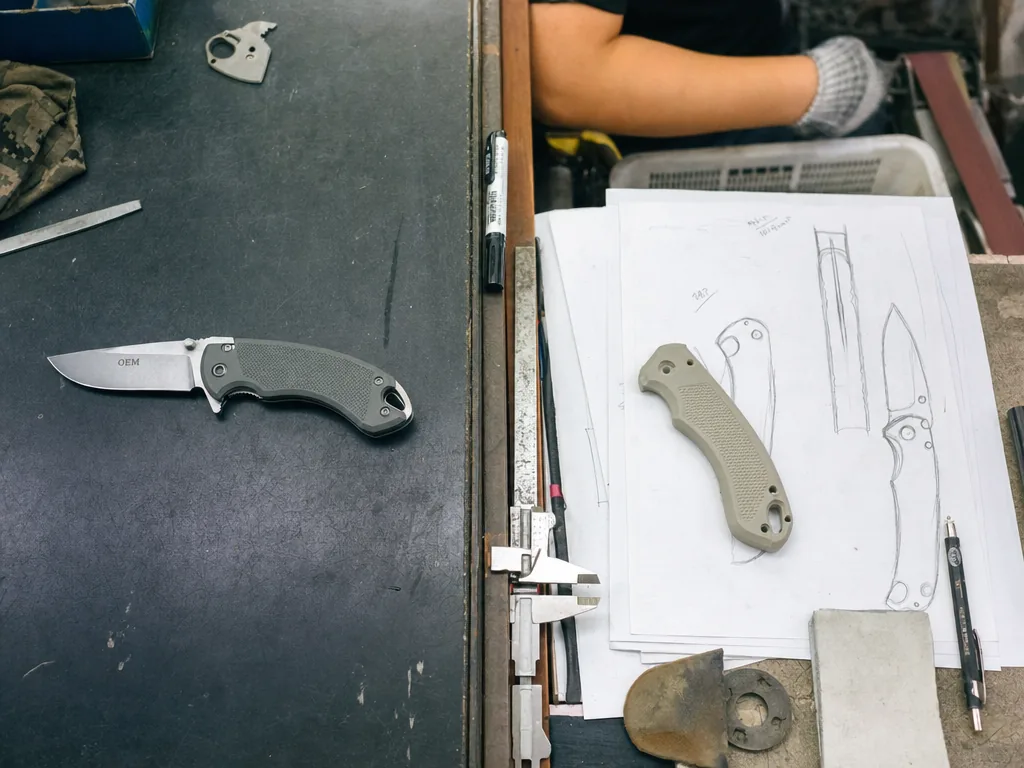
EDC knife trends in 2026 are shaped by legality, carry comfort, and mechanism reliability more than by extreme tactical styling. Brand buyers are concentrating on frame lock and liner lock models with blade lengths commonly between 75 and 95 mm, because these fit broad international demand while reducing some market-access issues. Deep-carry clips, ceramic bearings, and reversible pocket clips continue to signal value in the mid-tier, but procurement teams are scrutinizing lock geometry and detent consistency more closely than decorative hardware.
D2 remains active due to edge retention and acceptable cost, but many buyers prefer 9Cr18MoV or 8Cr13MoV when corrosion resistance and easier maintenance matter. Premium channels still ask for S35VN or M390-inspired positioning, yet for OEM programs these steels require sharper cost management and tighter machining control. The commercial sweet spot for many private label lines remains a folding knife that lands between USD 6 and 14 FOB, with CNC scales in G10 or aluminum and a proven lock architecture.
Compliance is central. Procurement teams now ask earlier about age-gating language, destination restrictions, blade length declarations, and carton labeling. For the UK and parts of the EU, legal review should happen before artwork approval, not before shipment. For US marketplace sellers, listing survival often depends on restrained product naming and accurate mechanism descriptions. From a factory perspective, pre-shipment checks should include lock engagement percentage, deployment force consistency, blade centering, and torque stability after cycling.
- Target first-order MOQ for a proven folding platform: 300-500 pcs
- Recommended inspection level: AQL 2.5 for major defects, tighter internal standard for lock failure
- Common production lead time: 30-50 days depending on CNC load and coating process
- Return-risk hotspots: blade play, uneven grind, weak pocket clips, coating scratches
Damascus knife demand is real, but buyers must separate aesthetics from spec
Damascus knife demand remains strong in premium kitchen and giftable EDC categories, but the sourcing conversation is more technical than many listings suggest. Buyers are increasingly careful about whether “Damascus” refers to true layered construction, a VG-10 or 10Cr core with patterned cladding, or a laser-etched or acid-etched visual effect. The distinction matters for cost, performance claims, and customer expectation management.
For B2B programs, composite Damascus kitchen knives commonly sit in the USD 18-45 FOB range depending on layer count claims, core steel, handle material, and packaging. Real layered billets or highly customized forged patterns run higher and generally require longer lead times, often 35-60 days after approval. Procurement teams should demand clarity on layer specification, core material, and whether the visible pattern persists through refinishing or is only a surface treatment. This is especially important when premium retail pricing depends on authenticity cues.
Buyers testing this category often start with one or two SKUs from established Damascus knives platforms instead of building a full collection immediately. That lowers claim risk and allows close monitoring of review language around sharpness, pattern consistency, and perceived craftsmanship. Inspection should cover not only hardness and geometry, but also pattern uniformity, handle stabilization, ferrule fit, and corrosion response after basic salt or humidity exposure tests. For export programs, premium presentation still matters, but a strong blade story backed by measurable specs converts better than decorative overstatement.
What global buyers now require from factories in knife market 2026
The operational side of the knife market 2026 is defined by lower tolerance for preventable errors. Buyers expect structured documentation, clear version control, and realistic production schedules. At minimum, factories serving international knife programs should be comfortable with approved golden samples, pre-production checklists, in-process QC records, and final inspection against AQL 2.5. ISO 9001 alignment is increasingly requested, especially by importers supplying established retail chains or multi-country distribution.
Lead time transparency matters as much as speed. A reliable quote often separates sampling, material preparation, logo application, packaging production, and assembly instead of offering one compressed promise. For normal custom orders using existing platforms, 25-45 days is credible. Complex CNC folders, forged lines, or premium box sets may require 45-60 days. During peak gifting periods, prudent buyers add 10-15 buffer days plus transit. FOB remains standard for experienced importers, while DDP is attractive for smaller Amazon operators, though the all-in unit economics must be reviewed carefully.
Packaging and compliance are now integrated into sourcing, not added later. Buyers ask about carton dimensions, barcode placement, drop resistance, suffocation warnings, care card wording, and country-of-origin marking at RFQ stage. For food-contact kitchen knives, documentation on material composition and applicable testing is increasingly expected. For private label sellers, the most successful factories are those that can support not only production but also repeatable replenishment across changing artwork and channel requirements.
- Inspection benchmark: AQL 2.5 common for finished goods
- Preferred trade terms: FOB for volume importers, DDP for smaller test orders
- Normal deposit structure: 30 percent deposit, 70 percent before shipment
- Reorder advantage comes from documented BOM and packaging specs, not memory
How buyers should source against knife industry trends 2026
Acting on knife industry trends 2026 means treating sourcing as a staged validation process. Start with a commercially proven platform, then customize only the elements that visibly affect conversion: blade finish, handle material, logo placement, packaging, and bundle composition. This approach preserves launch speed while still creating brand distinction. In most categories, the buyer who reaches market with a stable, repeatable knife beats the buyer who over-engineers a first run.
Build RFQs around measurable specifications. Include blade length, thickness, grind type, target hardness, steel grade, handle material, logo process, packaging dimensions, carton pack quantity, and inspection criteria. Request photo standards for cosmetic acceptance if finish consistency is important. For premium lines, ask for hardness test records and sample edge-angle confirmation. For folding knives, require lock function and centering checks before balance payment.
Commercially, use tiered ordering. A typical sequence is 100-300 sample or trial units where possible, followed by a 300-500 unit first PO on one hero SKU, then 1,000-plus reorder only after sales data and defect rates are clear. This reduces exposure and gives leverage for better pricing once the SKU proves itself. Brands that source this way are better positioned to adapt across kitchen, EDC, and premium pattern-welded categories without carrying excess inventory or accepting avoidable QC risk.
Frequently asked questions
For most new entrants, a single 8-inch chef knife or a 3-piece kitchen starter set is the lowest-risk launch. Demand is broad, packaging is straightforward, and customer use is easier to define than in large sets or niche blade shapes. In EDC, a proven liner-lock platform can work, but legal and marketplace restrictions require more careful pre-launch review.
For existing models with logo, packaging, and minor material changes, 300-500 units per SKU is a common starting MOQ. If you need new molds, exclusive handle tooling, or heavily customized hardware, factories often require 1,000-3,000 units. Sample runs can sometimes be done below MOQ, but unit cost rises and packaging options may be limited.
Damascus remains commercially strong, especially in giftable kitchen and premium enthusiast categories. The key is honest positioning. Buyers should confirm whether the product uses patterned cladding, a layered billet, or an etched visual effect. If the claim, packaging, and retail price align with the actual construction, Damascus can still support strong margins and better perceived value.
For kitchen knives, focus on hardness range, edge consistency, handle fit, polish uniformity, and rust or stain response. For folding knives, add lock engagement, blade centering, opening smoothness, blade play, and clip strength. Final inspection at AQL 2.5 is standard, but many buyers apply stricter internal acceptance limits for lock-related defects and cosmetic issues on premium lines.
FOB is usually better for experienced importers who can control freight, customs, and local warehousing costs at scale. DDP is useful for smaller test orders or Amazon sellers who need simpler landed pricing. However, DDP quotes should be reviewed line by line because lower administrative friction can hide weaker control over routing, timing, and final per-unit margin.
Get your project quoted
From a single SKU to a full product line, we can quote, sample and ship from our Zhejiang facility. Talk to a specialist who's worked on hundreds of buyer briefs.
Request a Quote