Knife sharpness testing matters at the sourcing stage because edge performance is one of the first defects end users notice and one of the hardest to correct after shipment. For importers and brand managers, a sharpness claim is only useful if it is tied to a repeatable method, a numerical acceptance range, and a defined sampling plan. Without that, “razor sharp” is marketing language, not a specification.
For factory-built kitchen knives, sharpness is shaped by edge angle, steel chemistry, heat treatment, grinding belts, burr removal, and final honing. The most common quantitative method in commercial use is the BESS scale knife test, but it should sit inside a broader quality system that includes hardness, edge symmetry, visual checks, and carton-level AQL 2.5 inspection. Buyers who understand these interactions can write better specs, compare quotes more accurately, and reduce complaint rates on both retail and Amazon channels.
What knife sharpness testing actually measures in production
In a factory environment, sharpness is best understood as the force required for an edge to sever a standardized medium under controlled conditions. That is why knife sharpness measurement is more actionable than subjective cut tests on paper or tomato skin. A knife can feel aggressive because of a coarse toothy finish but still show inconsistent apex formation along the edge. Conversely, a refined edge may score well at the heel and poorly near the tip if belt tracking, plunge geometry, or operator pressure varies.
Production teams therefore break edge quality into several measurable inputs:
- Edge angle: typically 12-18 degrees per side for kitchen knives, depending on steel and intended use.
- Edge thickness behind the apex: often 0.10-0.30 mm near the final edge for mass-market kitchen formats.
- Hardness: common targets are 54-56 HRC for entry stainless, 56-58 HRC for mid-tier 1.4116 or 5Cr15MoV, and 58-60 HRC for higher-spec steels.
- Burr removal quality: wire edge retention can pass a quick slice test but fail after a few cuts.
- Consistency along the edge: heel, midpoint, belly, and tip should all stay within a defined tolerance band.
For procurement teams, the practical takeaway is that sharpness should be specified as a batch QC requirement, not just a pre-shipment demo. A supplier with formal inspection controls can connect edge results back to process variables such as grinder grit sequence, stropping compound, and operator work instructions.
BESS scale knife testing: what the numbers mean for buyers
The BESS scale knife method, widely referenced in the knife trade, measures the grams of force needed to cut a calibrated test media. Lower numbers indicate a sharper edge. The appeal for factories and buyers is simple: it converts a subjective claim into a numerical threshold that can be recorded by SKU, lot, and station. Typical commercial testers use standardized synthetic filament media and produce readings that can be compared over time if calibration and operator method are controlled.
In sourcing conversations, buyers often ask what BESS score is “good enough.” The answer depends on market tier, edge durability target, and price point. A chef knife intended for specialty retail may be specified below 200 BESS, while a high-volume supermarket or promotional line may accept 250-350 if edge stability and cost are prioritized. Serrated utility knives and heavy cleavers require different expectations and should not be benchmarked against fine-edge gyutos.
| Approx. BESS score | Commercial interpretation | Typical sourcing use case |
|---|---|---|
| 120-180 | Very sharp, premium out-of-box edge | Specialty retail, enthusiast-oriented chef lines |
| 180-250 | Strong factory edge with broad consumer appeal | Mid- to upper-mid private label kitchen knives |
| 250-350 | Acceptably sharp for mainstream retail | Value-oriented sets, mass volume programs |
| 350+ | Borderline or inconsistent for quality positioning | Usually triggers rework or process review |
Important limitation: a BESS reading reflects initial cutting force, not retention. A polished 180 BESS edge on soft 52 HRC steel may lose performance faster than a 240 BESS edge on 58 HRC steel with cleaner apex formation. For that reason, sharpness specifications should be paired with hardness and edge retention expectations.
Knife edge testing methods factories use beyond the BESS scale
Serious factories do not rely on one instrument alone. Knife edge testing usually combines objective measurement with in-process checks and destructive or semi-destructive audits. BESS is useful for finished-edge acceptance, but production teams also monitor geometry and metallurgical variables that explain why a batch is trending better or worse.
Common methods include:
- Visual apex inspection: under 10x-60x magnification to identify reflection, rolls, chips, and residual burrs.
- Edge angle verification: using laser goniometers, optical comparators, or fixture-based audits. A target may be 15 degrees per side with ±1.5 degrees tolerance.
- Rockwell hardness testing: often batch-verified after heat treatment. Example acceptance for 1.4116 chef blades: 56-58 HRC.
- Cut retention sampling: repeated media cuts followed by post-cycle BESS recheck. Not always done on every production run, but valuable for new programs.
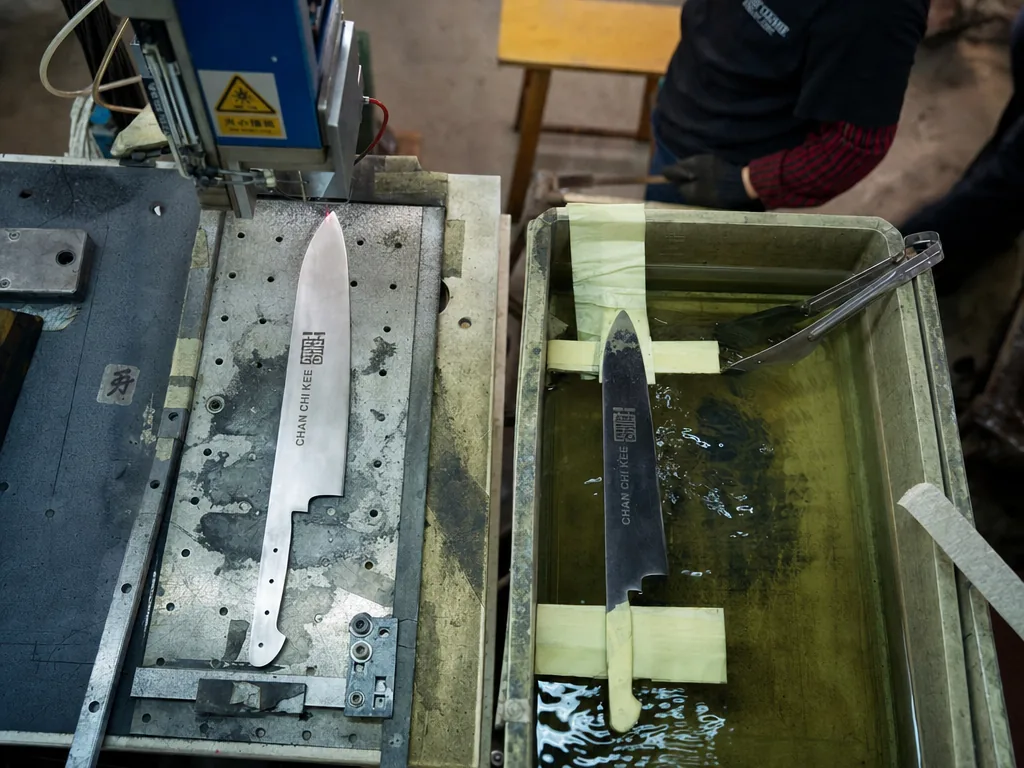
- Coating and finish review: black oxide, stonewash, satin, or mirror finishes can expose different burr-removal issues near the edge line.
On broad kitchen assortments such as kitchen knives, the testing stack should be adapted by SKU. A paring knife with a short edge can tolerate a narrower sampling map than a 200 mm chef blade. Likewise, granton edges, hollow grinds, and asymmetric Japanese-style profiles may require separate work instructions. The core buyer lesson is that a factory should be able to explain not only the final BESS target, but also which upstream checks prevent drift before final packing.
Factory sharpness QC: sampling plans, tolerances, and rework rules
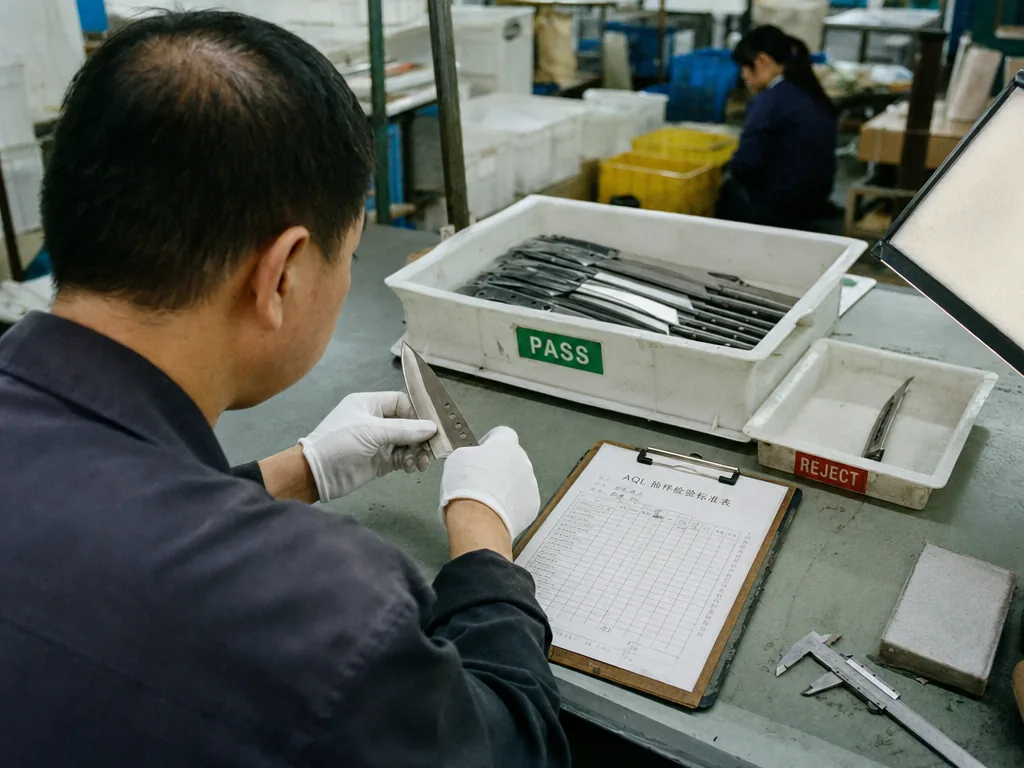
Factory sharpness QC is where many sourcing programs either become reliable or become expensive. The strongest systems define where to test, how many pieces to sample, what numerical range passes, and what happens when results fail. For branded imports, sharpness should be included in the control plan alongside cosmetic, dimensional, and packaging checkpoints.
A practical production standard for a 1,000-5,000 piece order of stamped stainless chef knives might look like this:
- Sampling: in-process 5 pcs per grinding operator every 2 hours; final QC per AQL 2.5 lot sampling at finished goods stage.
- Test points: heel, middle, and 20 mm behind the tip.
- BESS acceptance: average 220-280, no single point above 320.
- Angle tolerance: 15 degrees per side ±1.5 degrees.
- Hardness: 56-58 HRC, verified per heat lot.
- Rework trigger: if more than 10% of checked pieces exceed max BESS threshold or show burr remnants under magnification.
Rework usually involves re-honing, deburring, and retesting, but excessive rework can alter bevel width and cosmetic consistency. That matters particularly on exposed satin-finished chef knives, where uneven secondary bevels become visible at retail and in Amazon photography. Lead time impact is real: batch rework can add 2-5 days, while a root-cause correction on grinding belts or heat treatment may add 5-10 days. Buyers should ask suppliers whether sharpness failures are logged by station and operator, and whether corrective action is tied to ISO 9001 records rather than informal workshop judgment.
How steel, heat treatment, and geometry affect knife sharpness measurement
A frequent sourcing mistake is treating sharpness as independent from material selection. In reality, the BESS result is only the surface reading of a deeper system. Steel chemistry influences carbide size and toughness; heat treatment controls hardness and stability; geometry determines cutting force and damage resistance. The lowest possible reading is not automatically the best commercial choice.
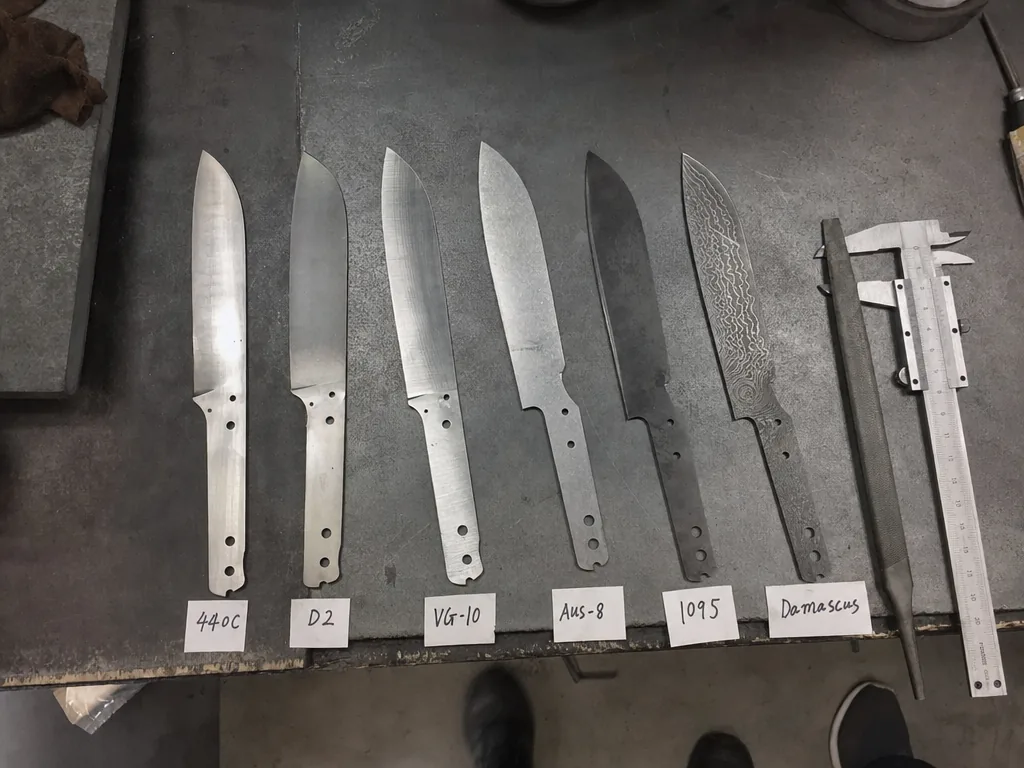
For example, 3Cr13 at 52-54 HRC can be sharpened quickly and cheaply, but the apex may fold sooner in use. 5Cr15MoV or 1.4116 at 55-58 HRC usually provides a better balance for mainstream kitchen programs. Harder steels such as 9Cr18MoV or VG-10-type grades can support finer edges, often with initial BESS improvements, but they raise material cost, grinding time, and reject risk if heat treatment control is weak.
Geometry creates the same tradeoff. A 12 degrees per side edge can score impressively in knife sharpness testing, but if behind-edge thickness is too thin for the target user, complaint rates may rise due to rolling or micro-chipping. For supermarket sets and high-volume Amazon listings, many factories settle around 14-17 degrees per side to balance first-use sharpness with abuse tolerance. On an FOB basis, moving from a basic sharpened edge to a tighter premium edge control can add roughly USD 0.15-0.60 per piece depending on steel, labor intensity, and whether BESS verification is done 100% or by sample. Those are small numbers compared with return costs and review damage when edge complaints surface at scale.
Specifying knife sharpness testing in RFQs and purchase orders
If buyers want consistent edges, the requirement must be written into the RFQ, golden sample approval, and final purchase order. Otherwise, suppliers will default to their house standard, which may vary by line, operator, or season. The cleanest approach is to specify method, target range, sample plan, and commercial terms in one place.
A workable RFQ clause might include:
- Test method: BESS or equivalent calibrated cutting-force tester, with media changed per equipment standard.
- Target: average finished edge 200-260 BESS for 8-inch chef knife, measured at three edge locations.
- Tolerance: no single reading above 300 BESS.
- Construction inputs: steel grade, hardness range, edge angle, finish, and any asymmetrical grind requirement.
- Sampling and QC: in-process checks plus final lot acceptance at AQL 2.5.
- Retest procedure: define whether failed lots are reworked, sorted, or rejected.
- Trade terms: clarify whether delays from rework affect FOB ship window or DDP delivery commitment.
Buyers should also ask for first article data before mass production: 10-20 pcs tested, with readings by position and heat lot. This is especially important when moving from sample-room hand finishing to production-line finishing, where results often widen by 20-80 BESS if process control is immature. Programs with low MOQs, such as 300-500 pcs per SKU, may need simpler sampling economics than a 10,000-pc run, but the documentation discipline should be the same.
Interpreting factory sharpness QC data when comparing suppliers
Many suppliers can quote a target BESS number; fewer can produce stable data over multiple lots. When comparing factories, buyers should request not just a best-case score but a spread: average, min, max, standard sample size, and failure handling. A factory claiming 180 BESS on one show sample may still be less reliable than one delivering 230-250 consistently across five production batches.
Useful comparison questions include:
- How often is the tester calibrated, and by whom?
- Is the reading taken before or after cleaning and final packaging?
- Are scores logged by operator, machine, and date?
- What is the batch-to-batch variance over the last 3 months?
- How many days are added if a lot needs resharpening?
- Can the supplier share corrective action examples tied to edge failures?
Good factories usually show predictable operating ranges. For example, a stable line may report 20 sample pieces averaging 235 BESS with a spread of 210-275. A weaker line may average 225 but range from 160 to 360, which signals inconsistent burr removal or angle control. For Amazon sellers, consistency matters more than a hero number because customer reviews amplify outliers. One visibly dull knife in a five-piece set can create a defect narrative that affects conversion for months. Buyers should therefore evaluate knife sharpness measurement as a capability signal embedded in the supplier's overall process discipline, not as an isolated lab metric.
Frequently asked questions
For most 200 mm private label chef knives, a practical target is 200-260 BESS average with no single test point above 300. Premium specialty retail may push below 200, while value sets may accept 250-320. Pair the target with steel grade, 56-58 HRC hardness, and an edge-angle tolerance so the number reflects a stable process rather than a one-off sample.
No. BESS gives a good reading of initial sharpness, but it does not fully capture edge retention, burr quality, or resistance to rolling and chipping. Buyers should combine BESS with hardness verification, angle checks, magnified apex inspection, and final lot sampling under AQL 2.5. That broader stack is what reduces return risk in production orders.
There is no universal number, but a sensible system mixes in-process and final checks. During grinding, factories often sample 5 pieces per operator every 2 hours. At final QC, sampling should align with lot size and AQL 2.5. For new SKUs or changed steel suppliers, ask for expanded first-run sampling and data from multiple edge positions.
Not always. A very low BESS score can indicate an extremely keen edge, but if the steel is soft or the edge is too thin, performance may collapse quickly in use. For commercial sourcing, a slightly higher but stable score on properly heat-treated steel is often a better outcome than an ultra-low score with poor retention or high damage risk.
For many kitchen programs, tighter sharpening control and documented BESS verification add roughly USD 0.15-0.60 per piece, depending on steel, labor content, and sample frequency. If a lot fails and requires rework, lead time can extend by 2-5 days; deeper process corrections may add 5-10 days. The cost is usually lower than returns and review damage.
Get your project quoted
From a single SKU to a full product line, we can quote, sample and ship from our Zhejiang facility. Talk to a specialist who's worked on hundreds of buyer briefs.
Request a Quote