Best knife steel is not a single grade; it is the grade that fits the product channel, target retail price, finishing process, and end-user maintenance level. For importers, Amazon private label sellers, and brand managers, steel choice affects FOB cost by USD 0.20 to over USD 8.00 per knife, changes heat-treatment controls, and can shift defect rates in salt-spray, hardness, and edge tests.
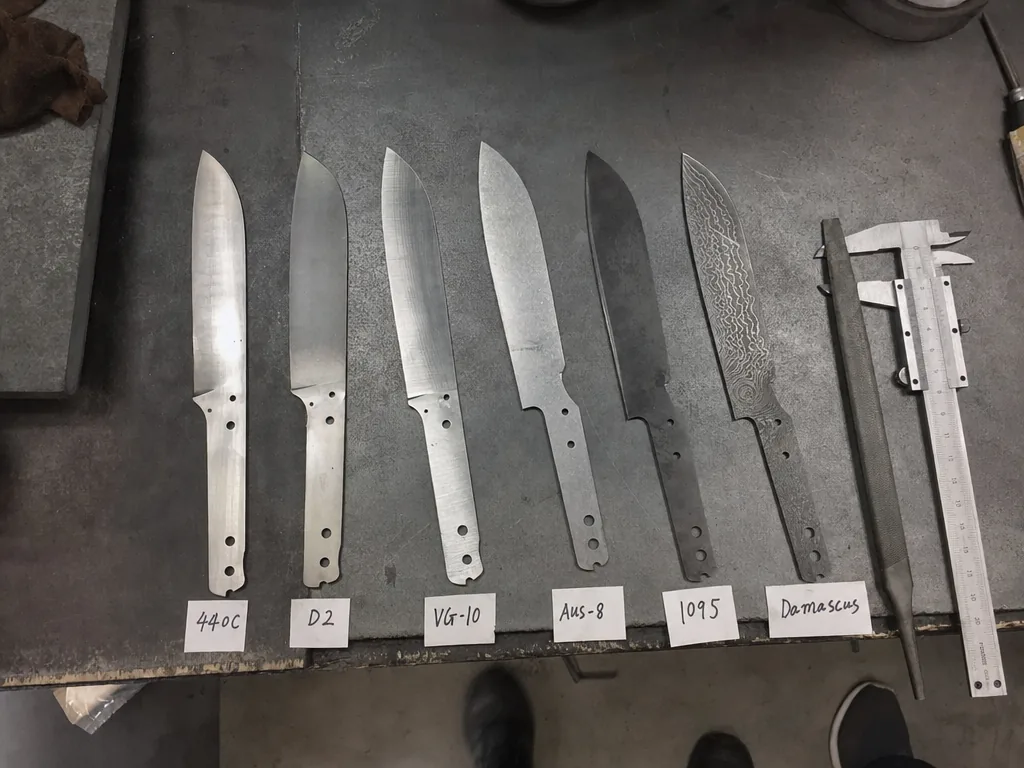
This procurement guide compares common knife steel grades by edge retention, corrosion resistance, manufacturability, and price band. It focuses on steels used in factory-scale production in China: 3Cr13, 5Cr15MoV, 7Cr17MoV, 8Cr13MoV, 9Cr18MoV, AUS-8, 440C, D2, 14C28N, 154CM, VG-10, S35VN, and high-carbon tool steels such as 1095. The goal is not to crown a laboratory winner, but to help purchasing teams specify the right stainless steel knife blade or carbon steel knife blade for repeatable OEM production.
Best Knife Steel Criteria for Procurement Teams
For B2B sourcing, the best knife steel must be evaluated against five procurement variables: edge retention, corrosion resistance, hardness window, process stability, and cost availability. A steel that performs well in a custom hunting knife may be a poor choice for a promotional kitchen knife if it requires narrow heat-treatment control, expensive grinding belts, or additional QC after coating.
Edge retention is mostly driven by carbon content, carbide volume, alloying elements such as chromium, vanadium, molybdenum, and the final hardness in HRC. Most mass-market stainless pocket knives ship at 56-59 HRC. Premium powder metallurgy steels often run 59-62 HRC. Kitchen knives using 5Cr15MoV or 7Cr17MoV commonly target 54-57 HRC to reduce chipping complaints and simplify sharpening.
Corrosion resistance depends on free chromium after carbide formation, surface finish, passivation, and user environment. A polished 3Cr13 blade may outperform a poorly finished D2 blade in humid storage, even though D2 has higher carbon and wear resistance. For coastal markets or dishwasher-prone kitchen use, corrosion performance is often more commercially important than maximum edge life.
Price must include yield loss and processing, not only raw steel. D2, VG-10, and S35VN increase blanking, grinding, heat-treatment, and QC cost. Lead time also changes. Common Chinese stainless grades can usually support 30-45 day production after sample approval; imported or premium specialty steels may add 15-30 days depending on coil, sheet, or bar stock availability.
Knife Steel Comparison: Ranked by Edge, Corrosion, and Price
The table below ranks practical procurement choices, not theoretical metallurgy. Edge retention is relative for properly heat-treated blades at typical OEM hardness ranges. Corrosion assumes satin or polished finish, normal passivation where applicable, and indoor storage. Actual performance should be verified by supplier sample testing, especially when moving from a display sample to mass production.
| Steel grade | Typical HRC | Edge retention | Corrosion resistance | Relative FOB impact | Best procurement fit |
|---|---|---|---|---|---|
| 3Cr13 | 52-55 | Low | Medium | Very low | Promotional knives, entry tools, low MSRP sets |
| 5Cr15MoV | 54-57 | Low-medium | Good | Low | Kitchen knives, retail sets, easy sharpening claims |
| 7Cr17MoV | 55-58 | Medium | Good | Low-medium | Outdoor folders, chef knives, balanced private label SKUs |
| 8Cr13MoV | 56-59 | Medium | Medium-good | Low-medium | EDC folders, value tactical knives |
| 9Cr18MoV | 58-60 | Medium-high | Good | Medium | Upgraded kitchen and outdoor knives |
| AUS-8 | 57-59 | Medium | Good | Medium | Export outdoor knives, Japanese-style positioning |
| 440C | 58-60 | Medium-high | Good | Medium | Classic premium value knives |
| D2 | 59-61 | High | Fair | Medium-high | Hard-use folders, tactical knives, coated blades |
| 14C28N | 58-60 | Medium-high | Very good | Medium-high | Corrosion-sensitive premium EDC |
| VG-10 | 59-61 | High | Good | High | Premium kitchen knives and gift sets |
| S35VN | 59-61 | Very high | Good-very good | Very high | Premium outdoor, enthusiast, low-volume programs |
| 1095 | 56-60 | Medium-high | Poor | Low-medium | Survival knives, coated carbon steel programs |
For a deeper grade-by-grade reference, buyers can review TANGFORGE’s steel comparison page when preparing RFQs or internal product briefs.
Best Knife Steel by Product Category and Channel
Channel fit matters because the same knife steel can generate different commercial outcomes. Amazon buyers often reward stated steel grades, but they also punish rust spots, chips, and inconsistent sharpness in reviews. Retail importers may prioritize predictable returns, carton-level QC, and price stability over headline metallurgy. A specialty outdoor brand can justify D2 or S35VN; a mass kitchen bundle usually cannot.
For kitchen knives, 5Cr15MoV, 7Cr17MoV, 9Cr18MoV, and VG-10 are the most common practical options. 5Cr15MoV supports aggressive price points and easy sharpening. 7Cr17MoV gives a visible upgrade at limited cost. 9Cr18MoV and VG-10 suit higher MSRP programs where edge retention and marketing claims must carry the retail price. For dishwasher-exposed consumer markets, use caution with high-carbon steels and semi-stainless tool steels.
For pocket knives and EDC folders, 8Cr13MoV remains a strong value baseline, especially for sub-USD 25 retail positioning. D2 knife steel grade is widely recognized in tactical and outdoor categories because it offers high wear resistance at lower cost than powder metallurgy steels. However, D2 is semi-stainless, not fully stainless. In humid storage, uncoated D2 blades need oiling, controlled packaging, and clear care instructions.
For fixed-blade outdoor knives, 1095, D2, 440C, 14C28N, and S35VN each serve different claims. 1095 is tough, economical, and suitable for black oxide or powder-coated survival knives. 14C28N is preferred where corrosion resistance is a major selling point. S35VN is best reserved for enthusiast programs with lower MOQ, higher ASP, and buyers willing to pay for premium steel documentation.
Stainless Steel Knife Blade Options: What Buyers Gain and Lose
A stainless steel knife blade typically contains at least about 12% chromium, but corrosion resistance varies significantly. 3Cr13 and 5Cr15MoV are easy to process and polish, while 440C, 9Cr18MoV, VG-10, and 14C28N bring higher hardness and better edge retention. The tradeoff is more demanding heat treatment and higher grinding cost.
Low-cost stainless steels are not automatically poor choices. For supermarket kitchen sets, gift bundles, and promotional tools, 3Cr13 or 5Cr15MoV can be commercially correct if the specification is honest. These steels sharpen easily, resist common kitchen staining better than carbon steels, and keep unit cost predictable. They are unsuitable for premium claims such as long edge retention or heavy field use.
Mid-tier stainless grades are often the safest B2B choice. 7Cr17MoV, 8Cr13MoV, AUS-8, 9Cr18MoV, and 440C provide better cutting performance without pushing the factory into exotic processing. For private label programs, they allow visible grade marking, stable large-batch sourcing, and good perceived value. Buyers should request hardness reports by batch and define an acceptable HRC range, such as 57-59 HRC for 8Cr13MoV folders or 58-60 HRC for 440C.
Premium stainless and near-stainless grades require tighter controls. VG-10 and S35VN should not be sourced only on supplier quotation language. Procurement teams should confirm mill certificates, heat-treatment process, sample edge testing, and whether the quoted price includes rejected blades after straightness, warp, or hardness inspection. For premium programs, a small QC cost increase is cheaper than a public material dispute.
Carbon Steel Knife Blade and D2 Knife Steel Grade Tradeoffs
A carbon steel knife blade is selected for toughness, easy sharpening, traditional positioning, and cost-effective cutting performance. Common grades such as 1095 can perform well in survival knives, bushcraft knives, machetes, and coated fixed blades. The weakness is corrosion. Without oil, coating, or dry packaging, carbon steel can develop rust during ocean freight, warehouse storage, or customer use.
For 1095, typical OEM hardness ranges from 56-60 HRC depending on blade geometry and use case. Large choppers may be kept lower for toughness, while smaller field knives can run harder for edge retention. Coatings such as black oxide, phosphate, powder coating, or PVD-like finishes can reduce corrosion risk, but the edge remains exposed after sharpening. Packaging should include VCI paper or desiccant for humid routes.
D2 knife steel grade occupies a different position. It contains high carbon and high chromium, usually around 1.4-1.6% carbon and 11-13% chromium, but much chromium is tied up in carbides. This produces strong wear resistance but only fair corrosion resistance. Buyers often describe D2 as semi-stainless. That language is more accurate than calling it stainless.
D2 is commercially attractive because it supports premium-sounding claims at a manageable cost. However, it is more difficult to grind than 8Cr13MoV, can chip if overheated or run too hard, and requires consistent heat treatment. A practical D2 specification for folders is often 59-61 HRC with blade coating or stonewash finish. For high-volume Amazon SKUs, include rust prevention, care-card language, and incoming QC for visible oxidation.
Cost, MOQ, Lead Time, and QC Controls for Knife Steel
Steel selection should be quoted with MOQ and lead time, not in isolation. For common stainless grades, factories may support MOQ from 300-1,000 pieces per SKU depending on handle, packaging, and tooling. Premium steels often require 500-2,000 pieces or a material surcharge because sheet, bar, or coil stock is not always shared across orders. Prototype samples normally take 7-15 days after drawing approval; mass production often runs 30-45 days for standard steels and 45-75 days for specialty steels.
Typical FOB cost differences vary by blade size and thickness. Moving from 3Cr13 to 5Cr15MoV may add only USD 0.10-0.40 on a small kitchen knife. Moving from 8Cr13MoV to D2 may add USD 0.50-2.00 on a folder due to material and grinding. VG-10 or S35VN can add several dollars per unit, especially when combined with CNC handles, premium packaging, and individual certification.
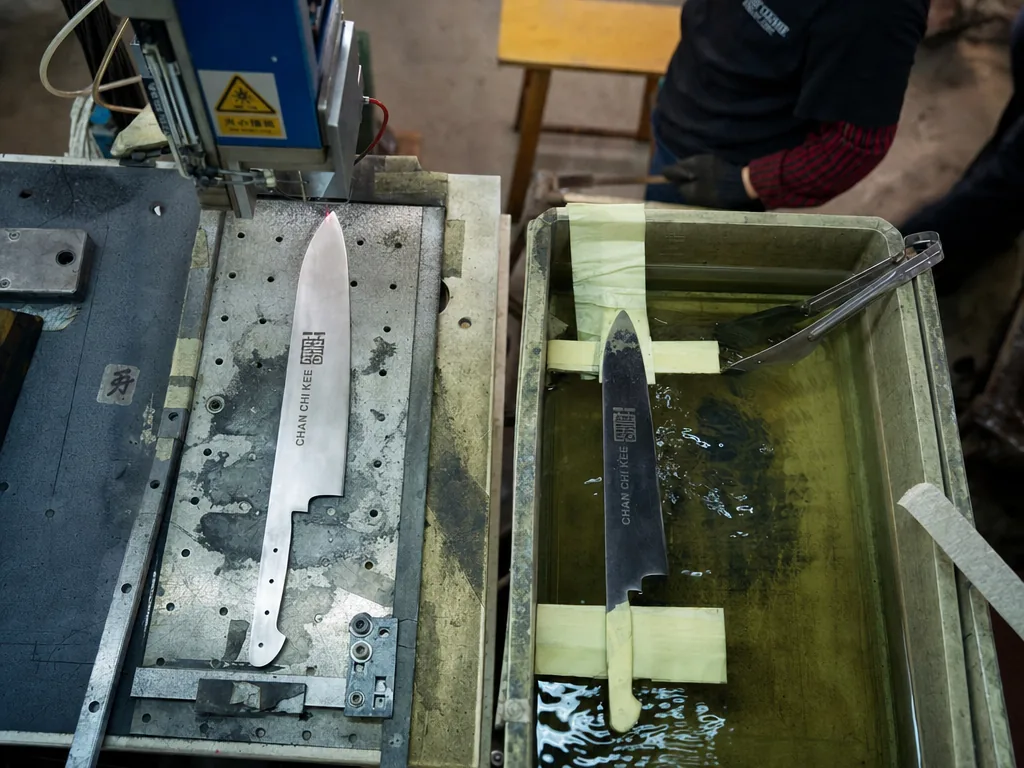
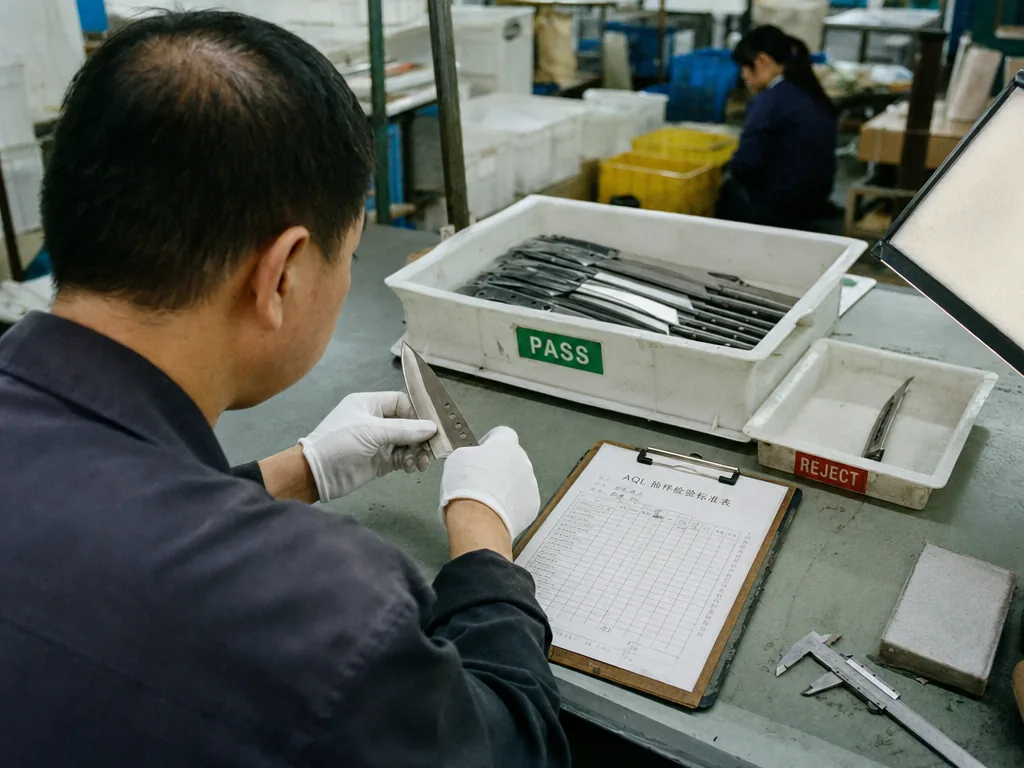
QC should be written into the purchase specification. At minimum, define steel grade, HRC range, blade thickness tolerance, surface finish, edge angle, salt-spray or humidity expectation where relevant, and packaging corrosion protection. For final inspection, many importers use AQL 2.5 for major defects and AQL 4.0 for minor cosmetic defects, with critical defects set to zero. Hardness checks should sample multiple blades per heat-treatment batch, not just one golden sample.
Factories operating under ISO 9001-style quality systems should be able to maintain traceability from raw material to heat-treatment lot. For export terms, align steel cost and risk with logistics terms such as FOB, CIF, or DDP. If you need a project-specific recommendation or RFQ review, contact us with target MSRP, blade type, steel shortlist, MOQ, and destination market.
How to Specify the Best Knife Steel in an OEM RFQ
An effective RFQ avoids vague phrases such as “high quality stainless steel” or “premium carbon steel.” Instead, specify the grade, accepted equivalent grades, HRC range, finish, coating, edge geometry, and test requirements. This reduces supplier interpretation and prevents quotation gaps between competing factories.
A strong OEM specification for a stainless folding knife might state: 8Cr13MoV blade, 2.8 mm thickness, 57-59 HRC, satin finish, 18-22 degree edge per side, laser grade mark, no visible pitting, oil-free clean packaging, and batch hardness report. A stronger D2 specification may add stonewash or coating, VCI packaging, 59-61 HRC, and no red rust after defined humidity storage conditions.
For kitchen programs, include food-contact expectations, surface finish, handle assembly requirements, and sharpening consistency. If the blade is marketed as VG-10, confirm whether it is solid VG-10 or VG-10 core laminated construction. If the steel is 5Cr15MoV or 7Cr17MoV, avoid overstated premium claims that could create marketplace disputes or return risk.
Procurement teams should also request pre-production samples made with production tooling and production heat treatment. Golden samples made in a sample room do not always represent mass output. Before deposit, confirm whether failed hardness, warp, rust, or grinding defects are absorbed by the factory or billed into the yield assumption. Clear material language at RFQ stage is the cheapest form of risk control.
Frequently asked questions
For value EDC folders, 8Cr13MoV is often the safest starting point because it balances cost, corrosion resistance, and recognizable grade marking. For a higher retail price, D2 can improve edge retention claims, but it needs coating, stonewash, or clear care instructions because it is semi-stainless. If corrosion complaints are a major risk, consider 14C28N or 9Cr18MoV instead.
D2 is better than many low-cost stainless steels for edge retention, but not for corrosion resistance. It is a high-carbon, high-chromium tool steel with strong wear resistance and only fair rust resistance. For tactical folders or coated fixed blades, D2 can be commercially strong. For kitchen knives, coastal markets, or low-maintenance users, stainless grades such as 9Cr18MoV, 440C, or 14C28N may be safer.
3Cr13 and 5Cr15MoV are common low-cost choices for large kitchen sets, gift packs, and promotional programs. 5Cr15MoV usually offers better practical value because it improves hardness and edge stability while keeping corrosion resistance and sharpening ease acceptable. For upgraded retail positioning, 7Cr17MoV or 9Cr18MoV can support better performance claims without moving into premium steel pricing.
The correct HRC range depends on steel and use. 5Cr15MoV kitchen knives often run 54-57 HRC, 8Cr13MoV folders commonly run 56-59 HRC, D2 folders often target 59-61 HRC, and VG-10 kitchen knives may run 59-61 HRC. Avoid specifying maximum hardness without considering blade geometry, toughness, and chipping risk. Require batch hardness testing in the QC plan.
Ask for mill certificates, heat-treatment records, and production sample reports before approval. For higher-value programs, use third-party chemical composition testing by XRF or laboratory analysis and verify hardness on multiple blades from the same batch. Tie approval samples to production tooling and production heat treatment. Include steel grade and HRC range in the purchase order, not only in email discussion.
Get your project quoted
From a single SKU to a full product line, we can quote, sample and ship from our Zhejiang facility. Talk to a specialist who's worked on hundreds of buyer briefs.
Request a Quote