Best pocket knife brands are useful to procurement teams only when their product logic is translated into build specifications, tolerance windows, and landed cost. Benchmade, Spyderco, Kershaw, and Buck each signal a different balance of steel choice, lock architecture, grind geometry, assembly labor, and warranty risk. For importers and Amazon sellers, that matters more than brand mythology.
This guide decodes those signals from a sourcing perspective. It focuses on the parts an OEM can actually build and repeat: blade steels from 8Cr13MoV to CPM-S30V, hardness targets from roughly 57-61 HRC, pivot systems, lock types, handle materials, AQL 2.5 inspection, and lead times that usually run 30-50 days after sample approval. The result is a practical benchmark for developing a best edc pocket knife line, a value-led entry SKU, or a premium private-label folding knife with fewer quality surprises.
How the best pocket knife brands translate into OEM specifications
For a factory, the commercial value of the best pocket knife brands is not the logo. It is the repeatable specification stack behind the logo. Buyers comparing a benchmade pocket knife, a spyderco pocket knife, a kershaw pocket knife, or a Buck lockback are really comparing five production variables: steel and heat treat, lock type, blade grind, opening system, and finishing consistency.
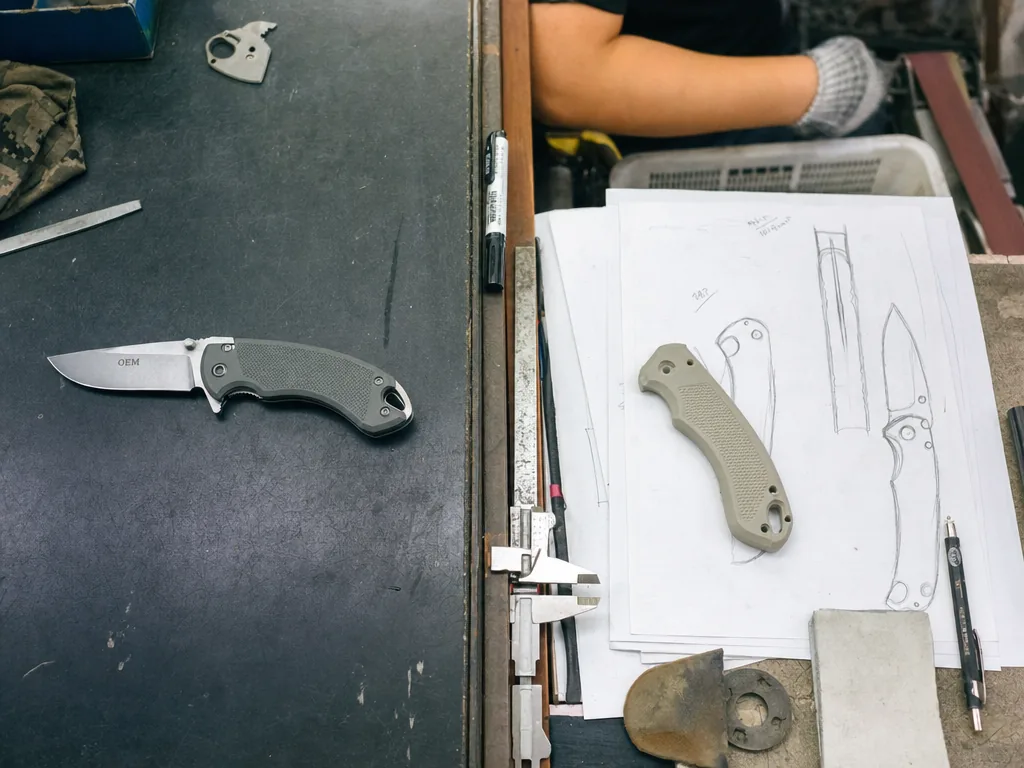
Those variables determine both cost and defect risk. A 3.2 mm D2 blade hardened to 59-60 HRC with a stonewash finish is far more forgiving in mass production than a satin CPM-S30V blade pushed to 60-61 HRC with tight cosmetic standards. A liner lock with phosphor-bronze washers is easier to assemble than a compression-style lock or a well-tuned crossbar lock with matched spring force. For teams planning a custom program, the fastest way to benchmark market positioning is to review a pocket knife OEM catalog and map comparable SKUs by steel, lock, and handle material rather than by brand story.
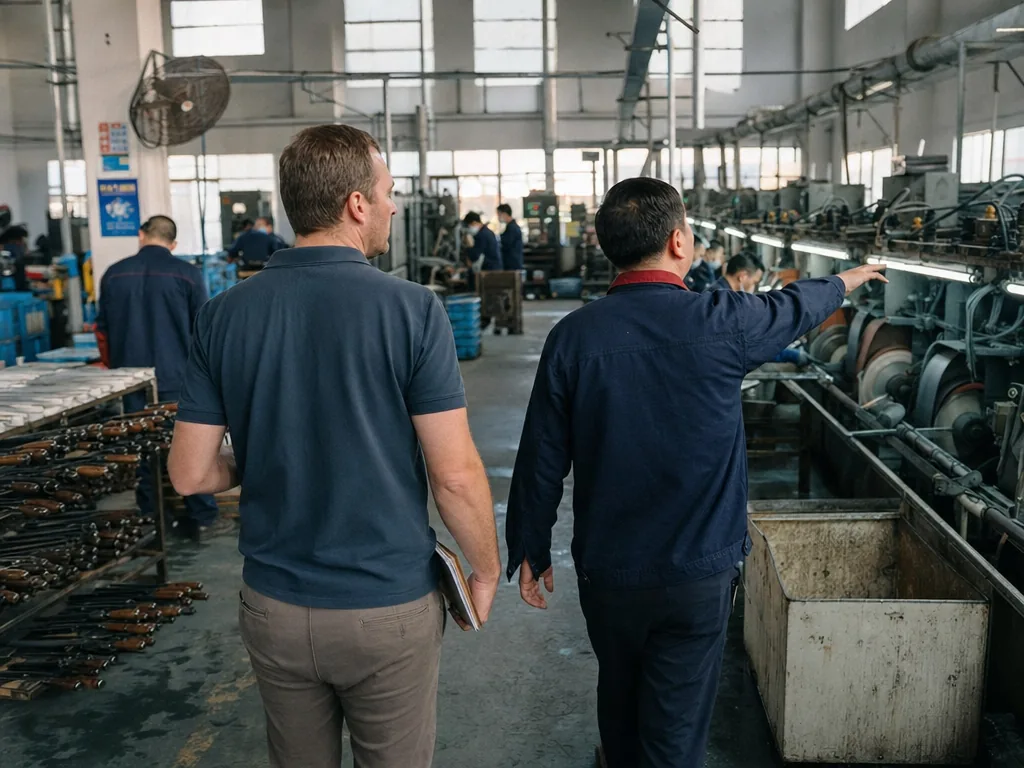
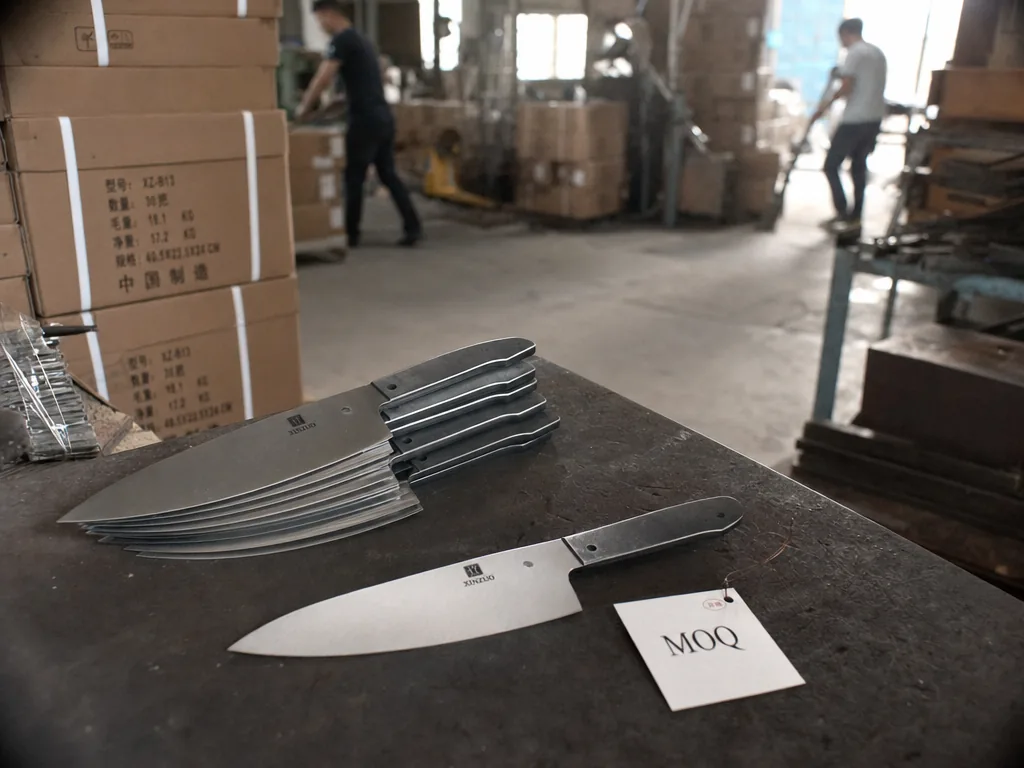
In most China OEM programs, indicative MOQs start around 300-500 pieces for an existing design with minor branding changes and 800-1,500 pieces for a custom platform. Sample lead time is often 7-15 days, production 30-45 days, and packaging integration can add another 5-10 days. A serious supplier should also discuss ISO 9001 workflows, incoming material checks, and final inspection at AQL 2.5 before talking about colorways.
Benchmade-style best pocket knife benchmarks: axis locks, premium steel, tight assembly
The lesson buyers take from a Benchmade-style product is not simply premium pricing. It is the combination of one-hand ambidextrous operation, lightweight construction, and low-friction action that makes a knife feel engineered rather than merely assembled. In OEM terms, that usually means a crossbar-style lock, blade stock around 2.8-3.2 mm, precise stop-pin fit, and consistent spring tension so the lock bar travels smoothly without uneven drag.
Steel selection is central. A benchmade pocket knife benchmark is often framed around CPM-S30V, CPM-S90V, or similar powder metallurgy grades, usually targeted at roughly 59-61 HRC depending on geometry. Not every OEM should chase those materials on day one. For a commercial equivalent at lower risk, many buyers start with 14C28N, N690, or D2. Those steels reduce raw material cost and sharpen warranty outcomes while still supporting a premium best pocket knife positioning if heat treat and edge symmetry are controlled.
Expect higher assembly cost than a basic liner lock. Crossbar systems involve more small parts, more tuning time, and more chances for inconsistent action if tolerances drift. This is where a factory's OEM manufacturing discipline matters. Buyers should ask for pivot torque standards, lock pull tests, and open-close cycle testing, typically 3,000-5,000 cycles during qualification. Cosmetic rejection should be written into the QC sheet, especially for anodized aluminum handles and satin blade flats where scratches become a high-return issue in e-commerce.
Spyderco pocket knife patterns OEMs can replicate without copying
Spyderco's market signal is functional geometry. The recognizable elements are a high-performance cutting profile, ergonomic handle contouring, and openings that favor gloved use and fast indexing. For OEM buyers, the productive takeaway is not to imitate protected design language but to understand why these knives cut aggressively and carry well. A spyderco pocket knife benchmark usually means a full-flat grind or high saber grind, a pronounced finger choil or forward control point, and a blade profile optimized for slicing rather than thick-stock visual drama.
Opening systems matter here. A round-hole style opener, thumb ramp texturing, and handle scales in G10, FRN, or micarta all reduce the gap between perception and use. Lock systems vary widely, so buyers should study folding lock mechanisms carefully before choosing the architecture. Back locks offer familiarity but require more precise rocker geometry. Compression-style locks can test well with enthusiasts but take more engineering effort. Liner locks remain the most cost-efficient for volume Amazon programs if lock face geometry is stable and lock-stick is screened out during inspection.
From a sourcing angle, a Japanese pocket knife benchmark often enters the comparison here because Japanese-made folders are associated with cleaner grinds and well-balanced heat treat. To approximate that quality level in China, buyers should specify edge-bevel tolerance, plunge-line alignment, and handle-to-liner flushness in millimeters, not just visual approval. A 0.2-0.3 mm fit gap standard is much more useful than asking for a knife to feel premium.
Kershaw and Buck spec logic: value engineering versus heritage durability
Kershaw and Buck represent two different procurement lessons. A kershaw pocket knife often succeeds by packing strong perceived value into a price-accessible format: assisted opening or crisp manual flipper action, practical stainless steel, modern handle textures, and finishes that hide handling marks. Buck, by contrast, still signals trust through straightforward lockback durability, restrained design, and a heat treat reputation that prioritizes stable edge behavior over spec-sheet theater.
For Kershaw-style sourcing, steels such as 8Cr13MoV, 7Cr17MoV, 9Cr18MoV, D2, and 14C28N are common stepping stones depending on target MSRP. Hardness is typically around 57-59 HRC for basic stainless and 59-60 HRC for D2 or 14C28N. These ranges support decent edge retention while limiting brittleness and rework. A flipper with ball bearings adds perceived sophistication, but buyers should confirm detent strength, lockup percentage, and bearing cleanliness after salt-spray and carton-drop tests.
Buck-style lockbacks are less flashy yet demanding in their own way. The rocker lock requires clean mating surfaces and reliable spring force. If the backspring is too weak, lock confidence suffers; too strong, and the opening feel becomes unpleasant. That tradeoff is why many heritage-style programs are well suited to a structured private label program where a proven chassis is modified through steel, handle, and packaging rather than reinvented from zero. For importers, this is often the most practical route to a dependable best knife brands pocket positioning under $8-18 FOB.
Best pocket knife brands compared by steel, lock, lead time, and FOB cost
Brand benchmarking becomes useful when it is converted into a sourcing matrix. The table below is not a retail ranking. It is a factory-oriented shorthand for what buyers are usually trying to achieve when they brief a new edc pocket knife program.
| Brand pattern | Common steel target | Typical hardness | Lock/opening emphasis | Indicative FOB China | Production lead time |
|---|---|---|---|---|---|
| Benchmade-style premium EDC | 14C28N, N690, CPM-S30V | 59-61 HRC | Crossbar lock, thumb stud | USD 12-35 | 35-50 days |
| Spyderco-style cutting EDC | 8Cr13MoV, VG-10, 14C28N, S30V | 58-60 HRC | Liner, back, or compression-style lock | USD 7-28 | 30-45 days |
| Kershaw-style value modern folder | 8Cr13MoV, 9Cr18MoV, D2 | 57-60 HRC | Flipper, liner lock, bearings | USD 4-14 | 25-40 days |
| Buck-style heritage utility | 420HC, 7Cr17MoV, 8Cr13MoV | 56-58 HRC | Lockback, nail nick or thumb stud | USD 5-16 | 30-45 days |
These ranges shift with packaging, coatings, CNC complexity, and whether shipment is FOB, CIF, or DDP. They also change materially at low volume. Below 500 pieces, setup and scrap rates push unit economics up fast. Buyers targeting the best edc pocket knife segment on Amazon should resist over-specifying steel while under-investing in lock tuning and cosmetic consistency. Returns are more often caused by blade centering, gritty action, and uneven edge grind than by customers measuring carbide volume in the steel.
Quality control standards behind a credible best edc pocket knife program
A knife that photographs well is not necessarily a knife that survives channel expansion. For procurement teams, the stronger signal is whether the supplier can document process control. AQL 2.5 is a normal final inspection baseline for folding knives, but it should be paired with a defect taxonomy. Critical defects include lock failure, cracked scales, exposed sharp edges on liners, or blades contacting the handle. Major defects include severe centering issues, lock-stick that impairs use, stripped screws, and inconsistent edge bevels. Minor defects typically cover cosmetic finish variation within defined thresholds.
Ask for measurable standards. Examples include blade centering within 0.5 mm, no side-to-side blade play after final torque, opening force window by model, hardness test report by batch, and corrosion or humidity checks for coated hardware. Factories claiming ISO 9001 capability should be able to show revision control on drawings, first-article approval records, and outgoing inspection forms tied to carton numbers.
Packaging also affects quality performance. Bulk-packed knives can arrive with finish rub if sleeves and separators are poorly specified. Retail-box knives need transit validation, especially for DDP e-commerce replenishment. For Amazon sellers, carton labeling accuracy and barcode verification deserve the same attention as the blade steel callout. A good factory will treat these as standard operating controls, not optional add-ons after production starts.
Building your own line from the best pocket knife brands playbook
The most profitable private-label knives rarely try to be a direct clone of the best pocket knife brands. They identify an audience, then borrow the right spec priorities. For a workwear retailer, that may mean a Buck-like lockback silhouette with upgraded G10 scales and 8Cr13MoV at 57-58 HRC. For an Amazon urban EDC line, the better play may be a Kershaw-style flipper in 14C28N with deep-carry clip, 3.0 mm blade stock, and clean detent tuning. For a specialty dealer, a Benchmade-style premium manual folder with crossbar lock and micarta can justify a higher ASP if the action and fit are genuinely refined.
Commercially, it helps to define three tiers before development begins. Entry tier usually lands around USD 4-7 FOB, mid-tier around USD 8-15, and premium import tier around USD 16-35 depending on steel and machining. MOQ planning should follow that logic. Start with one hero SKU at 500-800 pieces, not six weak SKUs at 200 each. The best knife brands pocket segment rewards depth of execution more than breadth of assortment.
Finally, document the target use case in the RFQ. State intended channel, target MSRP, steel options, clip orientation, lock type, and packaging format. That lets the factory propose the right tradeoffs instead of defaulting to the most visually impressive sample. Buyers who write better briefs usually get better knives.
Frequently asked questions
For most commercial launches, 14C28N, D2, or 8Cr13MoV are safer starting points than expensive powder steels. They offer a better balance of FOB cost, heat-treat consistency, and sharpening behavior in the field. If the target MSRP is below USD 60, good grind quality and lock tuning usually create more buyer satisfaction than moving immediately to CPM-S30V.
Entry-level import knives typically land around USD 4-7 FOB, mid-tier around USD 8-15, and premium import builds around USD 16-35 FOB. Those ranges assume standard packaging and normal MOQs. Custom CNC work, premium steels, coated hardware, and complex locks can push costs higher, especially below 500 pieces where setup cost has less volume to absorb it.
Liner locks remain the most practical for many high-volume programs because they are cost-efficient and easier to tune at scale. Crossbar locks feel more premium but add assembly complexity. Lockbacks are durable and familiar but less exciting for some channels. The best choice depends on target price, return tolerance, and whether buyers value low defect risk over enthusiast appeal.
If the factory already has a proven platform, pre-production samples can take 7-15 days and mass production 30-45 days after approval. Fully custom projects often need 3-6 weeks for engineering, revisions, and test samples before production starts. Packaging, certification requests, and peak-season congestion can extend the total timeline to 50-60 days or more.
Lock integrity, blade centering, edge consistency, screw torque, and action smoothness are the first controls to verify. Buyers should also review hardness reports, cosmetic standards, and packaging protection. Final inspection at AQL 2.5 is standard practice, but it only works if the defect definitions are specific enough to separate critical functional failures from acceptable cosmetic variation.
Get your project quoted
From a single SKU to a full product line, we can quote, sample and ship from our Zhejiang facility. Talk to a specialist who's worked on hundreds of buyer briefs.
Request a Quote