Knife sharpening angle is not a cosmetic detail. For OEM and private-label knife programs, it affects cutting feel, edge retention, warranty rates, grinding time, scrap risk, and how the product performs in BESS or media-cut tests after shipment. A 2-3 degree change per side can shift a chef knife from fine slicing to premature rolling, or make a hunting knife survive lateral load better at the cost of push-cut aggression.
For procurement teams, the practical question is not what angle is "best," but what angle range is appropriate for the steel, heat treatment, blade thickness behind the edge, and target use case. This guide explains how to specify knife sharpening angles for production, how sharpening systems influence consistency, what tolerances factories can actually hold, and which inspection methods reduce disputes on edge quality.
Knife sharpening angle basics for production specifications
In factory language, the most important distinction is whether the requested angle is per side or inclusive. A buyer may request 20 degrees, meaning either 20 degrees per side (40 degrees inclusive) or a 20-degree total edge. That ambiguity creates avoidable rejects. Production specifications should always state: edge angle per side, target inclusive angle, allowable tolerance, sharpening grit progression, and final burr-removal method.
For most mid- to premium-grade kitchen and outdoor knives, common production ranges are:
- Chef knives: 12-17 degrees per side, depending on steel hardness and thickness behind edge
- Fillet knives: 10-14 degrees per side for slicing efficiency, usually at lower lateral durability
- Hunting knives: 18-22 degrees per side for stronger apex stability
- Utility and EDC knives: 15-20 degrees per side
- Serrated sections: one-sided or asymmetrical grinds matched to gullet geometry
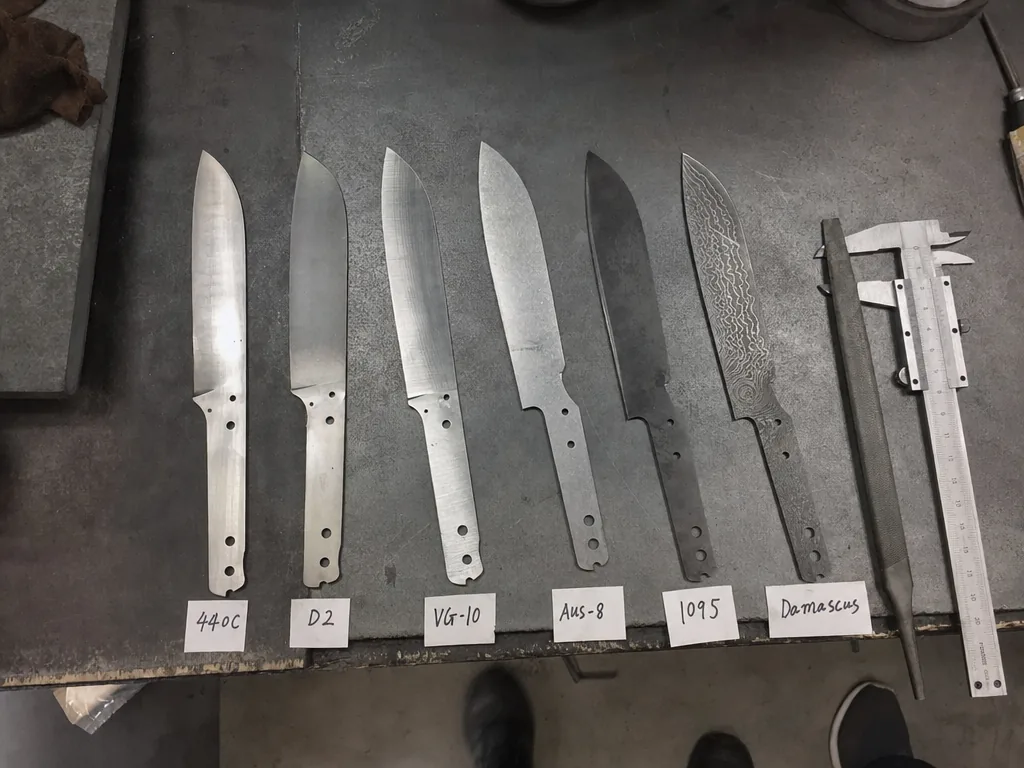
Angle alone is insufficient. The edge must be read together with blade stock, primary grind, steel, and hardness. A 15-degree edge on 1.4116 at 55 HRC behaves very differently from 15 degrees on 10Cr15CoMoV at 59-60 HRC. Buyers sourcing custom programs should ask how the supplier's manufacturing process controls grinding heat, edge burn, and angle repeatability across batches of 500, 2,000, or 10,000 units.
Knife sharpening angle chart by use case, steel, and hardness
A useful knife sharpening angle chart is a starting spec, not a universal rule. In OEM production, the best angle range depends on hardness, intended media, and target complaint profile. If the market values initial push-cutting feel, buyers may accept faster dulling. If returns are driven by chipping or rolling, a slightly more obtuse angle usually improves field durability.
| Knife type | Typical angle per side | Typical hardness | Use priority | Factory note |
|---|---|---|---|---|
| Western chef knife | 14-17° | 56-58 HRC | Balanced sharpness and durability | Common for stamped or forged chef knives |
| Japanese-style gyuto/santoku | 12-15° | 58-61 HRC | Finer slicing performance | Requires tighter burr control and better steel consistency |
| Fillet knife | 10-14° | 54-57 HRC | Low resistance in soft tissue | More prone to rolling if thickness behind edge is high |
| Hunting knife | 18-22° | 57-60 HRC | Edge stability under field load | Common on drop-point and skinner patterns |
| EDC/folding knife | 15-20° | 58-61 HRC | General-purpose retention | Micro-bevels often improve consistency |
| Serrated bread/utility knife | Single-side profile | 54-57 HRC | Aggressive sawing action | Needs gullet-matched tooling |
As a procurement baseline, many factories can hold a finished edge within about ±1.5 degrees per side on standard lines, and ±1.0 degree with tighter fixturing and more inspection. Below that, cost rises because setup time, operator skill, and rework rates increase. For programs above 3,000 pieces, the buyer should specify both target angle and approved tolerance rather than relying on sample feel alone.
Choosing a knife sharpening angle for chef, fillet, and hunting lines
The right angle is category-specific because cutting mechanics differ. A fillet knife sharpening angle usually sits at the low end of the range, often 10-12 degrees per side on flexible blades intended for fish processing. That geometry lowers cutting resistance and improves glide along bone, but the edge is less tolerant of twisting. If the knife is sold into retail channels where users may contact hard surfaces, 13-14 degrees per side often reduces complaints.
For kitchen programs, especially Western profiles, 15-17 degrees per side remains a reliable commercial standard. It gives acceptable slicing, fewer edge rolls on poly boards, and easier after-sales maintenance. Japanese-style kitchen lines using higher hardness can go lower, but only if heat treatment and finishing are stable. Buyers should pair angle specs with target hardness ranges such as 58-60 HRC and with edge-finish requirements like 400/800 grit belt plus deburr and light stropping.
A hunting knife sharpening angle generally needs more apex support. Field dressing, hide cutting, wood contact, and occasional torsion favor 18-20 degrees per side, with 20-22 degrees common for heavier stock or lower-alloy steels. Some brands split the difference by using a 17-degree primary edge and a small 20-degree micro-bevel. That approach can preserve slicing feel while improving consistency in production, because the final micro-bevel is easier to control during edge inspection and touch-up.
Wicked Edge knife sharpening system versus factory belt and wheel systems
The wicked edge knife sharpening system is well known in enthusiast and prototype work because it offers highly repeatable fixed-angle sharpening on individual knives. For product development, it is useful when a brand wants to evaluate 15, 17, and 20 degrees per side on the same blade family before freezing OEM specs. It is less relevant as a direct production-line solution for high-volume Chinese manufacturing, where throughput matters more than single-unit precision.
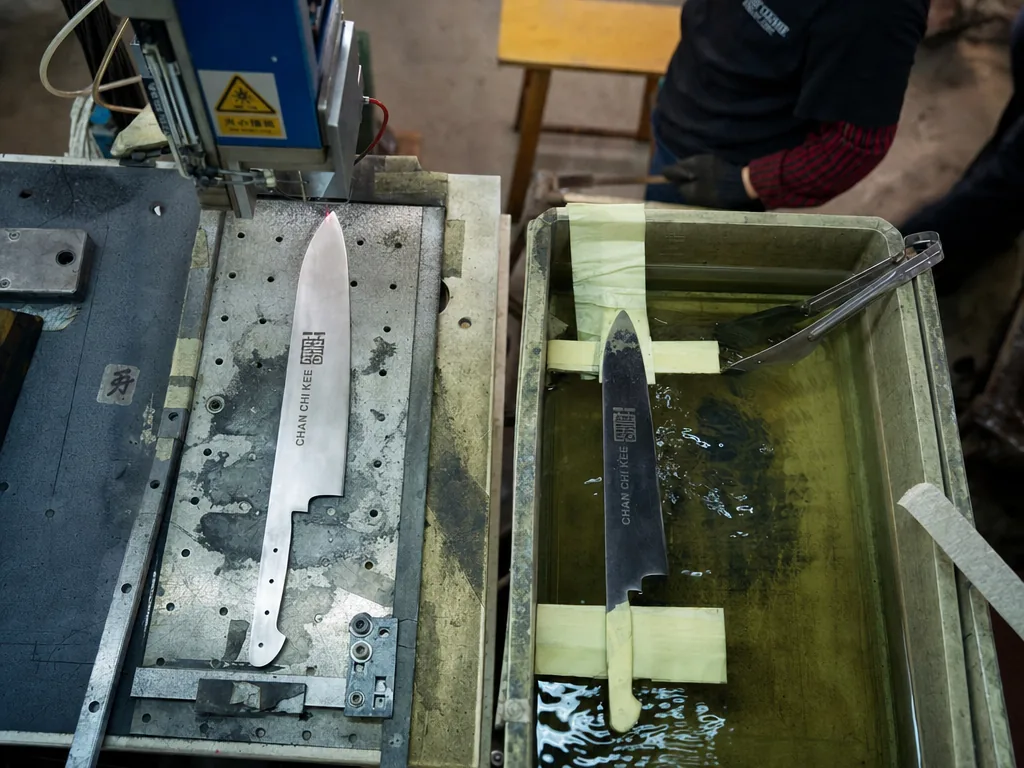
Factories usually rely on combinations of abrasive belts, contact wheels, vitrified wheels, robotic grinding cells, and manual finishing stations. Each system has tradeoffs:
- Fixed-angle guided systems: high repeatability, low throughput, good for prototypes and QA references
- Belt grinding: fast and flexible, but operator pressure and belt wear affect apex consistency
- Wheel grinding: efficient for certain profiles, but can overheat edges if process control is weak
- Robotic sharpening: better repeatability at scale, higher capex, usually justified on stable large-volume SKUs
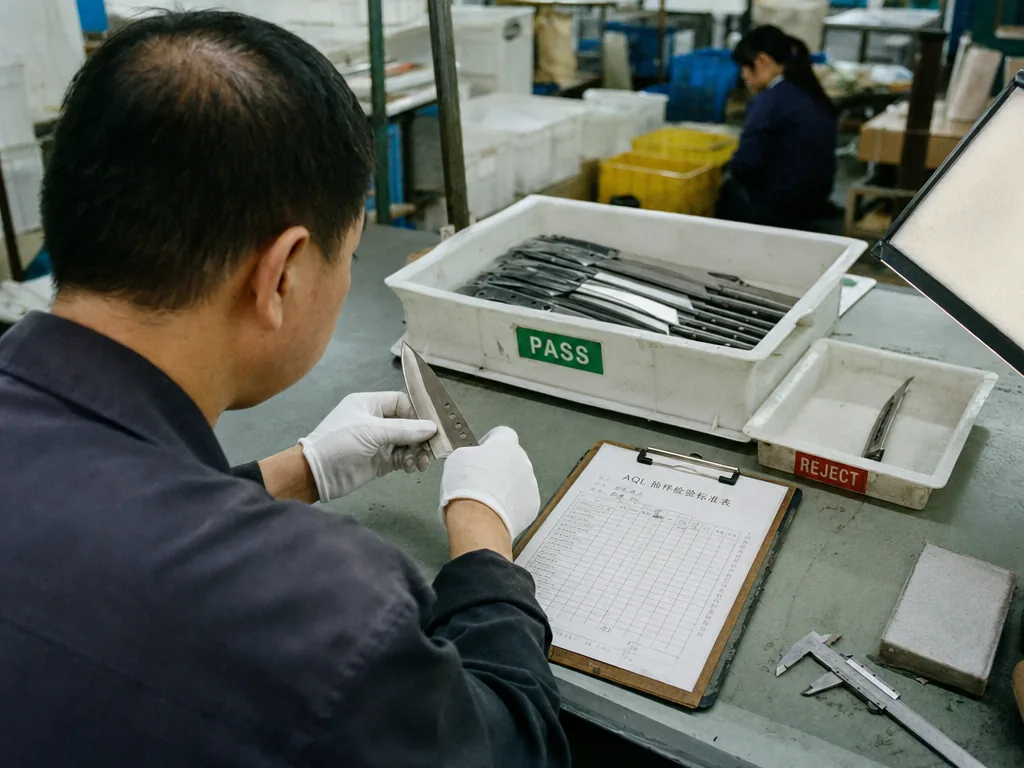
For most OEM buyers, the real question is whether the factory can demonstrate angle consistency across a statistically valid sample. Ask for first-article data, in-process checks every 100-300 pieces, and final sampling under AQL 2.5 for appearance plus defined edge metrics. If a supplier references only hand-feel, the process is under-controlled. If they document fixture settings, abrasive life, and deburr sequence, the program is more likely to scale predictably.
Knife sharpening angle guide tool options and how to verify edge quality
A knife sharpening angle guide tool can mean a simple clip-on guide, a digital angle gauge, a microscope fixture, or a dedicated edge-measurement jig. In production, buyers should not assume that the tool used to sharpen is the same tool used to verify. The best practice is to separate process control from acceptance testing.
Common verification methods include:
- Optical angle measurement: useful for cross-checking edge geometry on development samples
- Marker-test and bevel-width checks: practical for line setup, but not enough for final acceptance alone
- Microscope inspection at 50x-200x: reveals burr remnants, micro-chipping, and over-buffing
- Paper, rope, or media cuts: fast functional checks, but highly operator-dependent
- BESS measurement: a more standardized measure of force needed to sever test media
For branded knife programs, combining geometric verification with performance testing gives the cleanest purchasing standard. A factory may meet the angle target but still leave a fatigued burr that inflates field returns. That is why brands increasingly pair angle specs with BESS sharpness testing thresholds and microscopic acceptance criteria. As a rough commercial benchmark, a kitchen knife may target 150-300 BESS out of final assembly, while working outdoor knives may accept slightly higher values if edge stability is prioritized over extreme initial sharpness.
Specifying sharpening a serrated edge knife and final acceptance criteria
Sharpening a serrated edge knife is a separate specification problem from plain-edge sharpening. Serrations are not defined by a single knife sharpening angle because the functional geometry includes gullet radius, tooth pitch, tooth height, one-sided or two-sided beveling, and whether the back side is only deburred or lightly dressed. In production files, these features should be dimensioned in millimeters and linked to approved samples.
Typical serrated knife controls include gullet diameter, spacing tolerance, and sharpened-side consistency. A bread knife may use broad, shallow scallops optimized for crust, while a rescue or utility serration may use tighter, more aggressive points. If these details are not specified, suppliers may reproduce only the silhouette, not the cutting behavior.
For final acceptance, buyers should document:
- Angle per side or serration-side bevel definition
- Allowed tolerance, such as ±1.5 degrees per side on plain edges
- Hardness range, for example 56-58 HRC or 58-60 HRC
- Edge finish sequence and burr-removal method
- Sharpness target, such as BESS range or defined media-cut pass rate
- Sampling plan, often AQL 2.5 for critical visual and functional defects
- Trade terms and packing method, such as FOB or DDP, because transit damage can affect apex quality
On quality systems, importers should prefer suppliers operating under ISO 9001-style document control with retained lot records. Lead times for new edge development are commonly 7-15 days for samples and 30-50 days for bulk production after approval, depending on steel availability, printing, handle tooling, and packaging complexity.
Frequently asked questions
State the angle per side, the inclusive angle, and the allowed tolerance. For example: 15 degrees per side, 30 degrees inclusive, tolerance ±1.5 degrees, final deburr and 800-grit finish. Also add hardness range, sharpness target, and sampling method. Without those details, the supplier can meet the drawing visually while delivering inconsistent cutting performance.
Moving from a general commercial tolerance of about ±1.5 degrees per side to ±1.0 degree or tighter usually increases inspection time, fixture setup, operator skill requirements, and rework. On OEM kitchen knives, the added factory cost is often modest per piece but meaningful over volume. Expect the impact to scale with SKU complexity, steel hardness, and finish requirements.
Yes, but not as the only criterion. BESS is useful because it gives a comparable force-based sharpness reading, reducing disputes caused by subjective hand testing. However, BESS should be paired with angle verification, microscope checks for burrs or chips, and a simple functional media-cut test. A knife can score well initially and still have poor durability if the apex is fatigued.
For flexible fillet knives sold into general retail, 12-14 degrees per side is often safer than an ultra-thin 10-degree edge. It still cuts efficiently through fish and soft tissue, but gives better resistance to rolling when users contact cutting boards, bones, or frozen spots. If the product is strictly professional and thin behind the edge, lower angles may be justified.
Inspection should include tooth pitch, gullet depth or radius, sharpened-side consistency, burr condition, and a functional cut test on representative media. A serrated bread knife and a rescue blade may look similar in photos but perform very differently because the tooth geometry is tuned for different materials. Approved master samples are especially important for serrated programs.
Get your project quoted
From a single SKU to a full product line, we can quote, sample and ship from our Zhejiang facility. Talk to a specialist who's worked on hundreds of buyer briefs.
Request a Quote